How to Switch SEO Agencies Without Losing Your Rankings or Leads
Switching SEO agencies does not have to cost you rankings, traffic or leads. Your positions in Google belong to your website, not to your agency, and a well-run handover protects...
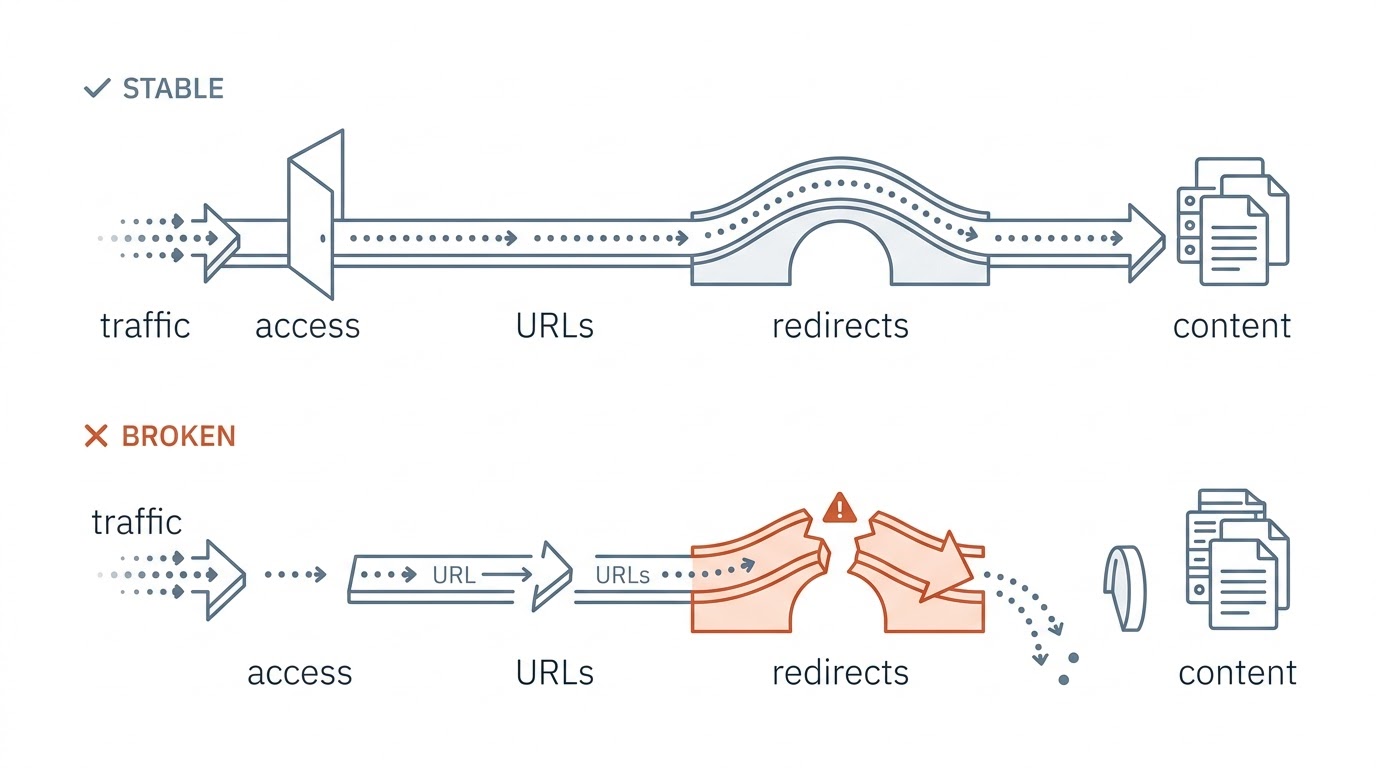
Switching SEO agencies does not have to cost you rankings, traffic or leads. Your positions in Google belong to your website, not to your agency, and a well-run handover protects them. What actually causes traffic drops during a transition is almost always process failure: lost access, unmapped URLs, deleted content or a coverage gap between the old retainer ending and the new one starting.
I’m Mike Villar, CEO of Growth Rocket, and in nearly two decades in this industry I’ve been on both sides of this conversation. We’ve onboarded clients arriving from other agencies, and we’ve handed accounts over cleanly when a client moved on. The pattern is consistent: the businesses that struggle are the ones that act on emotion first and process second. The ones that follow a plan barely see a blip. This article is that plan, in the order you should execute it.
Why switching SEO agencies feels riskier than it is
The fear is understandable. You’ve invested months or years into SEO, the results live in accounts someone else set up, and you’ve heard horror stories about sites falling off page one after a switch. But when you look at what Google itself documents as the causes of traffic drops, they come down to technical issues, URL changes, seasonality and algorithm updates. A handover can trigger the first two. It has nothing to do with the other two, though it often gets blamed for them.
That distinction matters because it tells you where to focus. As Customer Impact’s guide to switching SEO agencies puts it, your rankings are not tied to your agency, and a clean handover does not have to cost traffic. The risk is real, but it is procedural, not structural. Manage the process and you manage the risk.
Step 1: Secure ownership of your accounts before you say anything
Do this before the termination conversation, not after. Once notice is given, you are relying on goodwill, and while most agencies behave professionally, you do not want your analytics or your website hostage to anyone’s mood. This is the step I tell every prospective Growth Rocket client to complete first, even if they end up staying with their current partner.
Google Search Console, GA4 and Tag Manager
Your Google Search Console property should be verified under an account your company controls, with owner-level permissions. The same goes for GA4: you should hold admin access, and the property should live under your organization’s account, not the agency’s. Check Google Tag Manager the same way. If any of these sit under the agency’s accounts, request a transfer or add your own owner-level user now.
CMS, hosting, domain registrar and DNS
Confirm you have administrator access to your CMS, your hosting account, your domain registrar and your DNS or CDN provider. These are the levers that control your actual website. Several transition guides, including this checklist for practices switching agencies, list exactly these assets as the ones to secure before giving notice. If the agency registered your domain or hosts your site under their account, start the transfer process immediately, because registrar transfers can take days.
Google Business Profile and other logins
Reclaim owner access to your Google Business Profile, plus any ad platforms, social accounts, review tools, heatmapping software and rank trackers. Make a simple inventory: every tool, who the admin is, and whether the account belongs to you or the agency. Anything created and paid for by the agency under their own account is theirs, but anything tied to your brand and your data should be in your name.
Step 2: Read your contract before leaving an SEO agency
Before you send any notice, pull the current agreement and read it properly. This is the step people skip because they’re frustrated, and it’s the step that causes invoice disputes and lost deliverables later.
Notice periods and termination clauses
Thirty days’ written notice is the common standard, though some retainers run 60. Look for three things: the notice period, the termination clause (including termination for cause, which matters if performance is the reason you’re leaving), and any auto-renewal language that could lock you into another term if you miss a window. The Optimist guide to firing an SEO company makes the same point: locate these clauses before you say anything, so your exit is contractual rather than confrontational.
Who owns the content, links and data
Many SEO contracts include content-ownership clauses covering work produced during the engagement. Read yours carefully. In a fair agreement, content published on your site, and work you paid for, belongs to you. But some contracts muddy this, particularly around content hosted on the agency’s own properties, link placements they control, or reporting dashboards built in their accounts.
Decide explicitly what you want to keep. Usually the answer is: all content on your domain, all keyword and performance data, and a list of backlinks built. Links placed through the agency’s relationships can sometimes disappear after a breakup, so get the list now and monitor it after the switch.
Step 3: Export your work history and set a performance baseline
This step is the one that separates smooth transitions from six months of “wait, why did traffic drop?” Without a documented baseline, every post-switch fluctuation becomes an argument about whose fault it is.
What to ask your current agency to document
Request a transition document covering 12 to 24 months of work: rankings, backlinks built, technical issues found and fixed, content produced, and the roadmap in progress. Most importantly, ask for a decision log. The Botpresso vendor transition framework suggests four columns: the change made, the reasoning behind it, the expected impact, and the actual result. The why matters more than the what. A new agency that knows why a page was consolidated or a redirect was put in place won’t undo two years of good work in its first month.
The baseline metrics to capture
Export and save these yourself, from your own accounts, so they survive regardless of cooperation:
Indexed page count and coverage reports from Search Console
Keyword rankings for your priority terms, including page and position
Organic sessions by month, going back 12 to 24 months
Organic conversion rate and lead or revenue attribution from GA4
A full backlink export from your link tool of choice
A crawl of the current site, so you have a record of every URL and its status
This baseline is how you’ll attribute performance correctly after the switch. If organic leads dip in month two, you’ll know whether they were already trending down, and you’ll have the data to prove it either way.
Step 4: The SEO agency transition checklist
With access secured, the contract read and the baseline exported, you’re ready to execute the actual SEO handover. Here’s the sequence I recommend, compressed into roughly a month.
Weeks 1–2: Documentation and handover requests
Send formal written notice per the contract terms
Request the transition document, decision log and link list from the outgoing agency
Sign the new agency and share your baseline exports with them
Agree on a written timeline with the outgoing agency for completing outstanding deliverables and revoking their access
Weeks 3–4: Access transfers and running the two agencies in parallel
Transfer or confirm ownership of all accounts from Step 1
Have the new agency audit access levels and flag anything still under the old agency’s control
Overlap the two engagements rather than creating a gap. Practitioner guidance on agency transitions is consistent on this: run old and new arrangements in parallel for about 30 days so nothing goes unmonitored
Set a date, agreed with the outgoing agency, for removing their users from client-owned properties. Seer Interactive’s agency transition checklist treats this as a standard, professional step, and any reputable agency will cooperate
One thing I’ve learned from Growth Rocket’s own client onboarding: the outgoing agency’s cooperation during these weeks tells you a lot about whether leaving was the right call. The professional ones hand over everything and wish you well.
Common handover mistakes that cause traffic drops
When traffic does drop after a switch, it’s almost always traceable to one of these. Google’s own documentation on site moves and traffic debugging covers the mechanics, and a competent new agency will check each one during onboarding.
Redirect errors and unmapped URL changes
If any URLs change during the transition, and they often do when a new agency restructures a site, every old URL needs a server-side 301 redirect to its new equivalent. Google’s site move documentation is the authoritative reference here: an old-to-new URL map, proper 301s, updated canonicals and updated internal links. Unmapped URL changes lose pages entirely. This is the single most common cause of post-handover traffic loss, and it’s entirely preventable.
Removed pages and deleted content
A new agency’s audit sometimes recommends pruning content, and sometimes the outgoing agency pulls content it claims ownership of. Either way, removing a page that earns traffic or holds rankings without a deliberate plan is self-inflicted damage. Pages that must go should return a considered 404 or 410, or better, be redirected to the closest relevant page. Cross-reference every removal against your baseline traffic data first.
Lost backlinks and broken tracking
Links built through the outgoing agency’s relationships can quietly disappear in the months after a breakup. Monitor your backlink profile against the export from Step 3 and follow up on losses. At the same time, verify that GA4, Tag Manager, conversion tracking and call tracking all still fire correctly after any access or account changes. A tracking break looks exactly like a traffic drop in your reports, and I’ve seen teams waste weeks diagnosing a ranking problem that was actually a removed analytics tag.
What a new SEO agency’s first 60 days should deliver
Knowing what good onboarding looks like protects you twice: it tells you whether you hired well, and it sets expectations before the work starts.
The onboarding audit and strategy reset
In the first month, expect a full technical audit, a content and backlink review against your baseline, verification of all tracking, and a prioritized roadmap. The new agency should read the outgoing team’s decision log before changing anything. If your new partner proposes sweeping changes in week one without having reviewed the history, that’s a red flag. When we onboard a client at Growth Rocket, the first month is about understanding what exists and why before we touch it.
Monitoring, reporting and early warning signs
Days 30 to 60 should bring a monitoring rhythm: weekly checks on rankings, indexed pages and crawl errors, plus a monthly report that compares everything against your pre-switch baseline. Your new agency should also have a systematic way to investigate any decline. Google’s “Debug Google Search Traffic Drops” guide, published by the Search Central team in September 2023, lays out exactly how to isolate whether a drop is technical, seasonal, algorithmic or self-inflicted. Ask your new agency how they’d diagnose a dip. If the answer is vague, keep asking.
By day 60 you should have: a stable or improving baseline, confirmed tracking, a clear roadmap for the next two quarters, and no unanswered questions about what happened during the handover.
Plan the switch before you make the call
The order matters more than the speed. Secure access first, read the contract second, export your baseline third, then execute the handover with overlap rather than a gap. Do it in that order and switching SEO agencies is an administrative exercise, not a gamble.
If you’re at the point where you’re reading articles like this one, you’ve probably already made the decision. What you need now is a transition plan specific to your site, your contract and your data. Book a transition-planning call with Growth Rocket and we’ll map out your first 60 days before you give notice, so the switch happens on your terms, with your rankings and leads intact.
A good monthly SEO report answers four questions on the first page: what happened, why it happened, what it produced in leads and revenue, and what happens next. If your report...
The most common SEO agency red flags are guaranteed rankings, vague deliverables, no admin access to your own accounts, reports that stop at traffic, long contracts with no exit,...
The right choice in the SEO agency vs in-house vs freelancer decision depends on four things: your team size, your lead goals, how fast you need results and how many hours a month...