Answer Engine Optimization (AEO)

Answer Engine Optimization (AEO) Services: Be the Answer, Not Just a Result

People now ask a question and get an answer without opening a single page. Answer engine optimization makes sure the answer is yours: accurate, attributed to your brand and written so Google, ChatGPT, Perplexity and the voice assistants can lift it cleanly. It is SEO, pointed at the answer box.

  • Google Partner
  • Meta Business Partner
  • CXL Certified Optimizer
  • Magento Certified Developers
  • Claude Certified Architect – Foundations
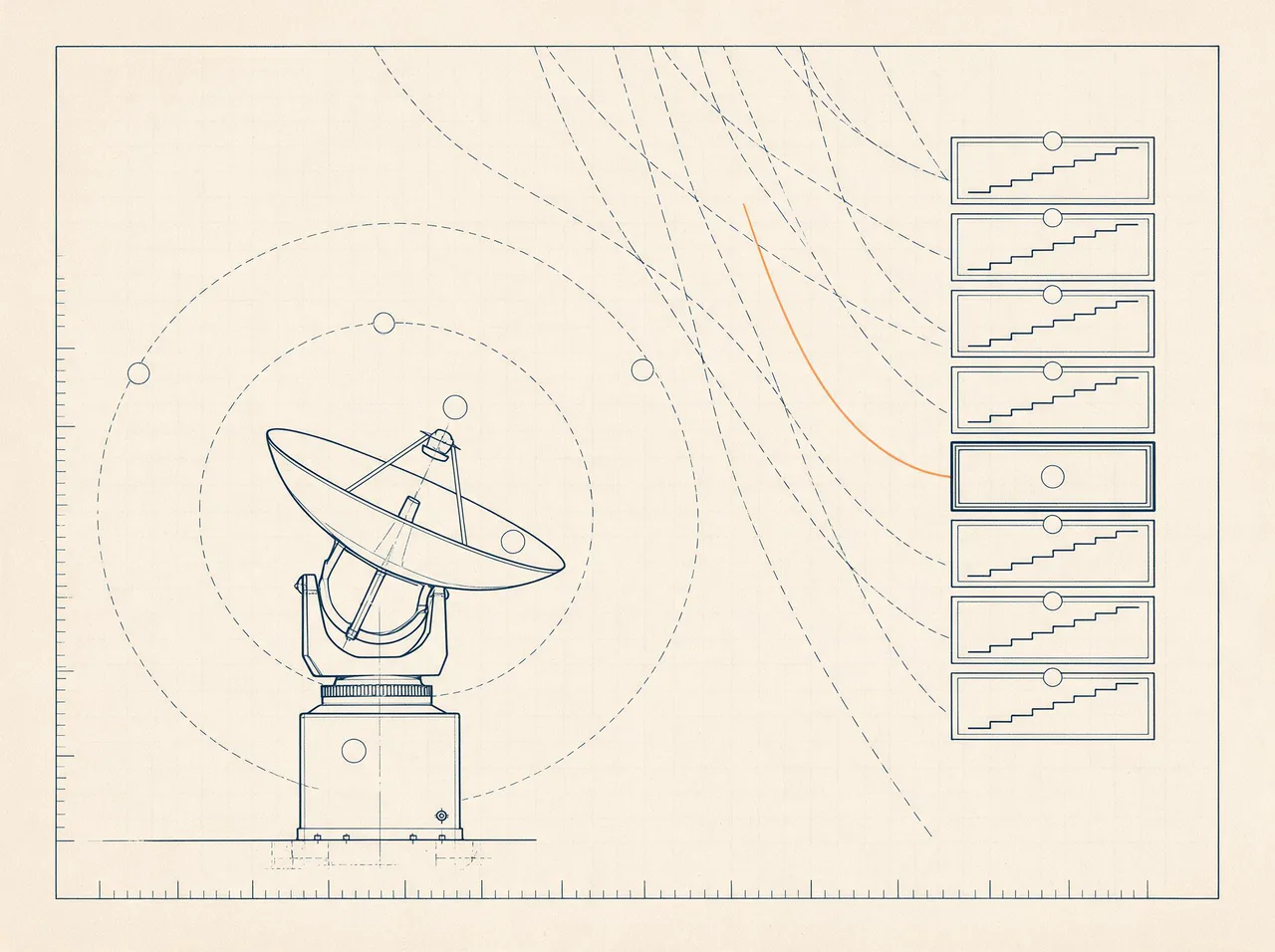
Drawing of a ground-station dish receiving many faint signals with one orange signal path into a single highlighted receiver panel, illustrating being chosen as the answer
Plate 04 · One answer, many signals

What is answer engine optimization (AEO)?

Answer engine optimization (AEO) is the practice of structuring your content and your brand so that search engines and AI assistants can lift a direct, accurate answer from your pages: in featured snippets, People Also Ask boxes, Google AI Overviews, voice assistants and chat answers.

Classic SEO earns a ranking and hopes for the click. AEO accepts that many questions are now answered right where they are asked, and makes sure that when your topic comes up, the answer, the source and the brand behind it are yours. You still want the click. You also want to be the name people remember when there isn’t one.

AEO is closely related to generative engine optimization (GEO). The simple split: AEO is about being the direct answer to a specific question. GEO is about being named and recommended when AI writes a longer response. We run both on top of a solid SEO foundation.

Updated October 2026 · Growth Rocket search team

AEO vs SEO: what is the difference?

SEO aims to rank your pages in search results. AEO aims to make your content the answer itself, in featured snippets, AI Overviews, voice assistants and chat answers. They share foundations, and AEO adds answer-first structure and entity clarity.

People search “AEO vs SEO” thousands of times a month, usually because someone has told them SEO is dead. It is not. Answer engines are built on the same web, and they favor the same signals: pages that are crawlable, trusted, fast and genuinely helpful. What changes is the shape of the content and the goal.

Classic SEO optimizes a page to win a click. AEO optimizes a passage to be lifted into an answer, often without a click. That calls for direct, quotable answers near the top of the page, clear question-and-answer structure, accurate entity information and structured data that matches what is on the page.

In practice we treat AEO as an upgrade to a solid SEO program, not a replacement. If your SEO foundation is weak, fix that first. If it is strong, AEO is how you make that foundation work in the new places people ask questions.
SEO, AEO, GEO and AISO: what is the difference?

The labels overlap, and the fundamentals are shared. This is how we draw the lines.

DisciplineOptimizing forWhere it shows upSuccess looks likeMain levers
SEO Rankings and qualified clicksGoogle and Bing results, Maps, ShoppingMore organic traffic, leads and revenueTechnical health, content, links, internal structure
AEO Being the direct answerFeatured snippets, People Also Ask, AI Overviews, voice, chat answersAnswers lifted from your pages, branded demandAnswer-first content, entity and schema accuracy, question coverage
GEO Being named and recommended by AIChatGPT, Gemini, Claude, Perplexity, AI Mode, CopilotMentions, citations and AI referral trafficEntities, third-party authority, prompt-led content, brand consistency
AISO The whole AI-visibility programEvery AI surface plus classic searchA measured, improving share of AI answersAudit, prompt tracking, AI referral analytics, reporting, brand-fact governance

What our AEO services include

Answer engines reward pages that answer clearly, from a source they can trust. This is the work behind that.

  • 01

    Question and prompt research

    We map the real questions your customers ask, in search, in People Also Ask and in the way they talk to AI assistants, and group them by intent.

  • 02

    Answer-first content

    We rewrite and build pages that lead with a direct, 40 to 60 word answer, then add the depth, evidence and examples that earn trust.

  • 03

    Featured snippet and PAA targeting

    We identify the snippets and People Also Ask boxes you can realistically win and format the pages to win them.

  • 04

    Structured data that matches the page

    Organization, Product, Person, Article and other markup, kept consistent with the visible text. Schema supports understanding. It doesn’t replace good content.

  • 05

    Entity and brand clarity

    Consistent facts about who you are, what you sell and who you serve, across your site, profiles and the sources AI systems rely on.

  • 06

    Technical readiness

    Crawlability, rendering, speed and snippet eligibility, so your best answers can actually be fetched and shown.

  • 07

    Voice and local answers

    Accurate Business Profile and listing data so assistants give the right hours, location and services.

  • 08

    Measurement

    Snippet and PAA tracking, AI Overview presence, AI referral traffic and branded search, reported together.

How to optimize for answer engines: a practical checklist

Answer the question in the first sentence or two, use clear headings that match real questions, keep facts accurate and consistent, add matching structured data, and make sure the page is crawlable and fast.

There is no secret file or trick. Google has said that no special markup or file is needed for its AI features. The work is old-fashioned, done carefully:

  • Lead with the answer.Put a direct 40 to 60 word answer under a heading that matches the question, then expand.
  • Cover the questions people actually ask.Use search data, People Also Ask, support tickets and sales calls to find them.
  • Use clear structuredescriptive headings, short paragraphs, lists and tables where they help.
  • Keep facts consistentacross your site, profiles and listings, so systems that read the whole web agree about who you are.
  • Add structured datathat truthfully describes the page. It helps, but it does not replace good content.
  • Earn trustshow who wrote the page, cite sources and keep it up to date.
  • Measuretrack snippets, People Also Ask appearances, AI citations and branded demand.

Where answers appear

Different engines, the same principle: clear, trusted, easy-to-extract content. Here is how the main ones differ.

  • Google AI Overviews and AI Mode

    Built on Google’s index and ranking systems. Pages must be crawlable, indexed and eligible for a snippet. Traffic is reported inside Search Console.

  • ChatGPT

    Answers from training data and, when it searches, from the live web. Third-party mentions and clear, citable pages carry weight.

  • Gemini

    Google’s assistant. It leans on the same web and entity signals as Search, so classic SEO fundamentals carry straight over.

  • Claude

    Draws on training data and web search where enabled. Plain-language pages and demonstrated expertise help it describe you accurately.

  • Perplexity

    Always shows its sources, which makes citation tracking unusually direct. Fresh, well-structured pages get picked up quickly.

  • Microsoft Copilot and Meta AI

    Bing’s index powers Copilot. Meta AI surfaces answers across Facebook, Instagram and WhatsApp. Both reward consistent brand facts.

What we won’t do

  • We don’t sell magic files or markup.Google says no special schema, AI file or markup is needed to appear in its AI features. We test a claim before we repeat it.
  • We don’t promise a mention.AI answers vary by prompt, by day and by platform. We promise the work, the measurement and honest reporting.
  • We don’t rename SEO and invoice it twice.The fundamentals are shared. You pay once for the foundation and once for the work that is genuinely new.
  • We don’t publish content that doesn’t help a person.If a page wouldn’t earn a citation from a thoughtful human editor, it won’t earn one from a machine.

Our AEO process

Five steps, in this order.

  1. 01

    Mine the questions

    Search, People Also Ask, sales calls and support tickets tell us what customers really want answered.

  2. 02

    Audit your answers

    We check which questions your site answers, how clearly and where competitors or AI summaries currently win.

  3. 03

    Rebuild the pages

    Answer-first rewrites, new pages for gaps, and structure that makes answers easy to extract.

  4. 04

    Reinforce the source

    Entity clarity, schema and third-party signals so engines trust that the answer is yours.

  5. 05

    Track and iterate

    Monitor snippets, citations and referrals, then double down on what is being used.

Why Growth Rocket for AEO

AEO is new enough that plenty of agencies are improvising. We are not starting from zero.

  1. 01

    SEO since day one

    Featured snippets, voice search and zero-click results were arguments we had years before AI answers. We have been adapting through every search product cycle.

  2. 02

    Practitioners, not packagers

    We also build AI applications, including our own, so our guidance comes from using these systems every day.

  3. 03

    Honest about what works

    We separate what Google documents, what is widely observed and what is speculation, and we tell you which is which.

  4. 04

    Content and development together

    Writers, SEOs and engineers on one team, so answer-first pages and the structure behind them ship together.

  5. 05

    Measured on business outcomes

    Visibility matters when it becomes demand. We report on both.

Certified, and kept current

How to choose an AEO agency: seven questions to ask

AEO is new enough that plenty of agencies have simply renamed their SEO packages. These questions separate them.

We answer every one of these on a first call.

  1. What is different from regular SEO?

    A good answer is specific: answer-first content, question coverage, entity accuracy, structured data and measurement of answer features. A bad one is the same checklist with new labels.

  2. How do you measure AEO success?

    Look for snippet and People Also Ask tracking, AI citation checks and branded demand, plus normal traffic and leads.

  3. Do you promise to get us into AI answers?

    No honest agency can. Answers vary by prompt, platform and day. Be wary of guarantees.

  4. What do you claim about schema or special files?

    Google says no special markup or file is needed for AI features. Ask how they test claims before repeating them.

  5. Who writes the content?

    AEO content has to be accurate and genuinely useful. Ask about expertise, editing and review.

  6. How do you keep facts consistent across the web?

    A strong answer covers profiles, listings, structured data and a single source of truth for brand facts.

  7. Is this on top of SEO, or instead of it?

    The honest answer is on top. You pay once for the foundation and once for what is genuinely new.

Search results behind our approach

Case Study: How Growth Rocket Helped Lick Sleeve Increase Net Revenue Through Organic & Paid Search

Case Study :

Case Study: How Growth Rocket Helped Lick Sleeve Increase Net Revenue Through Organic & Paid Search

Lick Sleeve offers a safe and comfortable leg protection device for dogs recovering from a leg injury. The brand wanted to expand its reach by targeting relevant markets with high purchase intent. Growth Rocket helped boost net revenue and transactions through data-driven, customer-centric, and cost-efficient search campaigns.

82,350%
improvement in blog users
1,879%
growth in organic users
427.57%
overall improvement in transactions
191.07%
increase in net revenue
Read More

AEO mistakes we fix

Most pages fail to become the answer for avoidable reasons.

  • Burying the answer under a long introductionWe lead with the answer, then give the reader the depth.
  • Writing for one keyword, not the whole questionWe cover the cluster of related questions people ask, and link them together.
  • Treating FAQ schema as a trickGoogle has sharply limited FAQ rich results, so we write FAQs to serve readers and answer engines, and keep any markup consistent with the visible text.
  • Inconsistent brand factsWe align what your site, profiles and listings say, because systems trust sources that agree.
  • Blocking the crawlers you wantWe check robots rules, CDN settings and rendering so your best answers can be fetched.
  • Measuring only clicksWe track snippets, citations, branded search and conversions together, so the picture is complete.

What is AEO, and why did “AEO” become a search term overnight?

AEO stands for answer engine optimization. Interest has jumped because people now get answers directly from search features and AI assistants, so brands want to be the source of those answers.

Answer engines are systems that respond to a question with an answer rather than a list of links: Google’s featured snippets and AI Overviews, voice assistants, and chat tools such as ChatGPT, Gemini, Claude and Perplexity. As more people start their searches there, being the cited or quoted source has become valuable.

The term overlaps with generative engine optimization (GEO) and AI search optimization (AISO). We use AEO for the work of being the direct answer, GEO for being named and recommended by AI, and AISO for the measurement and program that covers all of it.

AEO: frequently asked questions

What is answer engine optimization?

Answer engine optimization is the practice of making your content and brand easy for search engines and AI assistants to use as a direct answer. It covers featured snippets, People Also Ask, AI Overviews, voice answers and chat responses.

What is the difference between AEO and SEO?

SEO earns rankings and clicks across search results. AEO focuses on being the answer itself: the content is structured to be extracted, the entity behind it is clear and the information is accurate. AEO sits on top of SEO. It does not replace it.

What is the difference between AEO and GEO?

AEO targets a direct answer to a specific question. GEO targets being named and recommended in longer, AI-generated responses. They share most of their foundation and we usually run them together. See our GEO services.

Does schema markup help me appear in AI answers?

Schema helps systems understand a page and should match what is visible, but Google says no special schema is required to appear in its AI features. We use it where it helps and don’t sell it as a trick.

How do AI Overviews choose which pages to show?

Google says AI features link to pages that are indexed and eligible to appear in Search with a snippet, and that the usual search fundamentals apply. In practice, clear, trusted pages that answer the question directly are the ones that get used.

Will AEO reduce my website traffic?

Some question-style queries lose clicks when the answer appears in the results. The goal is to be the named source, win the clicks that remain and capture demand that starts in AI answers. We track traffic, branded search and conversions to see the full picture.

How long does AEO take to show results?

Snippet and content changes can show within weeks once pages are crawled. Broader entity and authority gains take a few months. We report on leading indicators early so you can see movement.

How do you measure AEO?

We track featured snippets and People Also Ask appearances, AI Overview presence for target queries, AI referral traffic in analytics, branded search and conversions. See our AI search optimization reporting.

Does AEO help with voice search?

Yes. Voice assistants read short, direct answers and rely on accurate business and entity data, which is exactly what AEO improves.

What is AEO?

AEO stands for answer engine optimization: the practice of making your content the direct answer in featured snippets, AI Overviews, voice assistants and chat tools, as well as ranking in the standard results.

AEO vs SEO: which one do I need?

You need both. SEO builds the foundation and wins clicks from rankings. AEO shapes content so it can be lifted into direct answers. Think of AEO as an upgrade to a good SEO program.

How does answer engine optimization work?

It works by answering real questions clearly and early on the page, using structure and accurate structured data, keeping brand facts consistent across the web and earning trust, so answer systems can use and cite your content.

What is the difference between AEO and GEO?

AEO focuses on being the direct answer, such as snippets and AI Overviews. GEO focuses on being named and recommended inside AI-generated responses across tools like ChatGPT, Gemini and Perplexity. They overlap heavily.

Ready for liftoff?

Tell us what your customers ask. We will talk you through which answers you own, which ones you don’t and what it takes to win them.