How Much Does SEO Cost for a Small Business? Monthly Retainer Ranges and What Each Tier Buys
How much does SEO cost for a small business? The short answer Most small businesses pay between $1,500 and $3,500 per month for SEO, and the right number depends on how competitive...
How much does SEO cost for a small business? The short answer
Most small businesses pay between $1,500 and $3,500 per month for SEO, and the right number depends on how competitive your market is and how many deals the work needs to produce. Nutshell puts the typical range for small and midsize companies at $1,500 to $5,000 a month. Ahrefs’ poll of 439 SEO providers found an average retainer of $2,917 a month, with 63% of buyers spending between $500 and $5,000, according to a roundup of that survey.
I’ve spent almost two decades in this industry, and the question I hear most is not “what’s the average?” It’s “what will I get for my number, and can I defend it to my boss?” This guide answers both. You’ll see the three pricing models, what each monthly tier buys, and a simple break-even formula that ties the fee to your average deal value.
The three ways SEO is priced
Agencies and consultants sell SEO in three ways: monthly retainers, fixed-price projects and hourly consulting. In Ahrefs’ survey, 78.2% of providers sold retainers, 48.9% sold per-project work and 34.8% charged hourly (many offer more than one). The model changes what you get and who carries the risk, so it matters as much as the headline price.
Monthly retainer: the model most small businesses end up on
A retainer is a fixed monthly fee for an agreed scope of work. It fits SEO because the results compound. Content you publish this month keeps ranking next year, and links you earn keep passing authority.
Retainers run from a few hundred dollars to tens of thousands. One agency rate card puts the full market at $1,500 to $50,000 or more a month depending on scope, but small businesses rarely sit near the top of that. Most settle in the $1,000 to $5,000 band.
Project-based pricing: audits, migrations and one-off fixes
A project has a start, an end and a fixed price. It suits defined work: a technical audit, a site migration, a keyword and content strategy, or a cleanup after a penalty or a botched redesign.
The weakness is that SEO doesn’t stop being useful after the deliverable ships. I’ve seen plenty of audit documents sit untouched because nobody on the client side had time to implement them. A project works best when you have people in-house who can execute, or when it’s the first phase before a retainer.
Hourly SEO consulting: when paying by the hour makes sense
Hourly pricing works for advice rather than execution. Backlinko’s survey of 300+ SEO professionals puts typical rates at $50 to $100 per hour, while Ahrefs’ poll found an average of $111. Rates at the top end of agency rate cards climb much higher.
Use it if you have a marketer or developer who can do the work and needs a senior person to review the plan, answer questions or check a quarter’s progress. Hourly is a poor fit if you expect someone to own results.
SEO retainer cost per month: what each tier actually buys
The tiers below combine the survey ranges with what I’ve seen deliver in practice. The deliverables are typical, not universal, and a good provider will adjust them to your market. Treat the lead impact as directional. Nobody can promise rankings, and anyone who does is selling something.
Under $500 a month: why this tier usually costs more than it saves
At this price, a provider has a few hours of labor per month to spend on you. Real work like content, technical fixes and link outreach can’t fit inside that. What usually fills the gap is a templated report, a handful of low-quality directory links or auto-generated blog posts.
The failure modes are concrete: thin content that never ranks, spammy links that can pull your site down, and a contract that ties you in while nothing moves. Fixing that damage later costs more than doing it properly the first time. If $500 is your ceiling, I’d rather see you spend it on a one-time audit and fix the top issues yourself.
$500 to $1,500 a month: foundations for low-competition local markets
Ahrefs found the single most common retainer band was $501 to $1,000, charged by 20.4% of providers. This tier can work if you’re a local service business in a market where competitors haven’t invested much in SEO.
A realistic scope looks like this:
Google Business Profile setup and ongoing optimization
On-page fixes for your core service and location pages
Citation cleanup and a basic review-generation process
One or two pieces of content per month
A short monthly report with rankings and calls or form fills
Expect slow, steady gains in map-pack visibility and a modest rise in inbound calls. It won’t carry you against established competitors with strong content and link profiles.
$1,500 to $3,500 a month: the sweet spot for most small businesses
This is where I see the best return for businesses with a real sales cycle. The budget is large enough to cover technical work, content and authority building at the same time, which is how rankings actually move.
A full technical audit up front, then ongoing fixes to speed, crawl issues and site structure
Keyword research mapped to pages that bring in buyers, not just traffic
Roughly four to eight pieces of new or refreshed content a month, depending on depth
Link building through digital PR, partnerships and genuine outreach
Conversion improvements on the pages that rank, since traffic that doesn’t convert doesn’t pay for itself
Working with Growth Rocket’s clients, I’ve found this tier is where SEO shifts from “we’re doing something” to a channel with visible pipeline. We’ve also written about how AI search visibility fits into this same budget range, since the content and authority work that earns rankings tends to help there too.
$3,500 to $7,500+ a month: competing in tough markets and multiple locations
This tier is for businesses with several locations, national ambitions or markets where competitors have spent years building authority. Think legal, finance, home services in large metros, or B2B software.
You’re paying for volume and specialization: more content, dedicated link acquisition, location-page programs, deeper technical work on larger sites and often a conversion specialist or developer hours. Reporting should connect organic traffic to closed revenue in your CRM. At this level, a vague deliverables list is a warning sign. You should see exactly what ships each month.
What moves SEO agency pricing up or down
Two businesses can ask for the “same” SEO and get quotes that differ by a factor of five. These are the reasons.
Competition, geography and your starting point
A plumber in a mid-sized town competes against a handful of weak sites. A personal injury firm in Los Angeles competes against firms that spend heavily on content and links. The harder the keyword, the more work it takes to rank, and the quote reflects that.
Your starting point matters just as much. A site with clean architecture and some existing authority needs less than one with duplicate pages, slow load times or a penalty history. Number of locations, site size and how much content you already have all push scope up or down.
Agency vs consultant vs freelancer: who you hire changes the price
Ahrefs’ survey found agencies averaged $3,209 a month, consultancies $3,250 and freelancers about $1,348. Backlinko’s data shows agencies charging roughly 30% more than freelancers.
A freelancer is cheaper and often excellent at one thing, but you’re relying on one person’s capacity and skill set. An agency covers technical SEO, content, outreach and reporting with a team, which costs more but means holiday cover and specialists. Neither is automatically better. Match the choice to how much of the work you need handled.
SEO cost vs ROI: a simple way to justify the spend
Your boss won’t care that $2,917 is an industry average. They’ll care whether the fee pays for itself. Here’s the math I use with clients when they need to make the case internally.
The break-even formula: retainer vs average deal value
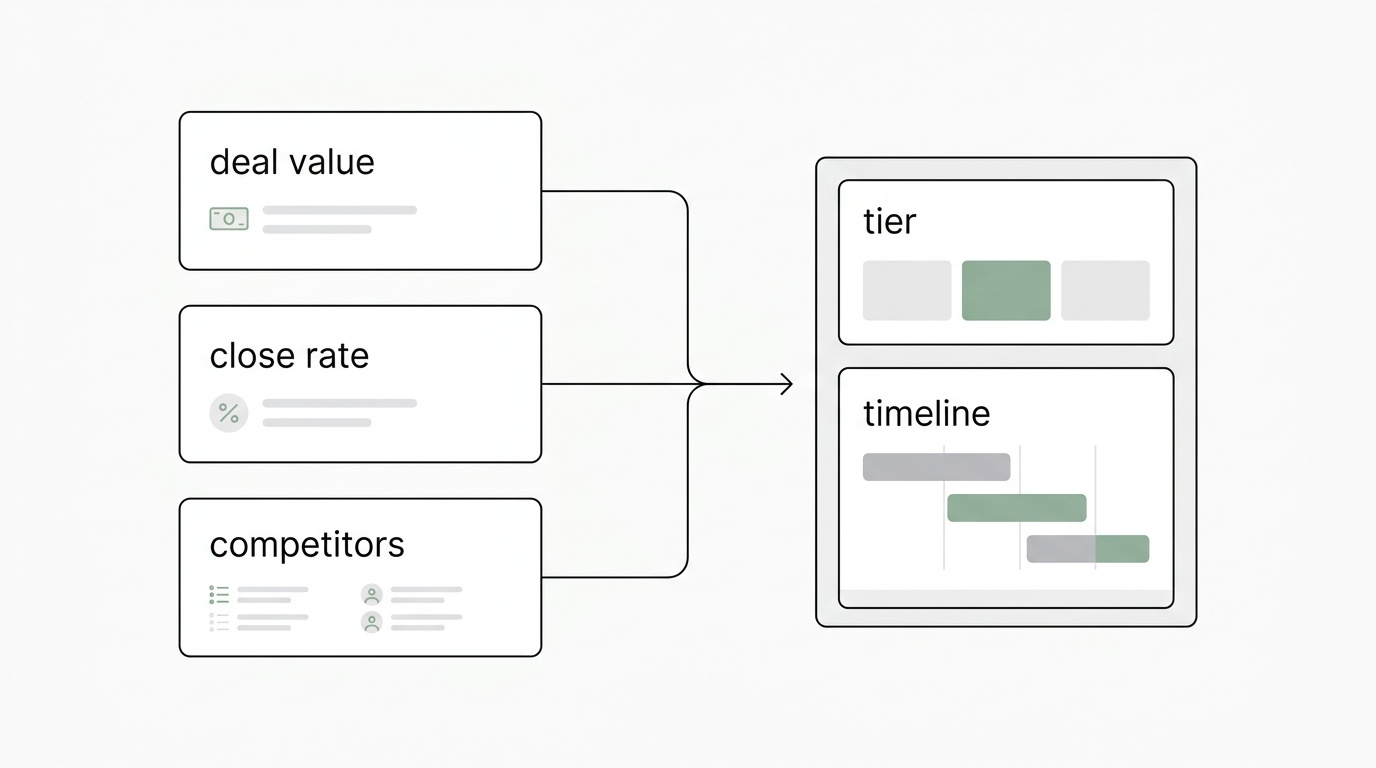
Work out how many extra customers you need each month to cover the fee:
Take your average deal value and multiply it by your gross margin to get gross profit per deal.
Divide the monthly retainer by that gross profit. The result is the number of extra deals per month needed to break even.
Divide that by your lead-to-customer close rate to get the number of extra leads you need.
Use gross profit rather than revenue. It’s the more honest number, and it’s the one a finance-minded boss will ask about anyway.
A worked example you can take to your boss
These figures are illustrative, so swap in your own. Say your retainer is $2,500 a month, your average deal is worth $4,000 and your gross margin is 40%. Gross profit per deal is $1,600.
$2,500 divided by $1,600 is about 1.6, so you need roughly two extra deals a month to break even. If you close 25% of leads, that’s about six or seven extra qualified leads a month from organic search. Anything beyond that is profit.
Now ask the practical question: is that realistic for your market? If you already get a steady flow of inquiries and organic search currently brings a trickle, the answer is often yes. Lead quality matters too. Organic visitors search with intent, which is one reason I push clients to judge SEO on pipeline and revenue instead of traffic.
How long until SEO pays for itself?
SEO is slower than paid ads, and your boss should hear that from you first. In my experience, early movement in rankings and impressions shows within the first few months, but meaningful lead volume usually arrives later. Payback tends to land in the second half of the first year in lower-competition markets and takes longer in competitive ones.
The upside is that the cost doesn’t reset to zero when you stop spending, the way ad budgets do. Content and authority keep working, though they decay without maintenance. Ask any provider for a month-by-month expectation of milestones, and hold them to it.
Red flags in SEO pricing: what a cheap quote is really telling you
Price alone doesn’t tell you whether a quote is good, but some patterns reliably point to trouble.
A guaranteed ranking or “page one in 30 days.” No one controls Google.
No audit before the quote. If they haven’t looked at your site, the price is a template.
A deliverables list made of vague verbs like “optimize” and “improve” with no quantities.
Link packages sold by count (for example, “50 links a month”) with no mention of where they come from.
Long lock-in contracts with no clear exit and no clarity on who owns your content and accounts.
Reports that show rankings and traffic but never leads or revenue.
When I review a quote a prospect got elsewhere, the cheap ones almost always fail the first two checks. Ask what the price includes, how long you’re tied in, how you leave and who owns the work.
What a scoped SEO proposal from Growth Rocket looks like
We don’t hand out a price list, because the honest answer to “how much?” depends on your site, your market and your deal economics. We scope it instead, so you can see what you’re buying and what we expect it to produce.
What we include before we quote a number
A Growth Rocket proposal has four parts:
A short audit of your site, your search visibility and the competitors who currently take your customers
A prioritized roadmap that puts the highest-return work first and explains why
A deliverables list for the monthly fee, with quantities for content, links and technical fixes
A lead-impact projection built on your average deal value and close rate, using the break-even formula above, so you can see the fee against the expected return
If SEO isn’t the right channel for your business yet, we’ll tell you. I’d rather lose a sale than take on a client whose numbers don’t work.
Book a strategy call
If you want a number grounded in your own market, book a strategy call with Growth Rocket. Bring your average deal value, your rough close rate and your top three competitors. We’ll tell you which tier fits, what it should deliver and how long we expect it to take.
The right choice in the SEO agency vs in-house vs freelancer decision depends on four things: your team size, your lead goals, how fast you need results and how many hours a month...
For in-house vs agency AI search optimization, the honest answer is a split. A generalist on your team can own content restructuring, review and listing profiles, and basic...
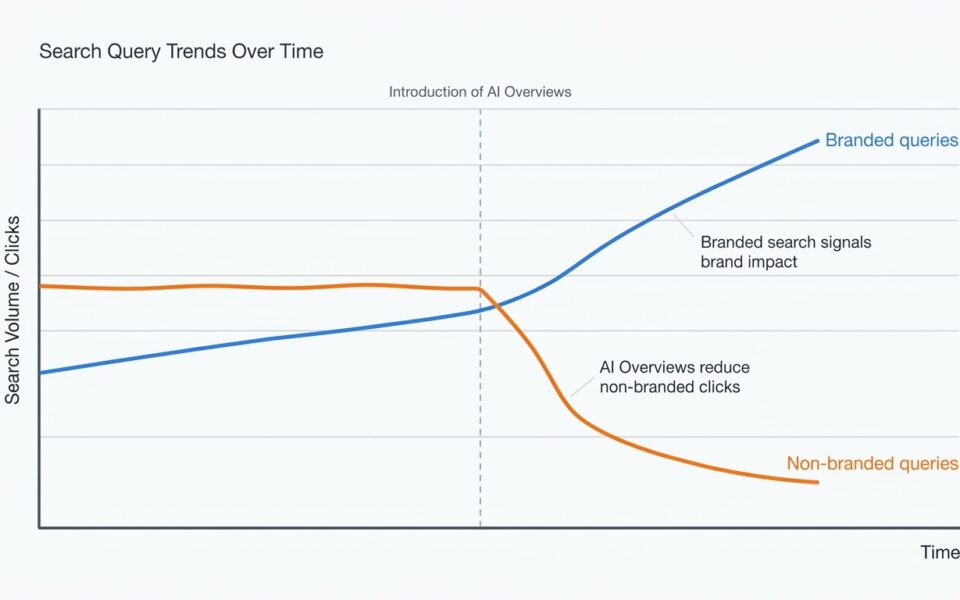
A branded search KPI tracks how many people search for your company by name, and it is the simplest way to see whether AI search is helping your brand. If more people type your...