How Long Does AEO and GEO Take to Show Results? A Realistic Timeline for Small Businesses
Most small businesses see their first GEO and AEO signals within 4 to 8 weeks. Consistent AI citations on competitive buyer questions usually take 3 to 6 months, and sometimes...
Most small businesses see their first GEO and AEO signals within 4 to 8 weeks. Consistent AI citations on competitive buyer questions usually take 3 to 6 months, and sometimes longer. Technical fixes can register in days, but earning trust from AI engines is the slow part.
I’ve spent almost two decades in search, and the expectations gap is the biggest source of friction I see between agencies and clients. Below is a month-by-month view of what changes, what slows it down, and how to report progress before a single lead arrives.
The short answer: how long does GEO take to work
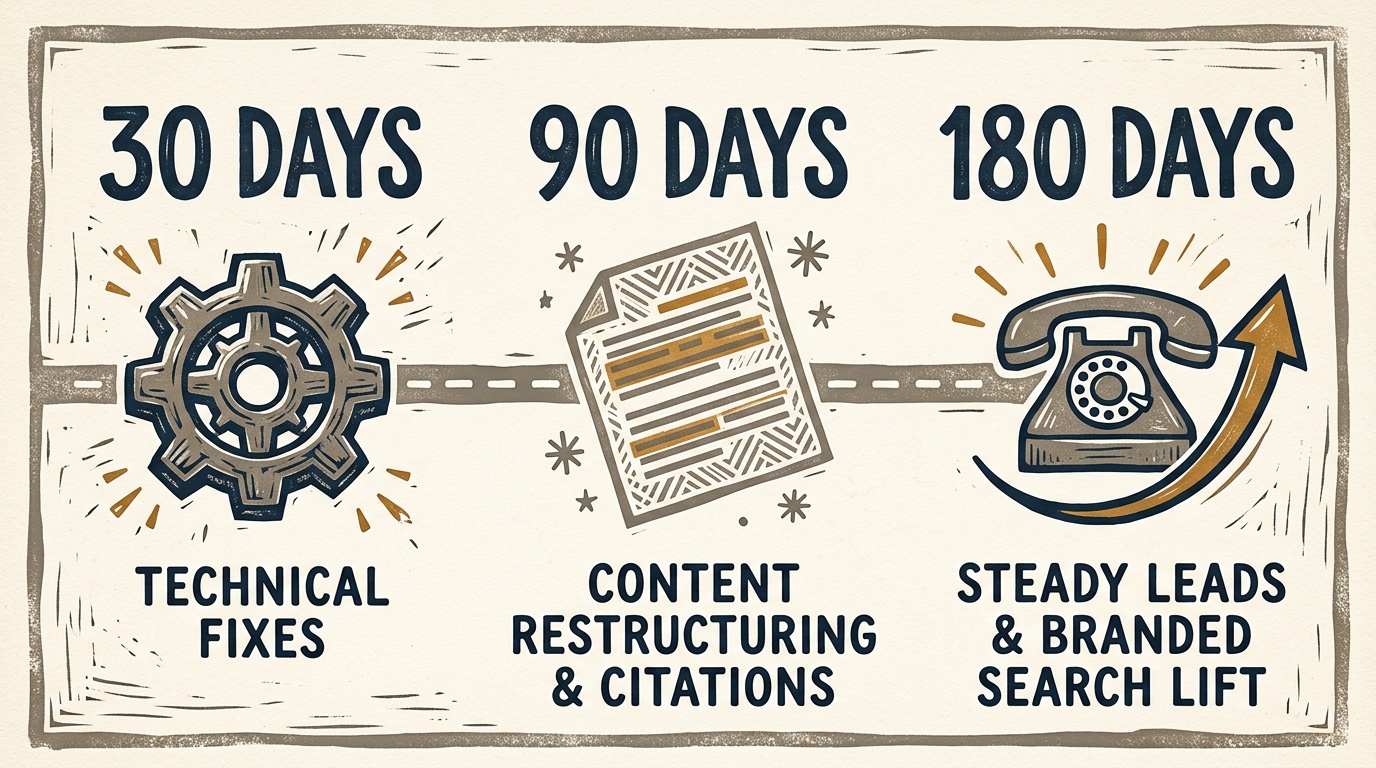
Plan on three phases. In the first 30 days you fix access and set a baseline. By day 90 your content is restructured and the first citations appear, though they are patchy. By day 180 you should see steadier visibility, a lift in branded search and the first leads that trace back to AI tools. AEO guidance from Wellows puts short-term wins such as content restructuring, schema and answer eligibility at 4 to 8 weeks, with consistent citation building after that.
Why honest timelines are ranges, not dates
Published estimates run from about three weeks to nine months, and no shared measurement method sits behind them. That spread makes sense once you see that GEO is several kinds of work on different clocks. A crawler fix takes days. A new page waits to be crawled. A third-party mention waits on a publisher. Trust builds slowly on top of all of it.
So any agency quoting you a single date is selling. I would rather give you an AEO results timeline built from ranges and checkpoints.
Leading indicators vs lagging indicators: what “results” actually means
Leading indicators move first and tell you the work is landing. Lagging indicators move last and pay the bills.
Leading: crawler access, indexing, mention rate on tracked prompts, first citations, branded search lift.
Lagging: referral traffic from AI tools, form fills, calls, revenue.
If you judge month two by revenue, you will call a working program a failure. Judge it by the leading list and the picture is much clearer.
Days 1–30: technical fixes, baselines and quick wins
Unblocking AI crawlers and getting indexed
Start with access. Check your robots.txt file and any firewall or CDN rules, because I regularly find security settings that block AI bots without anyone on the client side knowing. Then confirm your key pages are in your sitemap, load their main content without heavy scripts and are indexed by the search engines AI tools pull from.
This is the one area where results can show up in days. It is also the cheapest fix on the list.
Setting your baseline: prompts, mention rate and share of voice
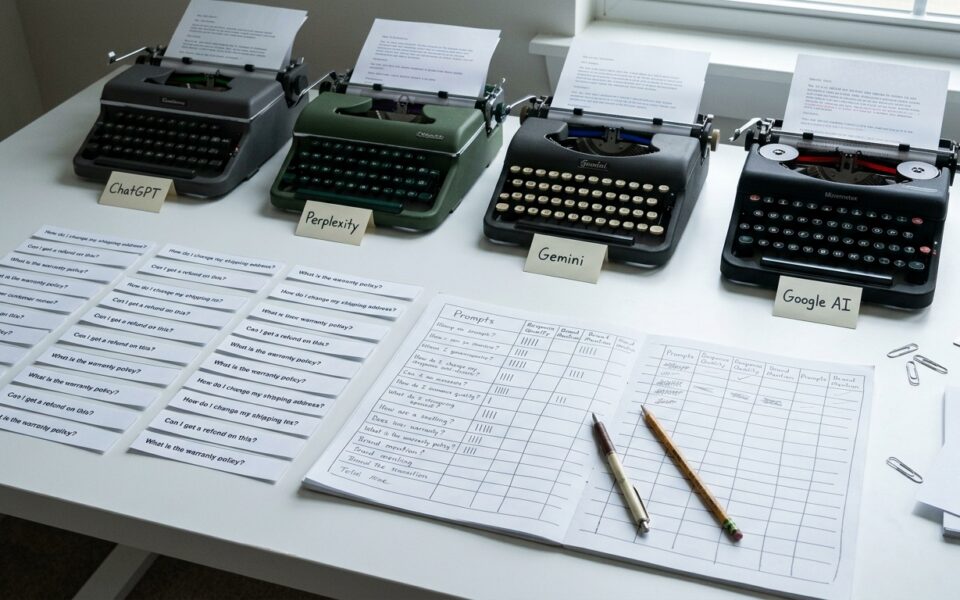
Write 20 to 30 prompts a buyer would type, and split them into branded and unbranded groups, as AirOps recommends in its brand mention framework. Run them in ChatGPT, Perplexity and Google AI Overviews. Record how often you are mentioned, how often you are cited with a link, and how you compare with two or three named competitors.
Expect a low number on unbranded prompts. That is normal, and it gives you something to measure against. Our 30-minute ChatGPT test is a quick way to build a first version of this baseline.
Days 31–90: content updates and first citations
Restructuring content so AI engines can extract and cite it
Rework the pages closest to revenue. Lead each page with a direct answer, use clear headings, keep paragraphs short and state facts plainly enough that a model can lift them. Original data and expert analysis outperform generic summaries when it comes to being cited, so add your own numbers and examples where you have them.
Structured comparison content such as tables, lists and pros-and-cons breakdowns earns more than its share of citations. If you sell something people compare, build that page.
Building third-party mentions and entity consistency
AI engines learn who you are from what other sites say about you. HubSpot notes that unlinked brand mentions in credible sources help AI systems tie your brand to a topic, so a mention without a backlink still counts.
Go after the places your buyers already read: industry directories, local press, associations, “best of” roundups. Keep your business name, description and category identical everywhere.
What your first citations will look like (and why they’ll be inconsistent)
If you are asking when ChatGPT will cite your site, the honest answer is that you will probably see a first citation on a narrow, specific prompt within the first couple of months. It may vanish the next day. AI answers change from run to run, so one appearance proves little and one absence proves less.
In my experience with client campaigns, early citations tend to land on branded and long-tail prompts first. Treat them as proof the plumbing works, not as the result.
Days 91–180: consistent visibility, branded search lift and leads
From sporadic mentions to consistent citations on buyer prompts
This phase is where small businesses often get impatient. Some guidance puts meaningful changes in AI recommendation frequency at three to six months, and other sources say consistent citations in major AI answers can take 6 to 12 months. That range matches what I’ve seen.
So how long for AI search visibility to feel real? For narrow topics in a local or niche market, often by month four to six. For competitive categories, plan on longer, because you are competing with sites that already have the authority.
Branded search lift and AI referral traffic
People who see your name in an AI answer often search for you directly afterward. Watch branded queries in Google Search Console and direct traffic in analytics. Also watch referrals from chatgpt.com and perplexity.ai.
The volume will be small. A rising line matters more than the absolute number at this stage.
When leads arrive: why AI traffic converts better than organic
Small volume can still produce good leads. Ahrefs reported that AI search was 0.5% of its traffic but produced 12.1% of signups, about 23 times the conversion rate of its organic visitors. A Seer Interactive case study found 15.9% of ChatGPT referral traffic converted, against 1.76% for Google organic.
Those are individual companies, so do not promise yourself the same ratio. The pattern is still useful: visitors who arrive after an AI recommendation have often done much of their research already.
GEO expectations for small businesses: what slows results down
Thin or generic content with nothing to cite
If your service pages say what every competitor’s pages say, an AI engine has no reason to pick yours. No amount of schema fixes that. Add specifics: pricing logic, process steps, local data, named case outcomes you can verify.
Weak third-party footprint and few brand mentions
A site that only talks about itself is a thin signal. When I audit stalled programs, the missing piece is usually outside the website: few directory listings, no roundup inclusions, no press. Fixing it takes outreach and patience, which is why this phase stretches the timeline.
Low domain trust and a new or neglected site
New domains and sites with years of neglect start behind. AI engines lean on the same authority signals that drive organic rankings, so a site with weak SEO fundamentals will wait longer. Plan for the upper end of the ranges if that describes you.
How to report progress before revenue appears
The monthly metrics that prove momentum
Use a short scorecard built from the KPI categories Adobe outlines: AI visibility, brand mentions, citations and referral traffic. In practice, I’d track these every month:
Mention rate and citation rate on your tracked prompts, split into branded and unbranded.
Share of voice against your named competitors.
Branded search impressions and clicks.
AI referral sessions and the leads they produce.
New third-party mentions earned that month.
Accounting for the AI attribution gap
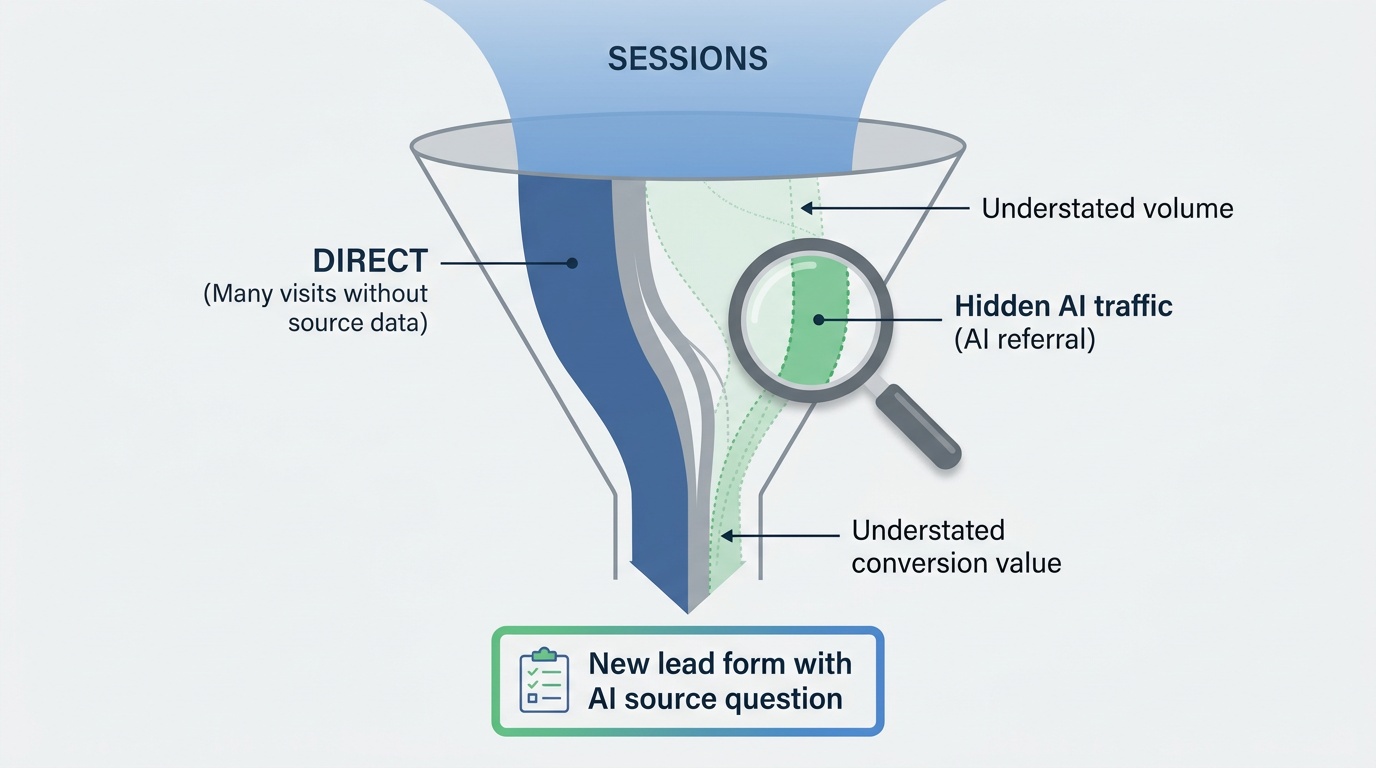
AI referral traffic is undercounted in most analytics setups, because many visits arrive without clean referrer data and get filed under direct. Judge the channel on sessions alone and you understate it twice: once on volume and once on conversion value. Ask new leads how they found you, and add a “ChatGPT or other AI tool” option to the form.
Setting stakeholder expectations at 30, 90 and 180 days
Tell your boss or board what to expect before the work starts, not after.
At 30 days: crawler access fixed, baseline recorded, no visible lift yet.
At 90 days: restructured pages live, third-party mentions growing, first citations appearing but inconsistent.
At 180 days: rising mention and citation rates, branded search lift, first attributable leads.
Be open that measurement in this field is still maturing. Clients trust that honesty more than a confident date.
Map this timeline to your site
Your timeline depends on your content, your third-party footprint and how much trust your domain has already earned. I can look at those three things and tell you which end of the ranges you should plan for.
Book a call with Growth Rocket and we will map the 30, 90 and 180-day milestones to your site, with the indicators we would report against each month.
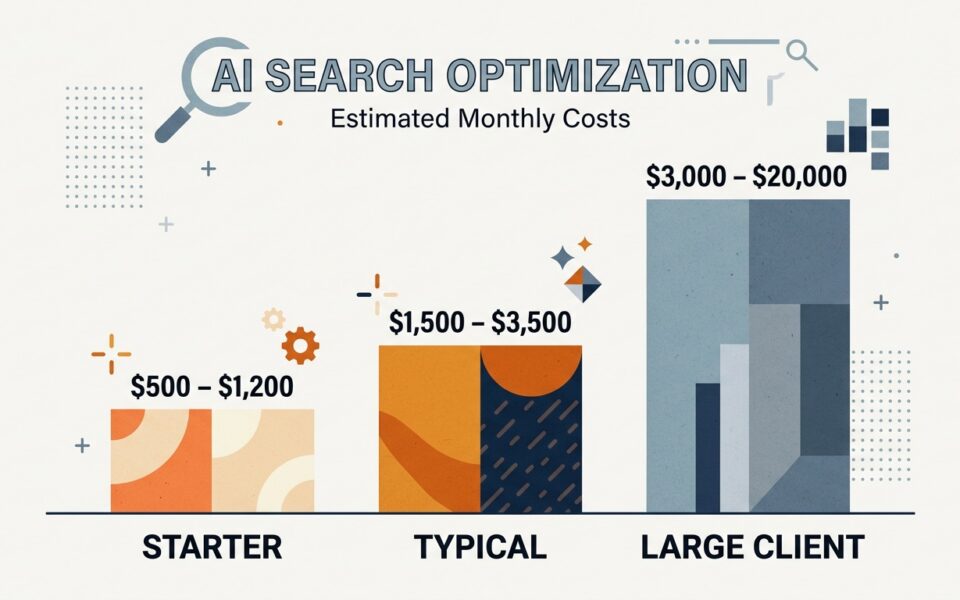
How much does AI search optimization cost a small business? The short answer Most small businesses should budget roughly $1,500 to $3,500 a month for SEO plus AI search work....
If you search "check if ChatGPT mentions my business," the answer is to ask the questions your buyers ask, repeat each one several times, and log whether your name appears. Do the...
Key Takeaways: Optimizing Average Order Value (AOV) consistently delivers faster, more measurable ROI than scaling paid traffic spend. Bundling, upsells, cross-sells, and...