Key Takeaways:
- Publishing workflow failures are one of the most common and costly operational breakdowns inside digital marketing agencies.
- Without structured systems, agencies lose time, miss deadlines, damage client relationships, and leave revenue on the table.
- The root causes are almost always process gaps, not talent gaps.
- Practical frameworks like editorial calendars, RACI matrices, and approval automation can dramatically reduce publishing errors.
- Marketing ops discipline is the connective tissue between strategy and execution, and agencies that invest in it outperform those that do not.
- AI-assisted tools are changing how agencies approach content scheduling, quality control, and multi-client publishing at scale.
Why Publishing Workflows Break Down More Than They Should
Every agency has a version of the same horror story. A blog post goes live with the wrong date. A social campaign launches without the approved copy. A client’s product announcement publishes before the embargo lifts. A page sits in draft for three weeks because nobody knew who had final sign-off. These are not edge cases. They are symptoms of a deeply common operational failure: broken publishing workflows.
After nearly two decades working inside and alongside digital marketing agencies of every size, from scrappy five-person shops to agencies managing hundreds of enterprise accounts, one thing is consistently true. The difference between agencies that scale profitably and those that constantly fight fires is almost never about the quality of their creative work. It is about the quality of their systems. Publishing workflows sit right at the center of that gap.
This article is for agency operators, marketing ops leads, and account teams who are tired of putting out the same fires every quarter. We are going to break down exactly where publishing workflows collapse, what the real cost of that breakdown looks like, and what practical systems high-performing agencies use to stay in control at scale.
The Real Cost of Poor Publishing Workflows
Before we get into solutions, let us be honest about what is actually at stake. Most agency leaders understand that workflow problems are annoying. Fewer have quantified what those problems actually cost.
Consider a mid-size digital marketing agency managing 20 active content clients. Each client averages eight published pieces of content per month across blog, social, and email. That is 160 publishing events per month. If even 10% of those events involve a rework cycle due to missed approvals, incorrect assets, or version confusion, that is 16 events per month consuming unplanned time. At a conservative estimate of two hours of rework per incident and a blended team rate of $75 per hour, that is $2,400 in unrecoverable labor cost every single month. Over a year, that is nearly $29,000 in margin erosion, before you account for client dissatisfaction and potential churn.
And churn is the real killer. Content publishing errors are highly visible to clients. Unlike a technical SEO misconfiguration that might go unnoticed for months, a post that goes live with a typo in the headline, the wrong product image, or a broken link is immediately apparent. Clients notice. They remember. And in a relationship business, perception of operational competence directly influences retention.
There is also the SEO dimension. Publishing workflows that lack proper pre-publication checklists frequently result in content going live without metadata, missing canonical tags, incorrect schema markup, or unoptimized image alt text. These are not catastrophic on a per-post basis, but they compound. An agency running clients’ SEO programs that consistently publishes technically deficient content is actively working against its own deliverables.
The Six Most Common Publishing Workflow Failures
Understanding where workflows typically break is the foundation of fixing them. Here are the six failure points that appear most frequently across agencies of all sizes.
- No single source of truth for content status. When content stages live across email threads, Slack messages, shared drives, and project management tools simultaneously, nobody has a reliable picture of what is approved, what is pending, and what is ready to publish. This is the most universal breakdown in agency publishing workflows.
- Approval chains that are undefined or inconsistently applied. Who has final sign-off on a blog post? Is it the account manager? The client’s marketing coordinator? A legal team member for regulated industries? When this is not documented and enforced, content stalls or, worse, publishes without the right eyes on it.
- Asset management chaos. Final versions of images, videos, and copy sitting in different locations, with file names like “final_v3_REALLYFINAL,” are a publishing disaster waiting to happen. Wrong assets get attached to the wrong posts constantly in agencies without centralized digital asset management.
- Calendar drift. An editorial calendar that is not actively maintained becomes decorative. When clients request changes, campaigns shift, or deadlines move, those changes need to cascade through the entire publishing schedule. Agencies that treat the calendar as a static document rather than a living operational tool are always playing catch-up.
- Handoff breakdowns between teams. The moment content moves from the copywriter to the designer to the SEO team to the account manager to the client is a moment of risk. Each handoff is an opportunity for context to be lost, feedback to be misapplied, or a piece to sit in someone’s queue without urgency attached to it.
- No pre-publication quality control checkpoint. Publishing directly from a first-approved draft without a structured technical and editorial QA step is how errors reach live URLs. A surprising number of agencies skip this step entirely when they are under deadline pressure, which is exactly when it matters most.
Building a Publishing Workflow That Actually Works
A functional publishing workflow for a digital marketing agency is not complicated in concept, but it does require deliberate design and consistent enforcement. The following framework is one that has been tested across multi-client environments and is adaptable to agencies at different stages of scale.
The workflow should move through five distinct phases: planning, creation, review and approval, pre-publication QA, and post-publication monitoring. Each phase needs defined owners, defined outputs, and a clear transition trigger to the next phase.
Phase 1: Planning. Every piece of content should begin with a brief that connects the content to a specific client objective, a target keyword or audience segment, a format, a distribution channel, and a publication date. This brief is not optional. It is the operating document for everything that follows. Agencies that skip formal briefs in favor of Slack messages and verbal alignment are setting up every downstream phase for ambiguity.
Phase 2: Creation. Writers, designers, and any other production resources should work from the brief and submit work to a defined location in the project management system, not via email, not via shared drive links dropped in a chat. The submission triggers the review phase. This is where tools like Asana, Monday.com, ClickUp, or Notion earn their keep. The tool matters less than the discipline of using it consistently.
Phase 3: Review and Approval. This phase needs a RACI matrix. That stands for Responsible, Accountable, Consulted, and Informed. For each content type and each client, the agency should have a documented answer to who is responsible for creating, who is accountable for approving, who needs to be consulted, and who simply needs to be informed when it publishes. Without this, approval processes default to whoever is loudest or most available, which is never the right system.
Phase 4: Pre-Publication QA. This is the checkpoint most agencies skip when they are busy. It should include a technical checklist and an editorial checklist. The technical checklist covers metadata completeness, URL structure, canonical tags, image optimization, schema markup, internal linking, and mobile rendering. The editorial checklist covers headline accuracy, brand voice compliance, CTA accuracy, legal or compliance requirements, and link verification. This step should be non-negotiable regardless of deadline pressure. Building it into the project timeline as a mandatory step, rather than treating it as optional polish, is what separates agencies that publish clean content consistently from those that do not.
Phase 5: Post-Publication Monitoring. Publishing is not the finish line. For SEO-focused content, indexation should be confirmed within 24 to 48 hours. Performance baselines should be logged. For paid or social content, initial engagement metrics should be monitored in the first window to catch any issues with targeting, creative, or landing page function. This step closes the loop and creates accountability for content performance, not just content delivery.
The Role of Marketing Ops in Publishing Workflow Design
The term marketing ops gets used loosely, but in the context of publishing workflows, it refers specifically to the systems, technology, documentation, and process governance that allow marketing execution to happen reliably at scale. In agencies, marketing ops is often treated as a back-office function when it should be a strategic one.
High-performing agencies invest in marketing ops not because they love process for its own sake, but because they understand that operational excellence is a competitive differentiator. When a client can see that their agency runs a clean, predictable, transparent publishing process, it builds the kind of trust that retainer relationships are built on. When an agency’s publishing workflows are chaotic, even exceptional creative work gets devalued because the experience of working with the agency is stressful.
A dedicated marketing ops function inside an agency typically owns the following publishing-related responsibilities:
- Maintaining and updating the master editorial calendar across all clients
- Owning the project management system configuration and ensuring teams actually use it
- Building and enforcing publishing checklists and QA processes
- Conducting quarterly workflow audits to identify bottlenecks and inefficiencies
- Training new team members on publishing systems and standards
- Managing integrations between content tools, CMS platforms, and reporting dashboards
For smaller agencies that cannot justify a full-time marketing ops hire, this function should still exist as a defined role responsibility, even if it is one of several responsibilities held by an operations manager or senior account lead. The mistake is treating it as nobody’s job. When publishing workflow ownership is diffused across everyone, it effectively belongs to no one.
Technology Choices That Support or Undermine Publishing Workflows
Technology is not a substitute for process, but the wrong technology stack will actively undermine even a well-designed process. Here is how high-performing agencies approach their publishing tech stack.
The core of any agency publishing workflow should include four categories of tools: project management, content collaboration, digital asset management, and CMS or scheduling. The specific tools matter less than ensuring they are integrated, consistently adopted, and mapped to the actual stages of the workflow.
- Project Management: Asana, Monday.com, ClickUp, and Notion are all capable of supporting multi-client publishing workflows. The key is building client-specific boards or spaces with standardized stage gates that mirror the five-phase workflow described earlier. Templates save enormous time when onboarding new clients.
- Content Collaboration: Google Workspace or Notion work well for copy drafts, but the file must live in the project management system’s linked record, not as a standalone document emailed back and forth. Version control discipline is non-negotiable.
- Digital Asset Management: Tools like Bynder, Brandfolder, or even a well-structured Dropbox Business setup can serve as the single source of truth for approved creative assets. Every asset used in publishing should be sourced from this system, not from individual desktops or email attachments.
- CMS and Scheduling: WordPress with an editorial plugin, HubSpot CMS, or ContentCal for social all support scheduled publishing. The important discipline is that scheduling happens only after all checklist phases are complete, using only assets pulled from the approved digital asset management system.
One area where agencies are increasingly gaining leverage is AI-assisted workflow tooling. Tools that auto-generate SEO metadata from draft content, flag readability issues before the QA phase, or suggest optimal publishing windows based on historical engagement data are now accessible at price points that make sense even for boutique agencies. The agencies that are integrating these capabilities are not replacing human judgment. They are reducing the cognitive load on their teams so that human judgment is applied where it matters most.
Multi-Client Publishing Workflows: Where Scale Creates New Risk
Managing publishing workflows for a single client is straightforward. Managing them across 15, 20, or 50 clients simultaneously introduces a category of complexity that individual client workflows do not address: cross-account collision and priority management.
Cross-account collision happens when the same team members are simultaneously responsible for high-priority publishing tasks across multiple clients, and there is no system for triaging or escalating conflicts. This leads to the quiet, invisible problem of the squeaky wheel getting the grease. Clients with more demanding account managers or louder stakeholders get publishing attention faster. Quieter clients miss deadlines. This is not a staffing problem. It is a capacity planning problem rooted in publishing workflow design.
Practical approaches to multi-client workflow management include:
- A master agency editorial calendar that overlays all client publishing schedules in one view, allowing operations leads to identify capacity crunches before they become missed deadlines.
- Client tiers with defined SLAs for publishing turnaround times. Retainer level or campaign complexity should determine how quickly content moves through the review and approval phase, and that SLA should be communicated explicitly to clients at onboarding.
- Weekly publishing audits where a designated ops team member reviews the status of every piece of content scheduled to publish in the next seven days across all active clients. Any item not at the QA stage five days before its publication date triggers an immediate escalation flag.
- Standardized client onboarding documentation that captures publishing preferences, approval contacts, brand guidelines, technical publishing requirements, and embargo or blackout dates before any content work begins.
A Real-World Example: How a Mid-Size Agency Fixed Its Publishing Chaos
Consider a digital marketing agency managing 18 clients across content marketing, SEO, and paid social. Their publishing process had grown organically over four years and consisted primarily of a shared Google Sheet used as an editorial calendar, content drafts sent as email attachments, and a Slack channel called “publishing-updates” where the team was supposed to flag when content went live. The result was predictable: missed publish dates, duplicate revisions, content going live without SEO optimization, and a client churn rate that was consistently above industry average.
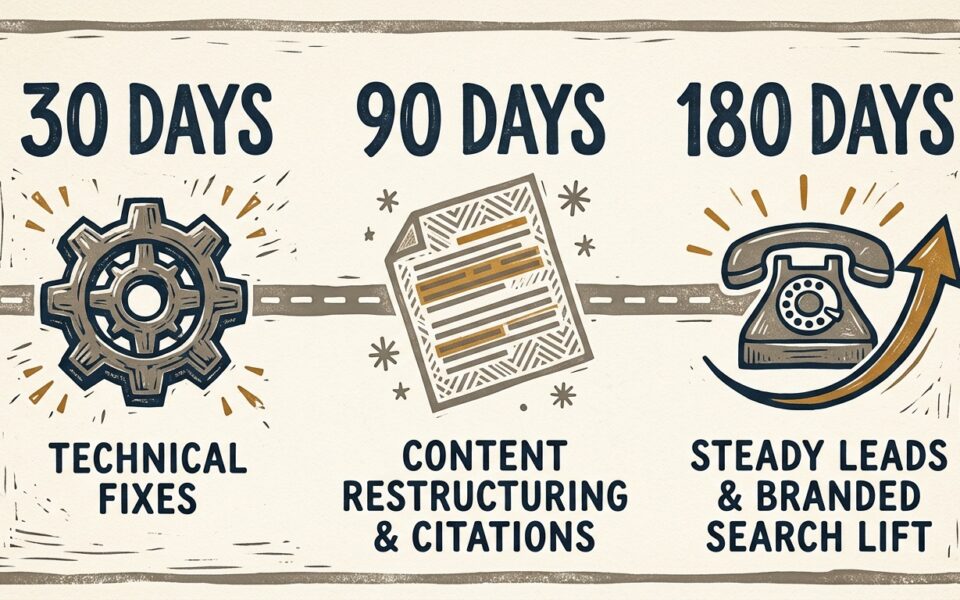
The agency’s operations lead conducted a two-week audit of every publishing event across all clients and identified four root causes: no defined approval chain, no pre-publication checklist, no single location for content status, and no capacity planning mechanism. Rather than overhauling everything simultaneously, they staged the fix over 90 days.
In the first 30 days, they migrated all client publishing workflows to Monday.com, building a standardized board template with stages for briefing, creation, internal review, client review, QA, scheduled, and published. Every content item, regardless of format, went through this board. In the second 30 days, they built a two-part QA checklist (technical and editorial) and made it a board item that had to be checked off before any item could move to the scheduled stage. In the final 30 days, they introduced a weekly 30-minute publishing audit meeting where the ops lead reviewed the status of all items due to publish in the following seven days.
Within six months of completing the rollout, their rework rate dropped by 60%, on-time publishing improved to 94% across all clients, and two clients who had been at risk of churning renewed their retainers citing improved operational communication as a primary factor in the decision.
The investment was not in new technology. They already had Monday.com. The investment was in process design, documentation, and consistent enforcement.
Practical Recommendations for Agency Leaders
If you are reading this and recognizing your own agency in the failure patterns described above, here is a prioritized action plan to start addressing your publishing workflow gaps.
- Audit before you build. Spend one week documenting your current publishing process as it actually happens, not as it is supposed to happen. Interview your account managers, writers, and designers. Map every handoff. Identify every place where the process relies on individual memory rather than documented procedure.
- Define ownership explicitly. Build a RACI matrix for your standard content types and apply it to every active client. Publishing workflow ownership must be assigned, documented, and visible to the entire team.
- Build and enforce a pre-publication checklist. Start with 10 items covering the most common error types your team produces. Make it a non-skippable stage gate in your project management system. Review and update it quarterly.
- Create a master agency editorial calendar. Even a well-maintained shared spreadsheet is better than no cross-client visibility. Ideally, this lives inside your project management tool as a filtered view across all client boards.
- Invest in marketing ops, not just creative talent. The agencies that consistently outperform on client retention are not always the ones with the best writers or designers. They are the ones whose operations are tight enough that great creative work actually reaches the audience it was built for, on time, error-free, and measurably effective.
- Review your tech stack for integration gaps. If your project management tool, CMS, and asset management system are not connected, you have manual handoff points that will always be error-prone. Evaluate automation options such as Zapier, Make, or native integrations to reduce these risks.
The Strategic Advantage of Operational Excellence
The most important thing to understand about publishing workflows is that they are not an administrative concern. They are a strategic asset. In a market where digital marketing agencies are competing fiercely for the same clients, differentiation through creative quality alone is increasingly difficult to sustain. Creative quality is table stakes at the mid-to-upper tier of the agency market.
What genuinely differentiates agencies is reliability, transparency, and the ability to execute consistently at scale without requiring heroic effort from the client to manage the relationship. That is what tight publishing workflows deliver. They reduce friction. They build trust. They allow your team’s creative and strategic capabilities to be the thing clients talk about, rather than being overshadowed by operational frustrations.
The agencies that will lead the next decade of digital marketing growth are the ones building operational infrastructure now. Not because they are bureaucratic, but because they understand that disciplined publishing workflows are what allow bold, high-impact marketing ideas to consistently reach the audience they were designed for, at the right time, in the right form, without error.
That is not a support function. That is the engine of agency performance.
Glossary of Terms
- Publishing Workflow: The structured sequence of steps, approvals, and checkpoints through which a piece of content moves from initial brief to live publication and post-publication monitoring.
- Marketing Ops (Marketing Operations): The function within a marketing organization responsible for process design, technology management, data governance, and operational systems that enable marketing execution at scale.
- RACI Matrix: A responsibility assignment framework where each task or deliverable is assigned to individuals who are Responsible (doing the work), Accountable (owning the outcome), Consulted (providing input), or Informed (notified of completion).
- Editorial Calendar: A planning document or system that maps content topics, formats, owners, and publication dates across a defined time period, used to coordinate and manage publishing schedules.
- Digital Asset Management (DAM): A system or platform used to store, organize, and retrieve approved digital files such as images, videos, and brand assets for use in content production and publishing.
- Pre-Publication QA (Quality Assurance): A structured review checkpoint conducted before content goes live, covering both technical elements (metadata, URL structure, schema) and editorial elements (copy accuracy, brand compliance, link verification).
- Stage Gate: A defined checkpoint in a workflow where a deliverable must meet specific criteria before it can advance to the next phase, used to enforce process discipline and reduce errors.
- SLA (Service Level Agreement): A documented commitment between an agency and client defining expected turnaround times, quality standards, and performance benchmarks for specific deliverables.
- Cross-Account Collision: A capacity management problem that occurs when the same agency team members are simultaneously responsible for urgent publishing tasks across multiple clients with conflicting timelines.
- CMS (Content Management System): A software platform such as WordPress or HubSpot used to create, manage, schedule, and publish digital content without requiring direct code editing.
- Schema Markup: Structured data code added to a web page to help search engines understand and display content more accurately in search results, including rich snippets and knowledge panels.
- Canonical Tag: An HTML element that tells search engines which version of a URL is the authoritative one, used to prevent duplicate content issues that can negatively impact SEO performance.
- Retainer: A recurring contractual arrangement where a client pays an agency a fixed monthly fee in exchange for an agreed scope of ongoing services.
- Generative Engine Optimization (GEO): The practice of optimizing content to be discovered, cited, and surfaced by AI-powered generative search engines such as Google SGE, ChatGPT, and Perplexity.
Further Reading