Key Takeaways:
- Zero-click searches now account for over 65% of Google queries, fundamentally reshaping how users consume information
- Traditional SEO metrics like click-through rates are becoming less relevant as AI-powered search results provide immediate answers
- Brands must optimize for featured snippets, knowledge panels, and AI training data to maintain search visibility
- Content strategy needs to shift from click-baiting to value-driven, structured information that feeds AI systems
- Businesses ignoring zero-click optimization risk becoming invisible in an AI-first search landscape
The digital marketing landscape is experiencing a seismic shift that most brands are dangerously unprepared for. While marketers obsess over click-through rates and traditional conversion funnels, a quiet revolution is dismantling the very foundation of search-driven customer acquisition. The era of zero-click optimization isn’t coming – it’s already here, and the hidden cost of ignoring this transformation could be the death knell for your brand’s discoverability.
The Death of the Click Economy
Let’s confront an uncomfortable truth: the click is dying. Recent data shows that over 65% of Google searches now end without a single click to an external website. This isn’t a temporary trend or a minor algorithmic adjustment – it’s the natural evolution of search behavior in an AI-dominated ecosystem. Users are getting their answers directly from search results, voice assistants, and AI chatbots without ever visiting your carefully optimized landing pages.
The traditional SEO playbook, built on the premise of driving traffic to owned properties, is becoming increasingly obsolete. We’re witnessing the emergence of what I call “ambient search” – a paradigm where information is consumed without conscious navigation. Users ask Siri about restaurant recommendations, query ChatGPT for technical specifications, and rely on Google’s featured snippets for quick answers. In this new reality, your brand’s ability to capture attention happens entirely within third-party AI systems.
The hidden cost here isn’t just lost traffic – it’s lost relevance. Brands that continue to optimize solely for traditional click-through metrics are essentially optimizing for a shrinking segment of search behavior. They’re fighting yesterday’s war while tomorrow’s battlefield is being redrawn by algorithms they don’t understand.
AI Systems as the New Gatekeepers
The most profound shift in modern search isn’t technological – it’s behavioral. AI systems have become the primary intermediaries between brands and consumers, fundamentally altering the customer discovery process. When someone asks Claude about project management tools or queries Perplexity about industry trends, these AI systems synthesize information from countless sources to provide a single, authoritative response.
Here’s where most marketers miss the mark: they’re still thinking about AI as just another search engine to game. In reality, AI systems are knowledge synthesizers that evaluate, combine, and recontextualize information in ways that traditional SEO tactics can’t influence. The cost of ignoring this shift is profound – brands become invisible not because they lack quality content, but because their content isn’t structured for AI consumption.
Consider this scenario: a potential customer researches your industry through an AI assistant. The AI references your competitor’s white paper because it contains properly structured data and clear, factual statements, while your flashy, keyword-stuffed content gets ignored. You’ve lost a customer before they even knew your brand existed. This is the zero-click cost – invisible but devastating.
The Vanishing Middle Funnel
Traditional marketing funnels assume a linear progression from awareness to consideration to decision. Zero-click optimization challenges this entire framework by collapsing the middle funnel. When AI systems provide comprehensive answers that include product comparisons, pricing information, and user reviews, they’re essentially compressing the entire customer journey into a single interaction.
Smart brands are recognizing this compression and adapting their content strategies accordingly. Instead of creating separate assets for each funnel stage, they’re developing comprehensive, authoritative content that serves multiple intentions simultaneously. This approach requires a fundamental rethinking of content architecture and information hierarchy.
The businesses that will thrive in this environment are those that can provide immediate value without requiring clicks. They understand that influence in the AI era comes from being the authoritative source that AI systems reference, not from driving traffic to their own properties.
Actionable Strategies for Zero-Click Dominance
Adapting to zero-click search requires specific, implementable tactics that go far beyond traditional SEO optimization. Here are the strategies that forward-thinking brands are using to maintain relevance:

Structured Data Optimization
AI systems rely heavily on structured data to understand and categorize content. Implement comprehensive schema markup across your website, focusing on:
- FAQ schemas for common industry questions
- HowTo schemas for process-driven content
- Product schemas with detailed specifications
- Organization schemas for brand entity establishment
- Review schemas for social proof integration
Example implementation: Instead of writing “Our software helps businesses manage projects,” structure it as “ProjectManagementSoftware: Increases team productivity by 40% through automated task tracking and real-time collaboration features.”
Entity-First Content Creation
AI systems think in entities and relationships rather than keywords. Develop content that clearly establishes your brand as an authoritative entity within your industry:
- Create comprehensive topic clusters around your core expertise
- Establish clear relationships between concepts, products, and outcomes
- Use consistent terminology and definitions across all content
- Develop authoritative glossaries and resource libraries
- Maintain updated knowledge bases with factual, verifiable information
Featured Snippet Optimization
Featured snippets remain one of the most reliable ways to capture zero-click attention. Optimize specifically for snippet formats:
- Answer questions concisely within 40-60 words
- Use numbered lists for process explanations
- Create comparison tables for product evaluations
- Provide clear definitions for industry terms
- Structure content with descriptive subheadings
AI Training Data Optimization
Position your content to become training data for AI systems by ensuring it meets their quality criteria:
- Publish factual, well-sourced content with clear citations
- Maintain consistent brand voice and messaging
- Create evergreen content that remains accurate over time
- Develop comprehensive resource pages that AI systems can reference
- Use clear, unambiguous language that AI can easily parse
Measuring Success in a Post-Click World
The metrics that defined SEO success are becoming irrelevant. Click-through rates, bounce rates, and session duration tell an incomplete story when most brand interactions happen outside your owned properties. Smart marketers are developing new measurement frameworks that account for zero-click impact:
| Traditional Metrics |
Zero-Click Metrics |
Business Impact |
| Click-through Rate |
Featured Snippet Capture Rate |
Brand Authority Establishment |
| Organic Traffic Volume |
AI Citation Frequency |
Thought Leadership Recognition |
| Bounce Rate |
Knowledge Panel Ownership |
Entity Recognition Strength |
| Session Duration |
Voice Search Result Frequency |
Conversational Discovery Rate |
| Page Views |
Brand Mention Context Quality |
Reputation Management Success |
The Compound Effect of Negligence
The hidden cost of ignoring zero-click optimization compounds over time. Every day your competitors optimize for AI discoverability while you focus solely on traditional metrics, they gain incremental advantages that become increasingly difficult to overcome. AI systems learn and reinforce patterns – if your brand isn’t part of their training data today, you’ll be exponentially less likely to appear in their responses tomorrow.
This creates what I call the “invisibility spiral.” Brands that aren’t optimized for AI citation get referenced less frequently, which reduces their authority signals, which further decreases their likelihood of future citations. Breaking out of this spiral requires immediate, strategic intervention.
The businesses winning in this environment understand that zero-click optimization isn’t about gaming AI systems – it’s about becoming genuinely useful to them. They’re creating content that AI systems want to reference because it’s accurate, comprehensive, and valuable to users.
ChatGPT and Conversational AI Response Optimization
Conversational AI platforms like ChatGPT create entirely new optimization challenges that traditional SEO frameworks cannot address effectively. These platforms prioritize authoritative, well-structured information that can be seamlessly integrated into conversational contexts.
Unlike search engines that rank pages, conversational AI systems evaluate information quality, source credibility, and contextual relevance to generate responses that may combine insights from multiple sources. Brands cannot “rank” in ChatGPT responses – they can only position themselves as authoritative sources worthy of citation and reference.
Optimization strategies focus on becoming the definitive source for specific topics rather than competing for broad keyword visibility. This requires deep specialization and comprehensive coverage that establishes clear expertise boundaries.
Practical tactics include:
- Authoritative content depth: Create resources so comprehensive that AI systems consistently reference them as primary sources for specific topics
- Technical accuracy verification: Ensure all technical claims can withstand AI fact-checking and cross-verification processes
- Citation-worthy formatting: Structure content with clear attribution, data sources, and expert credentials that AI systems can reference confidently
- Conversational language integration: Write content that translates effectively into conversational contexts without losing meaning or authority
- Update frequency optimization: Maintain content freshness that keeps information current with rapidly evolving topics
For enterprise e-commerce brands, ChatGPT optimization means ensuring product information, technical specifications, and usage guidance are accurate, comprehensive, and regularly updated. When customers ask AI assistants for product recommendations or comparisons, brands want their products mentioned with accurate, compelling information.
Future-Proofing Your Content Strategy
The shift toward zero-click search is accelerating, and early indicators suggest we’re heading toward an even more AI-mediated search experience. Brands that adapt now will establish competitive moats that become increasingly difficult for competitors to breach.
Future-ready content strategies focus on becoming indispensable information sources rather than traffic-driving mechanisms. This means creating content that serves users’ immediate needs while establishing your brand as the authoritative source within your domain.
Consider developing:
- Comprehensive industry databases that AI systems can reference
- Real-time data feeds that provide current information
- Expert opinion archives that establish thought leadership
- Technical specification libraries for product categories
- Historical trend analyses that provide context for current events
Implementation Roadmap
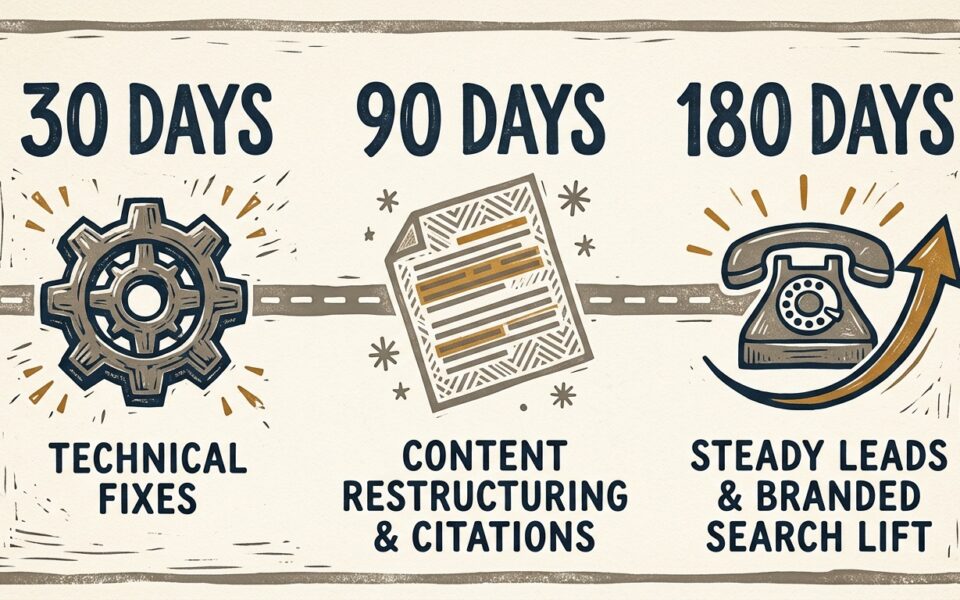
Transitioning to zero-click optimization requires systematic implementation. Here’s a practical roadmap for businesses ready to make this shift:
Phase 1: Assessment and Foundation (Weeks 1-4)
- Audit current content for AI-friendliness and structured data implementation
- Identify key topics where your brand should be the authoritative source
- Analyze competitor zero-click performance and featured snippet capture
- Establish baseline measurements for new zero-click metrics
Phase 2: Content Restructuring (Weeks 5-12)
- Implement comprehensive structured data markup across priority pages
- Redesign content to answer specific questions concisely
- Create entity-focused content clusters around core business topics
- Develop FAQ sections optimized for voice search and AI queries
Phase 3: Authority Building (Weeks 13-24)
- Publish comprehensive resource guides that AI systems can reference
- Establish consistent brand entity signals across all digital properties
- Create original research and data that becomes citation-worthy
- Monitor and optimize for featured snippet capture opportunities
The Urgency of Action
The window for easy zero-click optimization is closing rapidly. As more businesses recognize the importance of AI-first content strategies, competition for AI citation opportunities will intensify dramatically. The brands that establish authority now, while the landscape is still developing, will benefit from compound advantages as AI systems mature and solidify their reference patterns.
The hidden cost of ignoring zero-click optimization isn’t just about losing current opportunities – it’s about forfeiting your future relevance in an AI-dominated marketplace. Every day spent optimizing for yesterday’s search behavior is a day your competitors gain ground in tomorrow’s reality.
The choice is stark: adapt to zero-click search patterns now while you can still influence AI training data, or risk becoming invisible in the search ecosystem that’s already emerging around you. The cost of action pales in comparison to the cost of irrelevance.
Smart marketers aren’t waiting for definitive proof or industry consensus. They’re recognizing that zero-click optimization is the new competitive battleground and positioning their brands accordingly. The question isn’t whether zero-click search will dominate – it’s whether your brand will be visible when it does.
Glossary of Terms
- Zero-Click Search: Search queries that are answered directly in search results without requiring users to click through to external websites
- Featured Snippets: Selected search results that appear at the top of Google search results, providing direct answers to user queries
- Entity Optimization: SEO strategy focused on establishing clear relationships between concepts, brands, and topics rather than just targeting keywords
- Structured Data: Standardized format for providing information about a page and classifying page content to help search engines understand it better
- AI Citation: When AI systems reference or mention a brand’s content as a source in their responses
- Knowledge Panel: Information box that appears on Google when searching for entities (people, places, organizations, things)
- Ambient Search: Information consumption pattern where users receive answers without conscious navigation or clicking
- Schema Markup: Code added to websites to help search engines return more informative results for users
- Voice Search Optimization: Practice of optimizing content to appear in voice search results from virtual assistants
- AI Training Data: Content that AI systems use to learn and improve their response accuracy
Further Reading