In-House vs Agency for AI Search Optimization: What to Do Yourself and When to Hire Help
For in-house vs agency AI search optimization, the honest answer is a split. A generalist on your team can own content restructuring, review and listing profiles, and basic...
For in-house vs agency AI search optimization, the honest answer is a split. A generalist on your team can own content restructuring, review and listing profiles, and basic tracking. Advanced schema, technical architecture, digital PR and prompt research usually need a specialist. I’m Mike Villar, CEO of Growth Rocket, and after almost two decades in search, this is the split I’d give a team of one to five people.
What AI search optimization includes: GEO, AEO and the task list
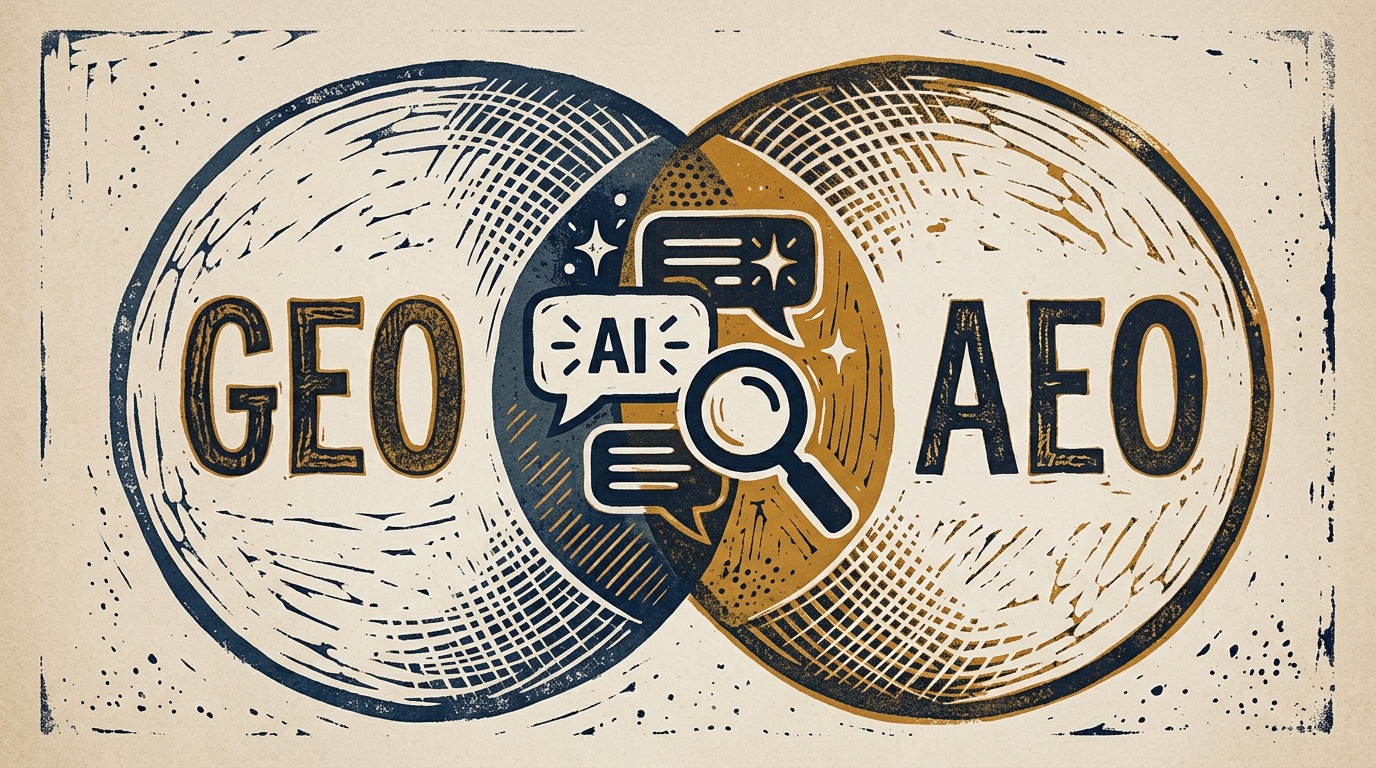
Two acronyms cover most of this work. Generative engine optimization (GEO) improves how visible and how accurately your brand appears inside AI platforms like ChatGPT and Gemini. Answer engine optimization (AEO), as HubSpot defines it, improves how often and how accurately your business shows up in AI-generated answers. In practice the two overlap so much that I treat them as one workload.
That workload breaks into six tasks:
Restructuring existing content so engines can quote it
Schema and structured data
Review and listing profiles
Digital PR and third-party mentions
Tracking and measurement
Technical fixes and site architecture
Prompt research, meaning working out what your buyers actually ask AI tools, sits on top of all six. The skills these tasks need are very different, which is why one “hire or not” answer doesn’t work.
In-house vs agency AI search optimization: how the decision changed
The classic SEO debate is about control, cost and expertise. A Forbes Business Council piece frames the AI-era version the same way: a balancing act among those factors. That framing still holds. Three things make the SEO in-house or outsource call harder now.
First, the work reaches beyond your website. Engines pull from review sites, directories, publications and forums, so a good share of the job happens on properties you don’t control. Second, feedback is slower and murkier than a rank tracker. Third, the field moves fast, and a generalist who is also running email and events rarely has time to keep up.
Working with Growth Rocket’s clients, I’ve seen that none of this makes agencies mandatory. It means each task needs its own answer.
What it costs: in-house team vs agency vs hybrid
I won’t quote dollar figures here. Most published cost comparisons come from vendors selling one side of the choice, and the numbers swing wildly depending on what’s included. Build your own estimate instead.
In-house: salary or a share of one, plus tools, plus the learning time before the person is effective. The learning time is the cost most teams forget.
Agency: a retainer or project fee, plus the hours your team spends briefing, reviewing and approving work.
Hybrid: your generalist keeps the cheap, repeatable tasks and you pay a specialist only for the hard ones.
For teams of one to five, hybrid is usually the lowest-risk spend, because you only buy specialist hours where a mistake is expensive.
The DIY list: AI search tasks a generalist can own
If you’re searching for DIY AEO for a small business, this is the good news. Three tasks suit a capable marketing generalist, and doing them well gets you most of the early gains. Forbes has published a small business guide to AEO that assumes owners will do this themselves, and I agree with that premise for these three.
Restructuring content so answer engines can quote it
This is editing, not engineering. Open each key page with a direct answer to the question the page targets. Use clear headings that match how people phrase questions, define terms in plain sentences, and keep paragraphs short enough to lift cleanly.
Start with the ten or so pages closest to revenue: service pages, pricing explainers, your best comparison posts. A writer with good editorial judgment can do this without any technical training. The main risk is rewriting pages that already rank, so keep a copy of the old version and watch traffic after each change.
Review and listing profiles
Engines form opinions about you from what others say, and getting that right is mostly admin. Write one short fact sheet with your company description, location, offerings and leadership. Then make every directory profile and social bio match it.
Claim profiles on the review platforms your buyers use and ask a handful of happy customers for honest reviews. Conflicting details across the web are a common reason AI tools describe a brand wrongly, and fixing them costs time, not money. Our guide on the GEO priority matrix for small teams goes further on ordering this work.
Basic AI visibility tracking and measurement
Basic tracking is a DIY job. Ahrefs offers a free AI visibility checker that shows how often ChatGPT, Gemini, Perplexity, Copilot and AI Overviews mention and cite your brand. If you want ongoing monitoring of one platform, SE Ranking’s ChatGPT visibility tracker records mentions, links and competitors over time.
Pair the tools with a simple habit. Keep a fixed list of buyer questions, run them monthly, and log whether you appear, who else does, and what the answer says about you. Consistency matters more than sophistication here.
The hire-help list: tasks that usually need a specialist
Four areas tend to go wrong when a generalist handles them alone. The cause isn’t effort. These tasks have a higher skill floor and a bigger downside when done badly.
Schema and structured data beyond the basics
A plugin can add basic Organization and Article markup, and that’s fine to do yourself. Trouble starts with nested markup, connecting entities across pages, and anything involving reviews. Google’s rules on review markup are strict, and misusing ratings schema can lead to a manual action, which is a penalty that takes real effort to reverse.
If you can’t read a JSON-LD block and spot what’s wrong with it, hand this one over. It’s a small project, not an ongoing retainer.
Technical fixes and site architecture
Crawl access, rendering, redirect chains, internal linking structure and migrations all affect whether engines can reach and understand your content. A bad fix can take pages out of search entirely. Teams with a modern CMS and a simple site can handle a lot of this, but anything involving custom builds, large page counts or a redesign deserves an experienced technical SEO.
Digital PR and third-party citations
One or two pitches a month to publications or podcasts your buyers follow is a fair DIY habit. A real digital PR program is different. It needs relationships, newsworthy angles, follow-up discipline and weeks of patient outreach, and a generalist with a full plate rarely sustains it.
From the client campaigns I’ve watched, mentions in respected third-party sources do more for AI visibility than almost anything done on-site. That’s exactly why a half-hearted effort wastes more than it saves.
Prompt research and AI visibility strategy
Prompt research means finding the questions buyers type into AI tools, and then working out how engines break those questions into smaller searches behind the scenes (often called query fan-out). It’s hard to do well without specialist tooling and a lot of repetition across platforms. A strategy that comes out of it tells you which pages, mentions and gaps matter most.
You can approximate it by hand using your sales calls and support tickets. For a clear picture across several platforms, though, this is where an outside team earns its fee.
Should I hire an agency for GEO? A skills, time and risk check for teams of one to five
Ask three questions about each task, not about AI search as a whole.
Skills: Has anyone on the team done this before, or can they learn it from a good guide in a week? If the answer is no, and the task touches code or site structure, lean toward help.
Time: Can a named person protect a few hours a week for it? Tasks nobody has hours for don’t get done, however simple they are.
Risk: What happens if it’s done wrong? Rewriting a blog post is reversible. A botched migration or a schema penalty isn’t, at least not quickly.
Tasks that pass all three go on your DIY list. Tasks that fail on risk go to a specialist regardless of how capable your team is. Tasks that fail only on time are worth a short, honest conversation about priorities before you spend anything.
When to hire an SEO agency: trigger points that end the debate
Teams ask me when to hire an SEO agency more than any other question on this topic. I look for these signals:
Leads or qualified traffic have been flat for two quarters even though you’ve finished the DIY list.
Nobody owns measurement, so you can’t say whether AI mentions are rising, falling or wrong.
You rank well in traditional search but rarely appear in AI-generated answers for the same topics.
A site rebuild, migration or platform change is coming, which raises the cost of technical mistakes.
Competitors show up in AI answers for your core questions and you can’t explain why.
Your one marketer is stretched thin and AI search work keeps slipping.
One trigger alone isn’t an emergency. Two or three together usually mean you’ve reached the ceiling of what a generalist can do, and more effort inside the same structure won’t change the result.
The hybrid option: splitting AI search work between your team and an agency
Most teams I work with end up here, and it suits the one-to-five-person range well. Your team keeps what depends on knowing your business: content edits, fact sheets, customer reviews, the monthly tracking log. An outside specialist takes schema, technical work, digital PR and the prompt research that drives strategy.
The handoff works when two rules are in place. One person on your side owns the relationship and the measurement, so the agency isn’t grading its own homework. And the agency’s scope is written task by task, so you know what you’re paying for and can pull a task back in-house when your team is ready.
Review the split every quarter. Tools improve, your generalist learns, and a task that needed outside help in January may be safe to own by summer.
For teams in the gray zone: what a Growth Rocket strategy call covers
Some teams don’t fit neatly on either list. Your site is mid-complexity, your marketer is strong but part-time, and you’ve hit one trigger but not three. That’s the gray zone, and a strategy call with Growth Rocket is built for it.
The call is a working conversation about your situation, not a pitch deck. We go through the same task-by-task split in this article using your site, your team’s hours and your current results. The aim is to leave you knowing which tasks to keep, which to hand off, and which triggers to watch.
If the honest answer is that you can handle it yourself for now, I’ll say so. Book a call with Growth Rocket when you want a second opinion on where your team sits.
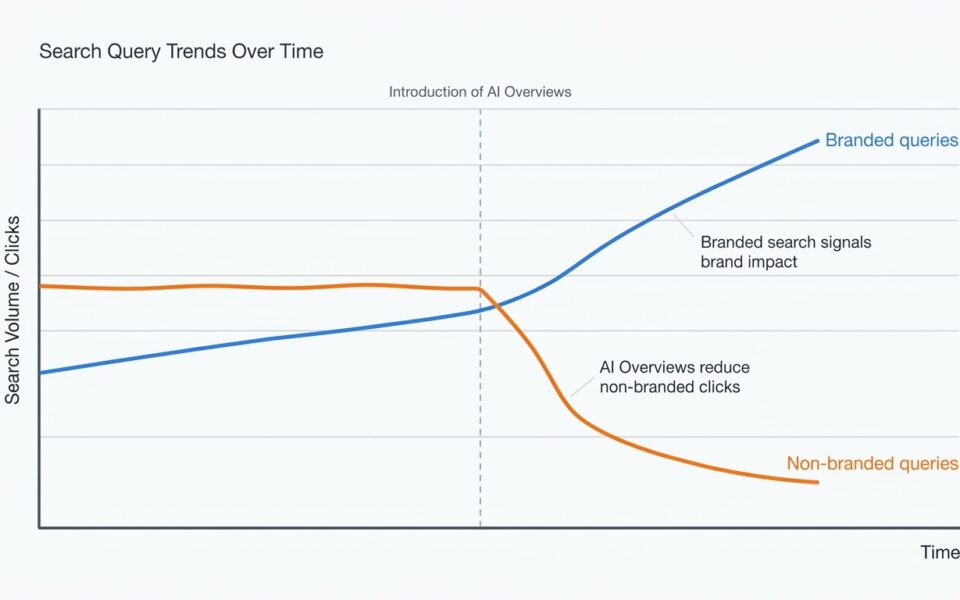
A branded search KPI tracks how many people search for your company by name, and it is the simplest way to see whether AI search is helping your brand. If more people type your...
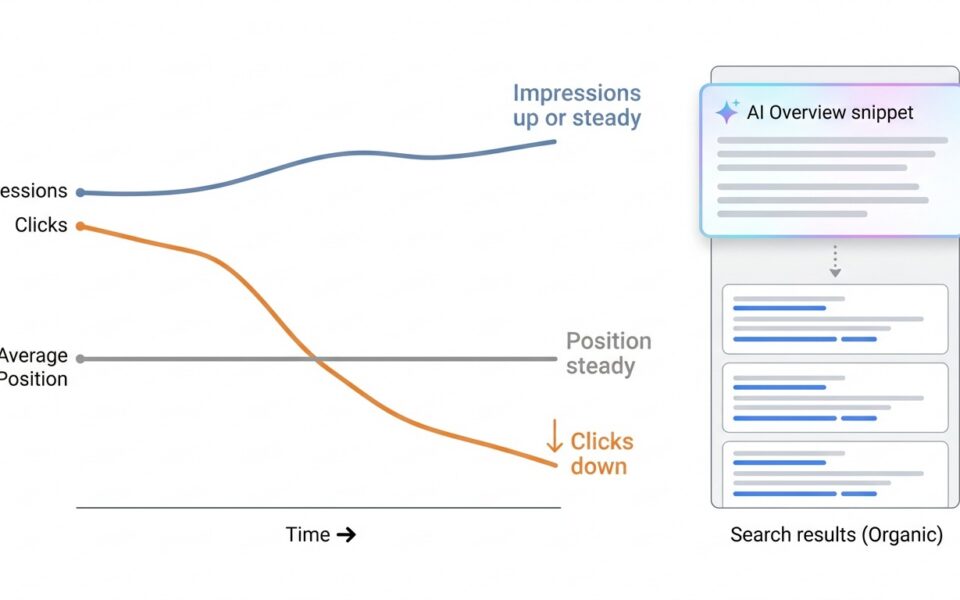
If Search Console shows clicks falling while impressions and average position hold steady, you most likely have a click-through problem, not a ranking loss. AI Overviews answer the...
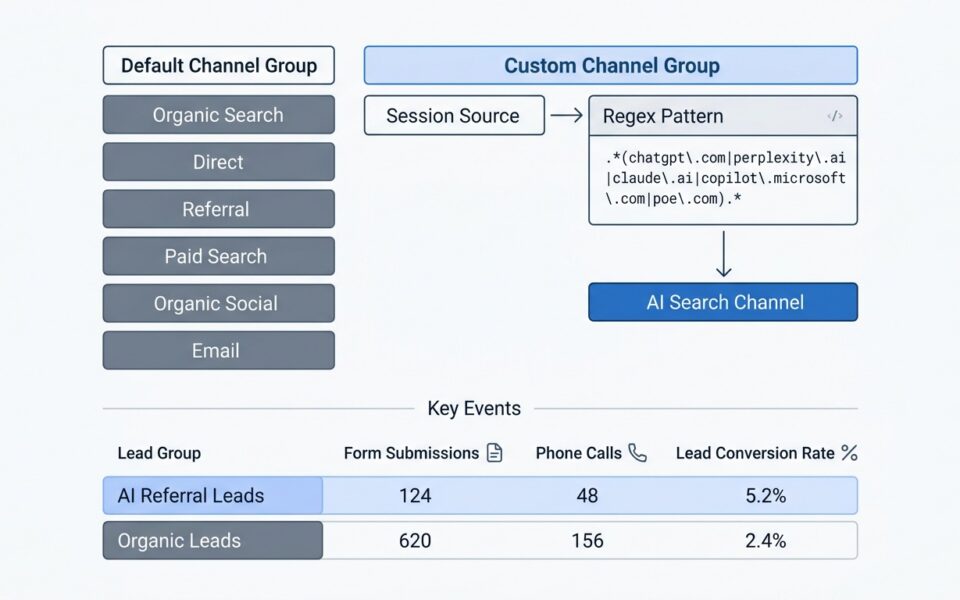
How to track ChatGPT traffic in GA4 (and tie it to leads) To track ChatGPT traffic in GA4, open Reports > Acquisition > Traffic acquisition, switch the dimension to session...