Key Takeaways:
- Copy testing is essential, but poorly structured testing programs are one of the most common and costly mistakes digital marketing agencies make.
- Testing without a hypothesis, statistical rigor, or clear decision-making criteria wastes budget and erodes client trust.
- Agencies managing multiple clients need standardized testing workflows to prevent chaos and inconsistency across accounts.
- Marketing ops infrastructure is the backbone of scalable, reliable copy testing programs.
- Knowing when to stop testing and when to act on results is just as important as running the test itself.
The Paradox of Testing More and Learning Less
There is a well-established belief in digital marketing that more testing equals better performance. On paper, this makes sense. You test headlines. You test calls to action. You test short copy against long copy, emotional angles against rational ones, urgency versus aspiration. You run the numbers, pick a winner, and move on. Rinse and repeat.
But here is the uncomfortable truth that most digital marketing agency teams are not talking about openly: copy testing, when done without structure, discipline, and operational rigor, can actively hurt performance. Not just slow it down. Actually reverse it.
After nearly two decades of working inside and alongside agencies managing multi-client portfolios, I have watched this happen more times than I can count. A well-intentioned testing culture turns into a revolving door of inconclusive experiments, polluted data, and decisions made on noise rather than signal. Clients lose confidence. Account managers lose context. And the agency loses the one thing it cannot afford to lose at scale: momentum.
This article is written for the agency side of the equation. If you are managing copy testing across five, fifteen, or fifty client accounts, the stakes are different than if you are managing a single brand. The operational complexity multiplies. The margin for error shrinks. And the need for standardized systems becomes non-negotiable.
Why Copy Testing Breaks Down in Agency Environments
Most copy testing failures are not creative failures. They are operational failures. The copy itself is usually fine. The problem is everything surrounding it: how the test was designed, how long it ran, what success looked like, who interpreted the data, and whether any of that was documented in a way that the next person on the account could actually use.
Let us be specific about the most common failure points agencies face.
- Testing without a hypothesis: A surprising number of agencies launch copy tests simply to “see what works.” This is not a testing strategy. It is creative guessing dressed up in data clothing. Without a clear hypothesis, you cannot build on results or transfer learning from one account to another.
- Underpowered tests: Running a split test on an ad set with 200 impressions per variant and calling a winner is one of the most persistent problems in paid media. The data is statistically meaningless, but the decision gets made anyway because someone needs to report progress to a client.
- Overlapping variables: Changing the headline, the body copy, and the call to action in the same test tells you something changed performance, but not what. Multivariate testing has its place, but only when traffic volumes support it and the testing design accounts for interaction effects.
- No standardized documentation: Agency teams turn over. Clients change account managers. When testing history is not captured in a centralized, retrievable format, the same experiments get run again. This is not just inefficient. It means the agency never compounds its learning.
- Client pressure overriding testing integrity: This one is particularly damaging. A client sees early data trending toward a variant and wants to cut the test short and scale. This is a rational instinct from a business owner’s perspective. It is the agency’s job to protect the integrity of the test, and many agencies are not equipped to have that conversation with authority because they have not built the systems that make that authority credible.
The Hidden Cost of Bad Copy Testing
Beyond the performance implications, sloppy copy testing has a direct impact on agency profitability. Consider the labor costs alone. A strategist who spends four hours a week managing inconclusive tests across ten clients is spending forty hours a week generating noise. Multiply that across a team of five strategists and you have two hundred hours a week burning budget on work that produces nothing actionable.
There is also the cost of the creative assets themselves. Every piece of copy that goes into a test represents writer time, review cycles, and approval workflows. When tests are poorly structured, that creative investment is wasted not because the copy was bad, but because the test could never have told you anything useful.
And then there is the client relationship cost. Clients who are sophisticated enough to understand testing will eventually notice when results are inconclusive month after month. They will start to question whether the agency actually knows what it is doing. Clients who are less sophisticated may not question the testing methodology directly, but they will feel the absence of clear narrative and directional momentum. Either way, the relationship weakens.
Copy testing done poorly is not a neutral activity. It has a measurable negative return.
What a Proper Testing Framework Actually Looks Like
The agencies that consistently drive results for clients at scale have one thing in common: they treat copy testing as a repeatable operational process, not a creative exercise. Here is what that looks like in practice.
Step One: Start With a Hypothesis, Not a Hunch
Every copy test should begin with a written hypothesis that follows a clear structure. For example: “We believe that leading with a specific outcome in the headline will outperform leading with a product feature because our audience data indicates users are in a comparison mindset at the point of ad exposure.”
This format forces three things: a directional assumption, a proposed mechanism, and a rationale grounded in audience insight. It also creates a record that can be reviewed after the test concludes regardless of the outcome.
Agencies should build hypothesis templates into their marketing ops stack. This does not need to be complex. A structured field in your project management tool or a shared Google Doc template is enough to get started.
Step Two: Define Success Before the Test Starts
What does winning look like? This sounds obvious but it is routinely skipped. Winning might mean a 15% improvement in click-through rate. It might mean a reduction in cost per lead. It might mean a higher conversion rate at a specific funnel stage. The metric and the threshold both need to be defined in advance.
Without pre-defined success criteria, results get interpreted retroactively in whatever way is most convenient. This is how confirmation bias takes root in testing programs. The team finds a metric that supports the narrative they wanted and calls the test a win.
A practical framework to implement immediately:
- Define your primary metric (the one that matters most for this test).
- Define your secondary metrics (signals that provide context but do not determine the winner).
- Set a minimum performance threshold that constitutes a meaningful win.
- Agree on a confidence level you require before acting on results (typically 90% to 95% statistical confidence for paid media).
- Set a minimum sample size before evaluating results.
Step Three: Control the Variables
Each copy test should isolate one variable wherever possible. This is not always achievable in the real world of agency timelines and client budgets, but it should be the default standard. When you test one element at a time, you build a knowledge base that is transferable. You start to understand your clients’ audiences at a structural level, not just at the level of individual campaigns.
For paid social copy testing, consider segmenting tests by these isolated elements:
- Primary headline angle (outcome-based vs. feature-based vs. social proof-based)
- Call to action language (action-oriented vs. benefit-oriented)
- Opening hook structure (question vs. statement vs. statistic)
- Copy length (concise vs. expanded)
- Tone (conversational vs. authoritative)
Each of these deserves its own dedicated testing cycle, not a simultaneous comparison of all of them at once.

Step Four: Let the Data Breathe
One of the most disciplined things an agency can do for its clients is resist the pressure to call tests early. This requires internal communication protocols and client education built into the account management process.
For most paid media environments, a copy test should run long enough to reach statistical significance and account for at least one full purchase or consideration cycle. For many B2C clients, that is a minimum of seven days. For B2B or high-consideration purchases, it may be three to four weeks.
Agencies should document this expectation in their onboarding materials and revisit it at the start of any new testing cycle. When clients understand why tests take time, they are far less likely to push for premature conclusions.
Building Scalable Marketing Ops for Copy Testing
Marketing ops is the layer of infrastructure that makes copy testing scalable across a multi-client agency. Without it, every account operates in a silo and the agency never accumulates institutional knowledge.
Here are the operational components every agency should have in place:
- A centralized test log: A shared document or database that records every test run across all accounts, including the hypothesis, the variables tested, the duration, the results, and the action taken. Tools like Notion, Airtable, or even a well-structured Google Sheet can serve this purpose.
- A copy testing calendar: Testing should be sequenced, not spontaneous. Build a 90-day testing roadmap for each client that sequences what gets tested in what order, based on funnel stage and campaign priority.
- Standardized reporting templates: Test results should be reported in a consistent format so that any team member can read a result and immediately understand what was tested, what happened, and what comes next.
- Cross-account learning sessions: Schedule monthly or quarterly internal reviews where strategists share testing findings across client portfolios. Patterns that emerge across industries, audience types, or funnel stages are some of the most valuable intellectual property an agency can develop.
- A creative brief that includes testing intent: Every creative brief should specify whether assets are being produced for a definitive campaign or for a testing cycle. The intent shapes how copy is written, how variants are structured, and how many options are required.
Real-World Example: How Testing Without Structure Burned a Paid Media Budget
Consider this scenario, which reflects a pattern seen repeatedly in agency environments. A mid-sized e-commerce client running paid social across Meta platforms with a monthly budget in the range of $30,000 engaged an agency to improve ROAS. The agency launched eight creative variants simultaneously across two campaigns, testing different headlines, body copy, and image combinations. None of the variants had a documented hypothesis. Success was defined loosely as “better performance.”
After three weeks, the account manager reviewed the data and identified one variant with a higher click-through rate. The team paused all other variants and scaled that one. Two weeks later, ROAS had declined. When the team investigated, they discovered the winning variant had the highest CTR but also the highest bounce rate on the landing page. The copy was creating a mismatch between the ad promise and the landing page delivery. Because multiple variables had been changed simultaneously, there was no way to isolate which element was responsible for the initial lift or the subsequent decline.
The entire month was essentially a wash. Budget had been spent, but the agency walked away with no actionable learning it could apply to the next cycle. The client grew frustrated. The relationship did not survive the quarter.
This is not a story about bad creative. It is a story about the absence of a testing system.
The Decision-Making Framework: When to Act, When to Wait, When to Kill
One of the highest-leverage skills an agency can develop is knowing how to make crisp decisions from test data. Here is a practical decision tree agencies can apply to copy test results:
- If a variant has reached statistical significance and meets the pre-defined success threshold: Declare a winner, implement at scale, and design the next test to build on this learning.
- If a test is approaching the planned end date but has not reached statistical significance: Extend the test if budget permits, or document it as inconclusive and use it to inform sample size planning for future tests.
- If early data shows one variant dramatically underperforming (by 40% or more on the primary metric): It is acceptable to pause the underperforming variant early. This is a budget protection decision, not a test conclusion.
- If results are statistically significant but the magnitude of improvement is below the minimum threshold: File it as a marginal result, do not scale, and question whether the variable tested is actually a high-leverage point for this audience.
- If a test concludes with no meaningful difference between variants: This is useful data. It tells you the variable tested does not significantly impact performance for this audience. Document it and move to a higher-leverage variable.
Translating Copy Testing into a Competitive Agency Advantage
Agencies that build genuine copy testing competency compound their advantage over time. Here is why. When you run structured, documented tests across dozens of client accounts, you begin to develop pattern recognition that no individual client could access on their own. You understand which headline angles tend to outperform in high-intent search environments. You know which CTA structures drive conversions in specific verticals. You have evidence-based answers to questions that most clients are still guessing about.
This institutional knowledge is a product. It can be packaged as part of an agency’s value proposition, built into onboarding conversations, and used to differentiate pitches in competitive reviews. When a prospective client asks how you approach creative optimization, an agency with a structured copy testing program can walk them through a methodology. An agency without one can only talk about results, which are always retrospective and always subject to interpretation.
The agencies that will win the next decade of digital marketing competition are not the ones with the best creative instincts. They are the ones that turn creative instincts into repeatable, scalable, evidence-based systems. Copy testing, done correctly, is one of the clearest expressions of that capability.
A Note on AI-Assisted Copy Testing
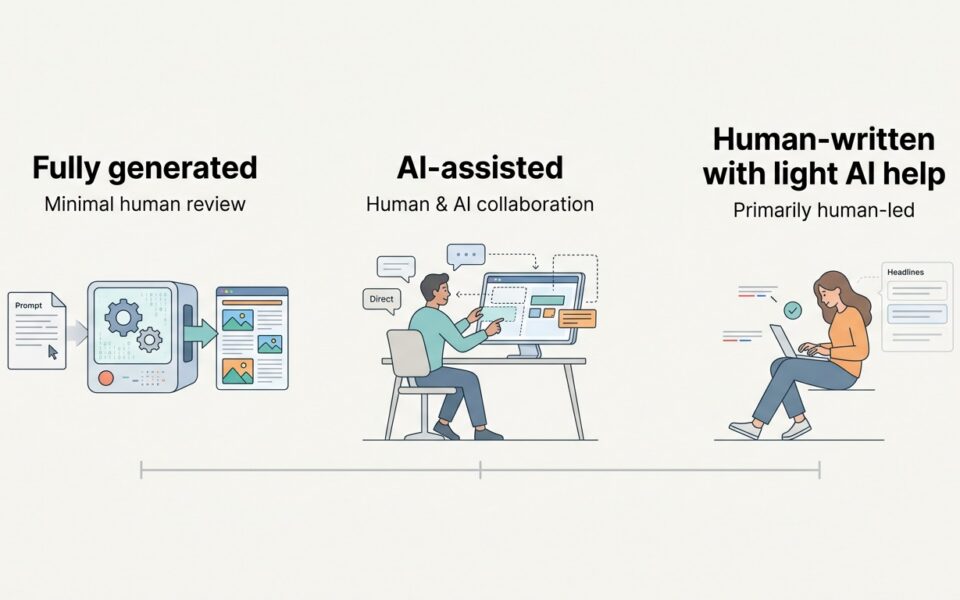
It would be incomplete to discuss copy testing in 2024 and beyond without addressing the role of AI tools. Generative AI has dramatically reduced the cost and time required to produce copy variants. What used to require a copywriter’s half-day of work can now be produced in minutes. This is genuinely useful for agencies, but it also introduces a new risk: the ability to generate variants outpaces the ability to test them responsibly.
More variants does not mean better testing. An agency that uses AI to generate fifty headline variants and launches them all simultaneously has not improved its testing program. It has made it worse. The discipline of copy testing is about isolation, sequencing, and structured learning. AI tools should be used to accelerate the production of controlled, hypothesis-driven variants, not to flood accounts with options.
The agencies that will get the most value from AI-assisted copy generation are the ones that already have a structured testing methodology in place. The tool serves the process. The process is not replaced by the tool.
Practical Checklist: Before You Launch Any Copy Test
- Is there a written hypothesis that specifies what you are testing and why?
- Have you isolated a single variable wherever possible?
- Have you defined your primary success metric and minimum performance threshold?
- Have you calculated the minimum sample size required for statistical significance?
- Is the test duration long enough to cover at least one full consideration cycle for this audience?
- Is there a plan for what happens after the test concludes (regardless of outcome)?
- Has this test been logged in your centralized test repository with all relevant details?
- Has the client been briefed on the testing parameters and the timeline?
Comparison: Structured vs. Unstructured Copy Testing
| Element |
Structured Testing |
Unstructured Testing |
| Hypothesis |
Written, specific, audience-grounded |
Absent or vague |
| Variables |
Isolated, one at a time |
Multiple simultaneous changes |
| Success Criteria |
Pre-defined metric and threshold |
Defined retroactively |
| Duration |
Based on sample size and cycle length |
Based on gut feel or client pressure |
| Documentation |
Centralized, standardized, retrievable |
Informal or nonexistent |
| Outcome |
Compounding institutional knowledge |
Isolated, non-transferable results |
| Client Confidence |
High, due to clear narrative |
Erodes over time |
Conclusion: The Agency That Tests Well, Wins
Copy testing is not a nice-to-have for modern digital marketing agencies. It is a core operational capability. But the difference between copy testing that drives compounding performance improvements and copy testing that drains budget and erodes client trust comes down entirely to structure, discipline, and the marketing ops infrastructure that supports both.
The agencies that treat testing as a system rather than an activity will build something genuinely rare in this industry: a learning organization. One that gets smarter with every campaign, every client, and every cycle. One that can walk into a pitch and speak with real authority about how it makes creative decisions and why those decisions outperform the competition.
The goal is not to test more. The goal is to test better. And testing better starts with acknowledging that the way most agencies approach copy testing right now is breaking performance, not building it.
Glossary of Terms
- Copy Testing: The process of systematically comparing two or more versions of written marketing content (such as ad headlines, body copy, or calls to action) to determine which version performs better against a defined metric.
- Digital Marketing Agency: A company that provides marketing services to clients, typically spanning paid media, SEO, content strategy, creative production, and performance analytics, often managing multiple client accounts simultaneously.
- Marketing Ops (Marketing Operations): The function within a marketing organization or agency responsible for the systems, processes, technology, and data infrastructure that enable marketing programs to run efficiently and at scale.
- A/B Testing: A controlled experiment comparing two variants (A and B) of a single element to determine which performs better. A foundational method in copy testing.
- Statistical Significance: A measure of confidence that the results of a test reflect a real difference in performance rather than random variation. Typically expressed as a percentage, with 90% to 95% being the standard threshold in paid media testing.
- Hypothesis: In a testing context, a structured, written statement that articulates what is being tested, the expected outcome, and the reasoning behind that expectation.
- Multivariate Testing: A testing methodology that tests multiple variables simultaneously to understand how combinations of elements interact. Requires significantly higher traffic volumes than A/B testing to yield reliable results.
- ROAS (Return on Ad Spend): A key performance metric calculated by dividing revenue generated from advertising by the cost of that advertising. Commonly used to evaluate paid media performance.
- Confirmation Bias: The tendency to interpret data in a way that confirms pre-existing beliefs or desired outcomes. A significant risk in unstructured testing environments.
- CTA (Call to Action): The specific instruction in a piece of marketing copy that tells the audience what action to take next, such as “Shop Now,” “Get a Free Quote,” or “Learn More.”
- Funnel Stage: A representation of where a potential customer is in the buying journey, typically categorized as awareness, consideration, or conversion. Copy testing strategies should be tailored to the funnel stage being targeted.
- Generative AI: Artificial intelligence systems capable of producing original content, including written copy, images, and code, based on prompts or inputs. Increasingly used in agency environments to accelerate creative production.
- Institutional Knowledge: The accumulated learning, insights, and expertise that an organization develops over time through its collective experiences. In an agency context, this includes testing results, audience insights, and creative performance patterns across client portfolios.
- Creative Brief: A document that outlines the objectives, audience, messaging strategy, tone, and deliverables for a creative project. In a testing context, it should also specify the testing intent and variant structure.
Further Reading