Key Takeaways
- AI-powered personalization enables businesses to deliver individualized experiences to thousands of prospects simultaneously, transforming traditional acquisition strategies
- Dynamic content generation and behavioral targeting create more relevant touchpoints that increase conversion rates by up to 40%
- Modern prospecting combines cold outreach precision with permission marketing principles through intelligent segmentation
- Successful personalization at scale requires robust data infrastructure, advanced attribution models, and continuous optimization frameworks
- The convergence of inbound marketing and outbound marketing through AI creates unprecedented opportunities for customer acquisition
The era of spray-and-pray marketing is dead. Today’s consumers expect personalized experiences that speak directly to their needs, challenges, and aspirations. Yet most businesses struggle with a fundamental paradox: how do you deliver truly personalized acquisition experiences while simultaneously reaching thousands of prospects?
The answer lies in artificial intelligence’s transformative power to personalize acquisition at scale. After nearly two decades in digital marketing, I’ve witnessed the evolution from mass marketing to segmentation to true 1:1 personalization. AI has finally made it possible to treat each prospect as an individual while maintaining the efficiency and reach that modern businesses demand.
The Personalization Revolution in Customer Acquisition
Traditional acquisition strategy operated on broad demographic assumptions and generic messaging. A software company might send the same email to every CTO, regardless of their company size, industry challenges, or current technology stack. This approach generated mediocre results because it failed to acknowledge the unique context of each prospect.
AI personalization flips this model entirely. Instead of creating a single message for thousands, intelligent systems generate thousands of unique messages, each crafted for a specific individual. This isn’t simply inserting a first name into an email template. True AI personalization analyzes behavioral patterns, contextual data, and predictive signals to create genuinely relevant experiences.
Consider how modern prospecting platforms now leverage AI to personalize cold outreach. They analyze a prospect’s recent LinkedIn activity, company news, industry trends, and interaction history to generate opening lines that reference specific, relevant details. A message might mention a prospect’s recent promotion, their company’s expansion into new markets, or a challenge specific to their industry vertical.
Dynamic Content: The Foundation of Scaled Personalization
Dynamic content generation represents the backbone of AI-powered personalization. Unlike static content that remains unchanged for all viewers, dynamic content adapts in real-time based on individual prospect characteristics and behaviors.
Effective dynamic content systems operate across multiple dimensions:
- Industry-specific messaging: SaaS platforms automatically adjust value propositions based on vertical-specific pain points
- Company size optimization: Enterprise prospects see different case studies than mid-market companies
- Role-based personalization: Technical decision-makers receive different content than financial stakeholders
- Geographic localization: Compliance requirements and market conditions vary by region
- Behavioral triggers: Content adapts based on previous interactions and engagement patterns
Implementation requires sophisticated content management systems that can serve variations at scale. Leading platforms use machine learning algorithms to determine which content combinations perform best for specific prospect profiles, continuously optimizing for higher conversion rates.
A practical example: An email marketing platform might detect that a prospect manages a remote team in the healthcare industry. The AI system automatically selects case studies from healthcare companies, emphasizes remote collaboration features, and includes compliance-specific messaging. This level of personalization would be impossible to achieve manually for thousands of prospects.
Behavioral Targeting: From Data Points to Insights
Behavioral targeting transforms raw interaction data into actionable personalization insights. Modern AI systems track and analyze hundreds of behavioral signals to understand prospect intent and preferences.
Key behavioral indicators include:
| Behavioral Signal |
Personalization Application |
Implementation Example |
| Content consumption patterns |
Topic preference identification |
Prospects reading security content receive security-focused outreach |
| Website navigation behavior |
Feature interest mapping |
Pricing page visitors get ROI-focused messaging |
| Email engagement timing |
Send time optimization |
Morning readers receive 8 AM sends, evening readers get 6 PM delivery |
| Social media activity |
Professional interest targeting |
AI mentions recent posts or shared articles in outreach messages |
| Technology stack detection |
Integration-specific messaging |
Salesforce users see Salesforce integration benefits prominently |
The sophistication of behavioral targeting has reached a point where AI can predict prospect preferences with remarkable accuracy. Machine learning models analyze historical conversion data to identify which behavioral combinations indicate high purchase intent.
Advanced implementations combine first-party behavioral data with third-party enrichment sources. When a prospect visits your pricing page multiple times, the AI might trigger a personalized email sequence that addresses common pricing objections while highlighting relevant case studies from similar companies.
Personalized Messaging: The Art of AI-Generated Relevance
Crafting personalized messages at scale requires AI systems that understand both language nuance and business context. Modern natural language generation models can create messages that feel genuinely personal while maintaining brand voice and regulatory compliance.
Effective personalized messaging frameworks operate on multiple levels:
Contextual Personalization: Messages reference specific company events, industry trends, or market conditions relevant to each prospect. AI monitors news feeds, company announcements, and market data to identify personalization opportunities.
Pain Point Targeting: Different roles within the same company face distinct challenges. AI systems maintain pain point databases mapped to specific titles, industries, and company sizes, ensuring messages address relevant concerns.
Solution Positioning: The same product can solve different problems for different prospects. AI dynamically positions features and benefits based on prospect profile analysis and similar customer success patterns.
Urgency Calibration: Some prospects respond to immediate action prompts while others prefer educational approaches. AI analyzes engagement patterns to determine optimal urgency levels for each individual.
A sophisticated example involves account-based marketing campaigns where AI generates unique message sequences for each stakeholder within target accounts. The CMO receives messages about marketing efficiency and lead quality improvement, while the CFO gets ROI projections and cost-benefit analyses. Despite addressing different concerns, both message tracks work toward the same conversion goal.
Scale Challenges: The Technical Infrastructure Requirements
Delivering personalization at scale demands robust technical infrastructure capable of processing massive data volumes while maintaining real-time responsiveness. Most businesses underestimate the complexity of scaling personalization beyond basic segmentation.
Critical infrastructure components include:
Data Pipeline Architecture: Personalization engines require continuous data feeds from multiple sources including CRM systems, marketing automation platforms, website analytics, social media monitoring tools, and third-party enrichment services. These data streams must be cleaned, normalized, and made available for real-time decision-making.
Machine Learning Operations: AI models require constant training and updating to maintain accuracy. Infrastructure must support model versioning, A/B testing of different algorithms, and automated retraining based on performance metrics.
Content Generation Systems: Scaling personalized content requires template libraries, dynamic insertion capabilities, and quality control mechanisms. Systems must generate thousands of unique messages while maintaining brand consistency and avoiding repetition.
Delivery Optimization: Personalized campaigns must coordinate across multiple channels including email, social media, advertising platforms, and website experiences. This requires sophisticated orchestration to prevent message conflicts and optimize timing.
The technical complexity explains why many businesses struggle with personalization implementation. Success requires either significant internal development resources or partnerships with specialized platforms that provide turnkey personalization infrastructure.

Framework for Delivering Personalized Acquisition Experiences
Successful personalization at scale follows a structured framework that balances automation with human oversight. Based on implementations across hundreds of campaigns, this framework ensures systematic scaling while maintaining message quality.
Stage 1: Data Foundation and Prospect Intelligence
Begin by establishing comprehensive prospect profiles that extend beyond basic demographic information. Effective profiles include firmographic data, technographic intelligence, behavioral patterns, and engagement history. This foundation enables all subsequent personalization efforts.
- Implement prospect enrichment workflows that automatically gather additional data points
- Create scoring models that identify high-value personalization opportunities
- Establish data quality processes to maintain profile accuracy
- Build integration layers connecting all prospect touchpoint systems
Stage 2: Segmentation and Persona Development
While AI enables individual personalization, effective frameworks start with intelligent segmentation that groups similar prospects for efficient message development and testing.
- Create dynamic segments based on behavioral patterns and firmographic characteristics
- Develop detailed persona profiles for each significant segment
- Map customer journey stages to personalization opportunities
- Identify high-impact personalization triggers for each segment
Stage 3: Content Template and Variation Creation
Personalization at scale requires structured content libraries that enable systematic variation while maintaining quality control.
- Build message templates with dynamic insertion points for personalized elements
- Create variation libraries for different industries, roles, and company sizes
- Develop approval workflows for AI-generated content
- Establish brand voice guidelines for automated content generation
Stage 4: Campaign Orchestration and Multi-Channel Coordination
Personalized experiences extend beyond single touchpoints. Successful frameworks coordinate messaging across all prospect interaction channels.
- Map prospect journey touchpoints across email, advertising, social media, and website experiences
- Create message sequencing logic that maintains consistency across channels
- Implement frequency capping to prevent over-communication
- Build feedback loops between channel performance and personalization optimization
Stage 5: Performance Measurement and Optimization
Personalization effectiveness requires sophisticated measurement that goes beyond traditional campaign metrics.
- Track personalization element performance to identify high-impact variables
- Measure engagement quality improvements alongside conversion rate changes
- Analyze long-term prospect relationship development beyond immediate conversions
- Create optimization feedback loops that improve AI model performance
The Convergence of Inbound and Outbound Strategies
AI personalization has created an unprecedented convergence between inbound marketing and outbound marketing approaches. Traditional boundaries between these strategies are dissolving as personalization enables permission marketing principles within cold outreach contexts.
Modern prospecting now incorporates inbound marketing tactics through intelligent content recommendations and educational approaches. Instead of immediately pitching products, AI-powered outbound campaigns can lead with valuable insights, industry reports, or educational resources tailored to each prospect’s specific interests and challenges.
This hybrid approach respects prospect attention while maintaining the proactive reach of outbound marketing. Prospects receive genuinely helpful information that justifies the interruption, creating permission for continued engagement.
The result is acquisition strategy that combines the best aspects of both methodologies: the efficiency and targeting precision of outbound with the trust-building and value creation of inbound approaches.
Advanced Attribution and Performance Optimization
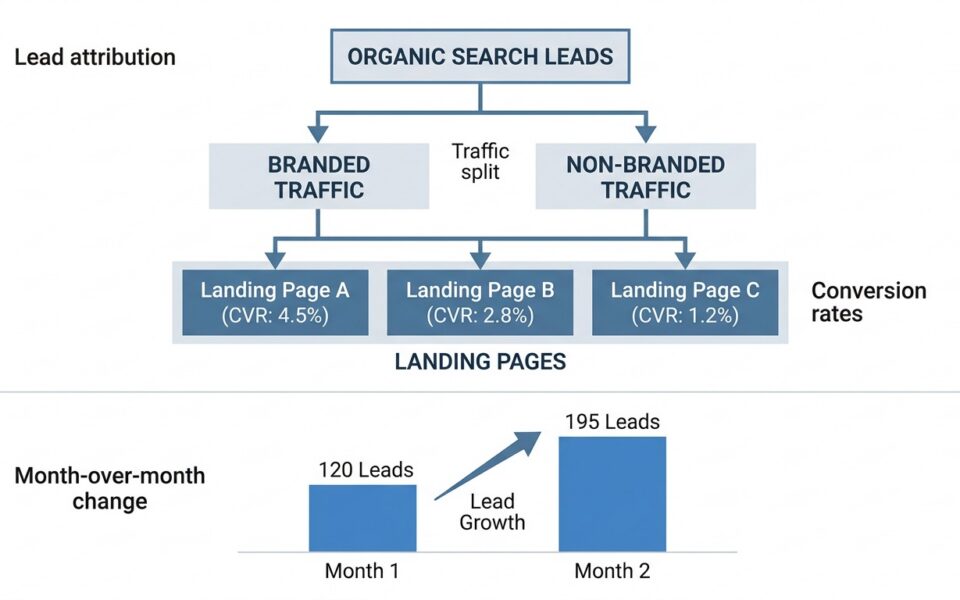
Measuring personalization impact requires sophisticated attribution models that account for the complex prospect journeys enabled by individualized experiences. Traditional last-touch attribution fails to capture the cumulative impact of personalized touchpoints across extended engagement cycles.
Advanced attribution frameworks track personalization elements across all prospect interactions, measuring how specific personalized messages, content variations, and timing optimizations contribute to conversion outcomes. This granular measurement enables continuous optimization of personalization algorithms and content strategies.
Key performance indicators extend beyond traditional conversion metrics to include engagement quality, message relevance scores, and long-term prospect relationship development. These sophisticated measurements provide the feedback loops necessary for AI systems to improve personalization accuracy over time.
Future Implications and Strategic Considerations
The trajectory of AI personalization points toward even more sophisticated capabilities that will further transform acquisition strategies. Predictive personalization will anticipate prospect needs before they explicitly express them, while emotional intelligence algorithms will adapt message tone and approach based on prospect communication preferences.
Businesses that master personalization at scale today will have significant competitive advantages as these capabilities become standard market expectations. The companies investing in personalization infrastructure and expertise now are building the foundation for sustained acquisition success in an increasingly competitive digital landscape.
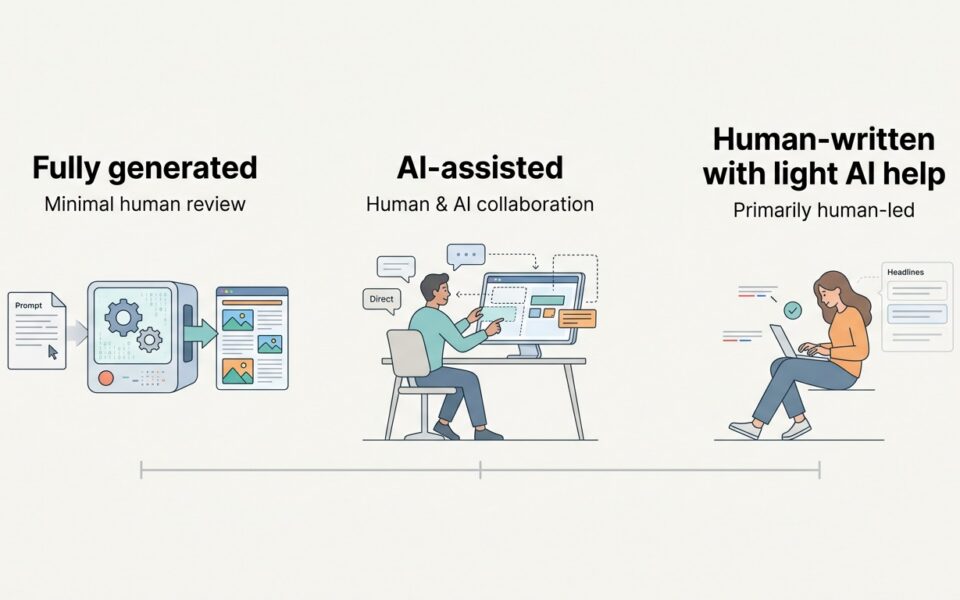
However, scaling personalization successfully requires careful balance between automation and human judgment. The most effective implementations combine AI efficiency with human creativity and strategic oversight, ensuring that personalized experiences feel genuinely relevant rather than algorithmically generated.
The transformation of customer acquisition through AI personalization represents more than a tactical improvement. It fundamentally changes how businesses build relationships with prospects, shifting from interruptive mass marketing toward value-driven individual engagement at scale. This evolution demands new skills, technologies, and strategic approaches, but the competitive advantages for businesses that master these capabilities are substantial and lasting.
Glossary of Terms
- Behavioral Targeting: Marketing approach that uses prospect interaction data and online behaviors to deliver personalized content and messaging
- Cold Outreach: Proactive communication with prospects who have had no previous interaction with your business, typically through email, phone, or social media
- Dynamic Content: Website or email content that changes automatically based on user characteristics, behaviors, or preferences
- Firmographic Data: Descriptive characteristics of organizations including company size, industry, revenue, location, and structure
- Inbound Marketing: Strategy focused on attracting prospects through valuable content and experiences tailored to their interests
- Machine Learning Operations (MLOps): Practice of deploying and maintaining machine learning models in production environments
- Modern Prospecting: Contemporary approach to identifying and engaging potential customers using digital tools, data analytics, and AI-powered personalization
- Natural Language Generation (NLG): AI technology that converts data and structured information into human-readable text
- Outbound Marketing: Traditional marketing approach involving proactive outreach to prospects through various channels
- Permission Marketing: Marketing strategy that focuses on obtaining explicit consent before sending promotional messages to prospects
- Technographic Data: Information about the technology stack and digital tools used by organizations
Further Reading