
Why Average Order Value Optimization Beats Chasing New Traffic
Key Takeaways: Optimizing Average Order Value (AOV) consistently delivers faster, more measurable ROI than scaling paid traffic spend. Bundling, upsells, cross-sells, and...
Mike VillarKey Takeaways: Highly polished content increasingly signals inauthenticity to modern consumers, creating a paradox for brands investing heavily in production quality Raw,...
 Alvar SantosFebruary 10, 2026

Key Takeaways:
We’re witnessing the death of the Instagram-perfect marketing era, and frankly, it’s about time. After two decades of watching brands chase increasingly polished, sterile perfection, the market has delivered a resounding verdict: consumers crave authenticity over aesthetics, relatability over refinement.
This shift represents more than a fleeting trend – it’s a fundamental recalibration of how audiences process and trust brand communications. The very production values that once signaled professionalism and trustworthiness now trigger skepticism and disconnection. Brands that invested millions in cinematography, professional talent, and flawless execution are discovering their content performs worse than competitors shooting on smartphones with natural lighting.
The authenticity paradox in polished marketing isn’t just reshaping creative strategies – it’s forcing a complete reconceptualization of brand building in the digital age.
The overproduction problem didn’t emerge overnight. For years, brands operated under the assumption that higher production values equaled higher perceived value. This logic seemed sound: professional lighting, crisp audio, seamless editing, and polished talent would naturally command more attention and trust than amateur alternatives.
But somewhere between 2018 and 2022, this equation flipped entirely. Several factors converged to create this reversal:
The data supporting this shift is overwhelming. User-generated content now generates 6.9 times higher engagement than brand-produced content. More telling: 79% of consumers report that user-generated content highly impacts their purchasing decisions, while only 13% say the same about traditional branded content.
This performance marketing reality has forced brands to confront an uncomfortable truth – their pursuit of perfection was actively undermining their brand strategy.
Smart brands aren’t abandoning production values entirely – they’re strategically deploying imperfection. This approach requires understanding that authenticity isn’t about being unpolished; it’s about being genuinely human within your brand’s context.
Take Glossier’s approach to brand building. Their content maintains high aesthetic standards while incorporating deliberate imperfections: natural lighting variations, candid expressions, and unretouched skin textures. They’ve mastered the art of looking accidentally perfect rather than professionally manufactured.
Similarly, Patagonia’s marketing consistently features real customers in uncontrolled environments. Their content often includes awkward pauses, natural speech patterns, and environmental imperfections that would have been edited out in traditional production. Yet their brand value continues climbing because audiences trust the authentic representation of their values.
The key insight: authenticity is about alignment between brand promise and content execution, not about production budget.
The authenticity paradox manifests differently across platforms, requiring tailored approaches for optimal performance marketing results:
| Platform | Authenticity Preference | Optimal Production Level | Key Success Factors |
|---|---|---|---|
| TikTok | Extremely High | Minimal | Natural lighting, real reactions, trending audio |
| Instagram Stories | High | Low-Medium | Behind-scenes content, real-time updates |
| Instagram Feed | Medium | Medium-High | Curated but not overproduced |
| Medium | Medium | Professional but personal insights | |
| YouTube | Variable | Medium-High | Depends on niche and audience expectations |
Based on extensive campaign analysis and performance data, I’ve developed a framework for navigating the authenticity-polish spectrum strategically:
Relatable Context: Content should reflect genuine scenarios your audience experiences. Avoid aspirational settings that feel disconnected from reality.
Emotional Honesty: Acknowledge challenges, failures, and learning processes rather than presenting only success stories.
Authentic Voice: Maintain consistent brand personality that feels human rather than corporate, even in professional contexts.
Live Elements: Incorporate real-time, unscripted moments that can’t be artificially manufactured.
B2B Technology Brands:
Consumer Lifestyle Brands:
Service-Based Businesses:
The authenticity paradox doesn’t mean abandoning production values entirely. Strategic brands understand when each approach serves their long-term strategy most effectively.
High-Polish Scenarios:
Raw Content Scenarios:
The most successful brand building strategies now employ a portfolio approach, mixing high-production cornerstone content with regular authentic touchpoints.
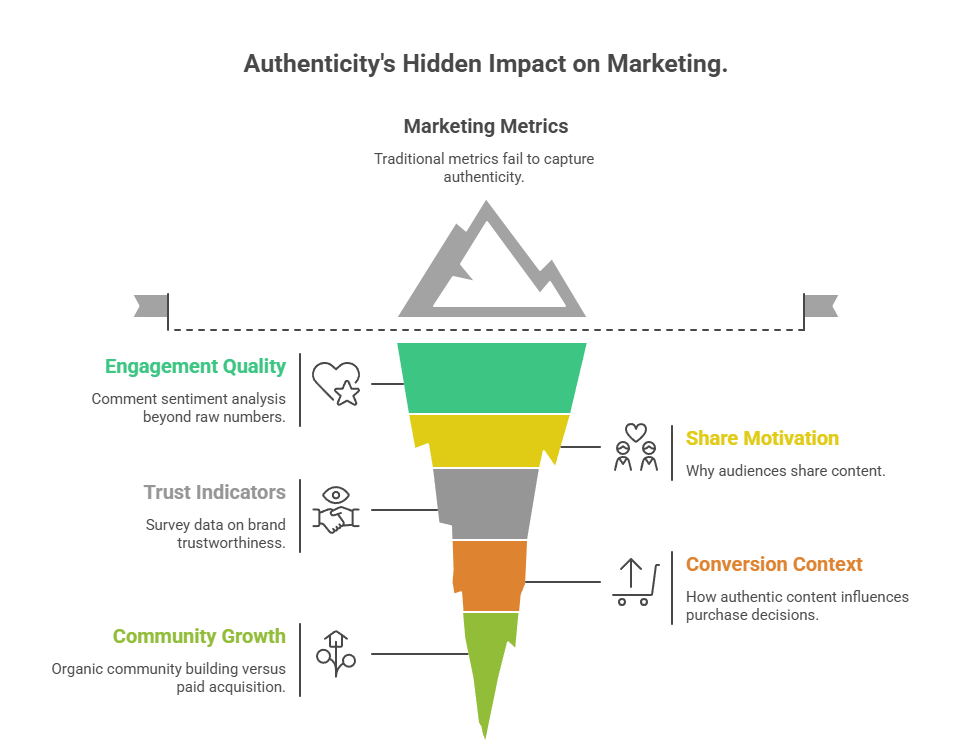
Traditional marketing metrics often fail to capture authenticity’s true performance marketing impact. Smart brands are tracking:
These metrics reveal that authentic content often shows lower immediate conversion rates but higher lifetime customer value and organic advocacy.
Emerging technologies are further complicating the authenticity landscape. AI-generated content can now produce “authentic-looking” material at scale, potentially flooding platforms with manufactured authenticity. This development makes genuine human connection even more valuable as a differentiator.
Brands must now consider:
Different industries face unique authenticity challenges that require specialized approaches:
Financial Services: Must balance regulatory compliance with relatable communication, often requiring creative approaches to humanize complex topics without compromising accuracy.
Healthcare: Need to maintain professional credibility while connecting emotionally with patients facing vulnerable situations.
Luxury Brands: Face the challenge of remaining aspirational while appearing accessible and authentic to broader audiences.
Technology: Must translate complex innovations into relatable benefits without oversimplifying or overpromising.
Looking ahead, the authenticity paradox will likely intensify as audiences become even more sophisticated at detecting inauthentic content. Brands that succeed will be those that embed authenticity into their core brand strategy rather than treating it as a creative execution choice.
This evolution requires organizational changes beyond marketing departments:
The brands that will thrive are those that recognize authenticity as a long-term strategy for building sustainable brand value, not just a tactical approach to improving engagement rates.
For organizations ready to navigate the authenticity paradox strategically, here’s a practical implementation roadmap:
Phase 1: Audit and Assessment (Month 1)
Phase 2: Strategic Framework Development (Month 2)
Phase 3: Pilot Program Launch (Months 3-4)
Phase 4: Scale and Optimize (Months 5-6)
The authenticity paradox in polished marketing isn’t a problem to solve – it’s a new reality to master. Brands that excel will be those that understand authenticity as a strategic choice requiring as much sophistication as traditional production approaches.
The future belongs to brands brave enough to be genuinely human while maintaining professional standards, to show imperfection while delivering excellence, and to embrace vulnerability while building authority. This isn’t about choosing between polish and authenticity – it’s about strategically deploying both to create deeper, more valuable connections with audiences.
The marketing balance between authenticity and polish will continue evolving, but the underlying principle remains constant: audiences crave genuine connection with brands that understand their real experiences and challenges. The brands that master this balance will build sustainable competitive advantages that transcend individual campaigns or platform changes.
In an era where production tools are democratized and authentic voices can reach millions instantly, the question isn’t whether your brand can afford to be authentic – it’s whether you can afford not to be.
Key Takeaways: Optimizing Average Order Value (AOV) consistently delivers faster, more measurable ROI than scaling paid traffic spend. Bundling, upsells, cross-sells, and...
Mike VillarKey Takeaways: Statistical significance is widely misunderstood and misreported in marketing tests, leading to decisions based on faulty data. Peeking at test results before...
Alvar SantosKey Takeaways: Looker Studio is the best budget-friendly option for marketing teams already embedded in the Google ecosystem, offering free access and solid connector support. Domo...
Amanda Bianca CoStart your brand's success journey today with a conversation. Share your goals and objectives with us and let's set up a discovery call.