
Why Average Order Value Optimization Beats Chasing New Traffic
Key Takeaways: Optimizing Average Order Value (AOV) consistently delivers faster, more measurable ROI than scaling paid traffic spend. Bundling, upsells, cross-sells, and...
Mike VillarKey Takeaways Agency-as-a-Service represents a fundamental shift from project-based billing to subscription-based recurring revenue models, offering predictable income streams and...
 Josh EvoraFebruary 13, 2026

Key Takeaways
The digital marketing landscape has undergone a seismic shift in the past five years, and nowhere is this more evident than in agency service delivery models. After nearly two decades in this industry, I’ve witnessed the limitations of traditional project-based engagements firsthand. Clients demand continuous optimization, real-time adjustments, and ongoing strategic support that simply doesn’t fit neatly into project timelines or fixed deliverables.
The Agency-as-a-Service (AaaS) model represents the natural evolution of professional services, borrowing successful elements from the Software-as-a-Service revolution that transformed the technology sector. This approach fundamentally reimagines how agencies structure their offerings, price their services, and deliver value to clients through ongoing subscription relationships rather than discrete project engagements.
Traditional agencies face an inherent paradox: the more successful a campaign or project becomes, the more ongoing optimization and management it requires. Yet project-based models create artificial endpoints that force agencies to either under-serve successful initiatives or constantly pitch new projects to maintain the relationship. AaaS eliminates this friction by aligning agency success with client success through continuous service delivery.
The foundation of any successful AaaS implementation rests on four critical pillars that work in concert to deliver superior client outcomes while maintaining agency profitability and team satisfaction.
The subscription model transforms agency economics by creating predictable, recurring revenue streams that enable better resource planning and team stability. Unlike project-based billing that creates feast-or-famine cycles, subscription revenue allows agencies to invest in better talent, superior tools, and more sophisticated processes.
Most successful AaaS agencies structure their subscriptions around comprehensive service tiers rather than individual service offerings. A typical structure might include:
The key insight here is that successful AaaS pricing isn’t based on hourly rates or individual deliverables, but rather on the value of ongoing access to a complete marketing team and infrastructure. Clients pay for the peace of mind that comes with having a dedicated growth strategy partner who’s incentivized to drive continuous improvement.
Perhaps the most compelling aspect of the AaaS model is the unlimited request structure, which addresses one of the biggest pain points in traditional agency relationships: scope creep and change requests. Rather than nickel-and-diming clients for every adjustment or additional piece of content, successful AaaS agencies embrace unlimited requests as a competitive differentiator.
However, “unlimited” doesn’t mean “immediate” or “without prioritization.” Smart agencies implement sophisticated request management systems that include:
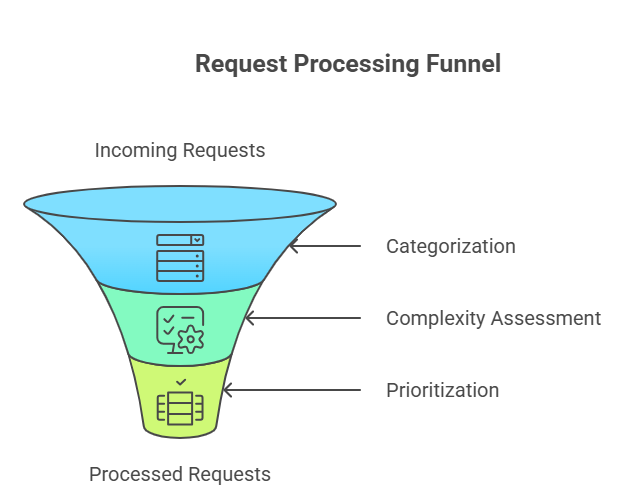
Design Pickle pioneered this approach in the graphic design space, processing over 50,000 requests monthly across their client base while maintaining high satisfaction scores. Their success demonstrates that unlimited requests, when properly managed, actually reduce client friction while improving project quality through better prioritization.
Effective scope management in an AaaS model requires a fundamental mindset shift from defending boundaries to optimizing outcomes. Rather than saying “that’s out of scope,” successful AaaS agencies ask “how does this request support your core business objectives?”
This approach requires establishing clear service boundaries upfront, not to limit client requests, but to ensure all activities align with the overarching growth strategy. For example, a marketing scaling subscription might include:
Requests that fall outside these parameters aren’t rejected but rather queued for strategic discussion. This might mean suggesting a tier upgrade for clients who consistently require services beyond their current subscription level, or identifying opportunities for additional specialized engagements.
The client benefits of AaaS extend far beyond simple cost considerations, though the economics are compelling. Clients typically see 20-30% cost savings compared to hiring equivalent in-house talent, while gaining access to a broader range of specialized skills and enterprise-level tools.
CFOs and business owners appreciate the budget predictability that comes with subscription-based marketing services. Rather than managing multiple vendor relationships, project approvals, and variable monthly expenses, clients can budget a fixed monthly investment in their growth strategy.
This predictability enables more aggressive growth planning. When businesses know their marketing operations costs are fixed, they can more confidently invest in inventory, hiring, or expansion, knowing their customer acquisition engine will scale proportionally.
One of the most compelling benefits of the AaaS model is democratizing access to senior-level marketing talent. A startup or mid-market company that couldn’t afford a $150,000+ Chief Marketing Officer can access equivalent strategic expertise through an AaaS subscription at a fraction of the cost.
This expertise extends beyond strategy to implementation. AaaS clients benefit from agencies’ accumulated knowledge across dozens or hundreds of other engagements, gaining insights from successful campaigns, failed experiments, and industry best practices that would take years to develop internally.
The unlimited request model enables unprecedented agility in marketing execution. When Apple announces iOS privacy changes, Google updates its algorithm, or a competitor launches a disruptive campaign, AaaS clients can pivot immediately without waiting for project approvals or scope amendments.
This agility proved invaluable during the COVID-19 pandemic, when businesses needed to completely overhaul their messaging, target different audiences, and rapidly deploy new digital strategies. AaaS clients consistently outperformed those locked into rigid project timelines or limited by in-house resource constraints.
Several agencies have successfully implemented and scaled AaaS models, providing valuable insights into what works and what doesn’t in this evolving service delivery approach.
Design Pickle launched in 2015 with a simple proposition: unlimited graphic design requests for a flat monthly fee. Starting at $370/month, clients could submit as many design requests as needed, with a 24-48 hour turnaround on most projects.
Their success metrics are impressive:
Design Pickle’s key innovation was treating design as an ongoing operational need rather than a discrete project requirement. They built sophisticated workflow management systems, developed standardized processes for common request types, and created a global talent network that enables 24-hour production cycles.
Madgicx represents the evolution of AaaS into more sophisticated, technology-enhanced service delivery. Their platform combines human expertise with AI-driven optimization to deliver Facebook and Instagram advertising management as a subscription service.
Their subscription tiers range from $99/month for small businesses to enterprise packages exceeding $2,000/month. The key differentiator is their technology stack, which automates routine optimization tasks while human experts focus on strategy, creative direction, and account growth.
Results speak for themselves:
Draft Horse demonstrates how traditional full-service agencies can successfully transition to AaaS models. They offer comprehensive marketing operations subscriptions starting at $5,000/month, including strategy, execution, and optimization across all digital channels.
Their approach emphasizes team scaling through dedicated account pods – small teams that function as outsourced marketing departments for their clients. Each pod includes a strategist, designer, copywriter, and account manager, providing comprehensive coverage without the overhead of full-time hires.
Client results include:
As the AaaS market matures, businesses need sophisticated frameworks for evaluating potential partners. The decision criteria extend far beyond pricing to encompass strategic alignment, operational capabilities, and long-term scalability.
The foundation of any successful AaaS relationship is the provider’s service delivery infrastructure. This encompasses both technology systems and operational processes that enable consistent, high-quality output at scale.
Key evaluation criteria include:
Beyond operational capabilities, successful AaaS relationships require deep strategic alignment and relevant expertise. This is particularly important in scalable marketing, where strategic decisions compound over time.
Evaluation should focus on:
AaaS pricing requires more sophisticated analysis than traditional project-based comparisons. The goal is understanding total cost of ownership and return on investment over extended time horizons.
| Service Tier | Typical Monthly Cost | Equivalent In-House Cost | Primary Value Drivers |
|---|---|---|---|
| Basic Marketing Support | $3,000-$5,000 | $8,000-$12,000 | Content creation, social media, basic SEO |
| Growth Marketing | $8,000-$12,000 | $18,000-$25,000 | Paid advertising, conversion optimization, strategy |
| Enterprise Operations | $15,000-$25,000+ | $35,000-$50,000+ | Full marketing department, custom development, dedicated resources |
Key financial considerations include:
Successful AaaS relationships don’t happen by accident. They require intentional setup, clear expectations, and ongoing optimization from both agency and client perspectives.
The first 90 days of an AaaS relationship set the trajectory for long-term success. During this period, agencies should focus on understanding business objectives, integrating with existing systems, and establishing communication rhythms that will scale effectively.
Best practices for successful onboarding include:
The unlimited request model requires sophisticated relationship management to maintain client satisfaction while preserving agency profitability. This balance is achieved through transparent communication, strategic prioritization, and continuous value demonstration.
Key relationship management practices include:
The AaaS model represents more than a pricing innovation – it’s a fundamental reimagining of how professional services create and deliver value. As this model matures, several trends are emerging that will shape its evolution over the next decade.
Artificial intelligence is rapidly transforming AaaS capabilities, enabling agencies to deliver more sophisticated services at scale while maintaining competitive pricing. AI applications in AaaS include:
As the AaaS market matures, successful agencies are increasingly focusing on specific verticals or specialized service areas rather than trying to be everything to everyone. This specialization enables deeper expertise, better results, and premium pricing.
Emerging specialization trends include:
This specialization trend benefits both agencies and clients by enabling deeper expertise, more relevant case studies, and more sophisticated service delivery within specific contexts.
While subscription pricing provides revenue predictability, the most sophisticated AaaS providers are experimenting with hybrid models that combine base subscriptions with performance incentives. These models align agency compensation with client success while maintaining revenue stability.
Emerging pricing models include:
After observing hundreds of AaaS implementations across different agency types and client segments, several critical success factors consistently emerge. These factors separate thriving AaaS relationships from those that struggle or ultimately fail.
Successful AaaS providers invest heavily in technology infrastructure that enables efficient service delivery at scale. This isn’t just about project management tools – it encompasses the entire technology ecosystem that supports client service delivery.
Essential technology components include:
The transition from project-based to subscription-based service delivery requires significant cultural changes within agency organizations. Team members must shift from project completion mindsets to ongoing relationship optimization perspectives.
Key cultural adaptations include:
AaaS profitability requires sophisticated understanding of unit economics, client lifetime value, and resource utilization optimization. Agencies must carefully balance service quality with operational efficiency to maintain healthy margins while delivering superior client value.
Critical financial metrics include:
The Agency-as-a-Service model represents a fundamental evolution in how professional marketing services are delivered, priced, and optimized. For agencies, it offers the promise of predictable revenue, deeper client relationships, and more sustainable business growth. For clients, it provides access to senior-level expertise, operational flexibility, and outcome-focused service delivery that traditional project-based models simply cannot match.
Success in this model requires significant investment in technology infrastructure, process optimization, and cultural transformation. However, agencies that successfully navigate this transition consistently achieve higher client satisfaction, better team retention, and more sustainable profitability than their project-based competitors.
As we look toward the future, AaaS will continue evolving through AI integration, increased specialization, and more sophisticated performance-based pricing models. The agencies that embrace this evolution while maintaining focus on client success will define the next generation of professional services delivery.
The question isn’t whether AaaS represents the future of agency services – the market has already answered that question through rapid adoption and superior client outcomes. The question is how quickly agencies can adapt their service delivery models to meet evolving client expectations while building more sustainable, profitable business models.
Key Takeaways: Optimizing Average Order Value (AOV) consistently delivers faster, more measurable ROI than scaling paid traffic spend. Bundling, upsells, cross-sells, and...
Mike VillarKey Takeaways: Statistical significance is widely misunderstood and misreported in marketing tests, leading to decisions based on faulty data. Peeking at test results before...
Alvar SantosKey Takeaways: Looker Studio is the best budget-friendly option for marketing teams already embedded in the Google ecosystem, offering free access and solid connector support. Domo...
Amanda Bianca CoStart your brand's success journey today with a conversation. Share your goals and objectives with us and let's set up a discovery call.