
Why Average Order Value Optimization Beats Chasing New Traffic
Key Takeaways: Optimizing Average Order Value (AOV) consistently delivers faster, more measurable ROI than scaling paid traffic spend. Bundling, upsells, cross-sells, and...
Mike VillarKey Takeaways: Brands are evolving from product creators to media publishers, building owned content platforms that generate revenue and strengthen customer relationships...
 Amanda Bianca CoFebruary 6, 2026

Key Takeaways:
The traditional boundaries between brands and media companies are dissolving. What we’re witnessing isn’t just a trend—it’s a fundamental restructuring of how businesses communicate with their audiences. Forward-thinking brands aren’t content with renting attention from media companies; they’re building their own publishing empires.
This transformation represents more than content marketing evolution. Brands are establishing legitimate media properties that generate independent revenue streams, command audience loyalty, and compete directly with traditional publishers. The implications for customer acquisition and brand building are profound.
The shift toward brand-owned media stems from a perfect storm of market forces. Traditional advertising costs continue climbing while effectiveness diminishes. Consumer trust in advertising plummets while demand for authentic content soars. Simultaneously, content creation and distribution technologies have democratized media production.
Smart brands recognize that controlling their media narrative provides competitive advantages that extend far beyond marketing. Owned media creates direct relationships with audiences, generates first-party data, and builds sustainable competitive moats that competitors cannot easily replicate.
The economics are compelling. When brands invest in owned media properties, they capture 100% of the audience value they create rather than paying premiums to rent attention from established publishers. This fundamental shift in value capture explains why companies across industries are allocating significant resources to media property development.
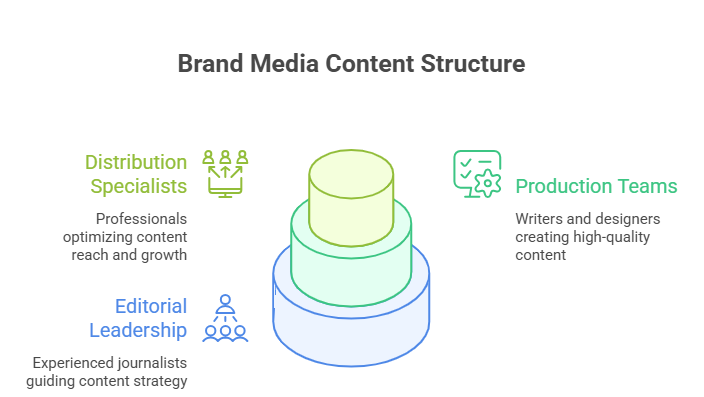
Building successful brand media requires fundamentally different organizational structures than traditional marketing teams. The most successful brand publishers have recognized that editorial excellence demands dedicated resources and specialized expertise.
Leading brand media companies structure their content teams around three core functions:
Red Bull exemplifies this approach with their sophisticated media operation. Their content team operates independently from their beverage marketing, focusing on extreme sports journalism and documentary production. This editorial independence allows them to build genuine audience trust while subtly reinforcing brand values.
The key insight is separating content creation from direct product promotion. Audiences engage with valuable content, not thinly veiled advertising. Brands that maintain editorial integrity while serving audience interests build stronger, more sustainable media properties.
Successful owned media strategies begin with clear audience definition and content positioning. Brands must identify specific audience segments they can serve better than existing publishers. This requires deep understanding of audience needs, competitive content gaps, and unique brand perspectives.
The most effective owned media strategies focus on three strategic pillars:
HubSpot’s approach illustrates strategic owned media execution. Their blog doesn’t just promote their software; it provides comprehensive education about inbound marketing, sales, and customer service. This positions HubSpot as the definitive resource for their target audience while generating substantial lead generation.
Their content strategy extends across multiple formats and platforms, including blogs, podcasts, video series, and interactive tools. Each content piece serves dual purposes: providing genuine value to audiences and subtly demonstrating HubSpot’s expertise and software capabilities.
While traditional publishers rely heavily on advertising revenue, brand media companies can pursue more diverse monetization strategies. The most successful brand publishers combine multiple revenue streams that reinforce their core business objectives.
Direct monetization approaches include:
Morning Brew demonstrates sophisticated content monetization. Starting as a daily newsletter, they’ve expanded into multiple publications, job boards, and live events. Their revenue model combines advertising, job posting fees, and premium subscriptions while maintaining editorial quality that audiences trust.
The brand has successfully leveraged influencer marketing and partnerships with micro-influencers to expand their reach while maintaining authentic marketing approaches that resonate with their professional audience. Their engagement rates remain high because they prioritize audience value over direct promotion.
Several brands have achieved remarkable success building media properties that rival traditional publishers in audience size and engagement quality.
Nike has evolved beyond athletic apparel into a multimedia content powerhouse. Their approach spans multiple platforms and content types, from Nike Run Club’s training content to documentary features highlighting athlete stories.
Their influencer strategy cleverly combines celebrity athletes with nano-influencers and micro-influencers who represent authentic fitness journeys. This approach generates higher engagement rates than traditional celebrity endorsements while building genuine community around fitness and athletic achievement.
Nike’s content doesn’t primarily sell products; it inspires athletic participation and celebrates achievement. This content-first approach strengthens brand affinity and drives long-term customer loyalty that translates into sustained revenue growth.
American Express has built comprehensive media properties focused on small business education and growth. Their OPEN Forum and related content initiatives provide practical business advice, success stories, and networking opportunities for entrepreneurs.
This content strategy positions American Express as an essential partner for small business success rather than just a payment processing provider. The content directly supports their business customer acquisition goals while providing genuine value to their target audience.
Their approach includes partnerships with business influencers and thought leaders who contribute expertise and expand content reach. This influencer strategy emphasizes credibility and practical value over promotional messaging.
Glossier has revolutionized beauty marketing through community-driven content creation. Rather than traditional advertising, they build content around customer experiences and authentic product usage.
Their strategy heavily incorporates user-generated content and partnerships with micro-influencers who genuinely use and recommend their products. This authentic marketing approach generates exceptional engagement rates and builds trust that traditional beauty advertising cannot match.
The brand’s media strategy extends across blogs, social platforms, and email newsletters that feel more like friendly conversations than promotional content. This approach has built a loyal community that actively advocates for the brand.
Measuring owned media success requires metrics that extend beyond traditional marketing KPIs. Brand media investments should be evaluated across multiple dimensions that reflect both immediate impact and long-term value creation.
| Metric Category | Key Indicators | Measurement Frequency |
|---|---|---|
| Audience Growth | Subscribers, followers, email list size | Monthly |
| Engagement Quality | Time on site, comment rates, social shares | Weekly |
| Revenue Attribution | Lead generation, conversion rates, customer acquisition cost | Monthly |
| Brand Health | Brand awareness, consideration, customer lifetime value | Quarterly |
The most sophisticated brand publishers track content ROI across the entire customer journey. This includes measuring how content consumption influences purchase decisions, customer retention, and advocacy behaviors.
Advanced analytics should connect content engagement to business outcomes. Brands need to understand which content types drive qualified leads, which topics resonate with high-value customers, and how content consumption affects customer lifetime value.
Building sustainable brand media requires robust technology infrastructure that supports content creation, distribution, and measurement at scale. The most successful brand publishers invest in platforms that enable consistent content production and sophisticated audience analytics.
Essential technology components include:
Leading brand publishers often build custom technology stacks that integrate content management with customer relationship management and e-commerce platforms. This integration enables sophisticated personalization and direct revenue attribution from content consumption.
The brand media trend will accelerate as technology continues lowering content creation and distribution barriers. Artificial intelligence and automation will enable smaller brands to compete with established publishers while maintaining content quality and consistency.
We’re entering an era where every brand must consider their media strategy as seriously as their product development. Brands that build authentic, valuable content properties will enjoy sustainable competitive advantages that traditional marketing cannot replicate.
The most successful future brands will seamlessly blend product innovation with content excellence, creating integrated experiences that serve customer needs while building business value. This convergence represents a fundamental shift in how businesses compete for customer attention and loyalty.
Smart brands are already preparing for this future by investing in editorial talent, content technology, and audience development capabilities. The brands that begin building media properties today will have significant advantages over competitors who delay this strategic evolution.
Brands considering media property development should follow a structured approach that minimizes risk while maximizing learning and growth potential.
Phase 1: Foundation Building (Months 1-3)
Phase 2: Audience Development (Months 4-12)
Phase 3: Monetization and Scale (Year 2+)
This phased approach allows brands to validate their media strategy before making significant investments while building the organizational capabilities necessary for long-term success.
Key Takeaways: Optimizing Average Order Value (AOV) consistently delivers faster, more measurable ROI than scaling paid traffic spend. Bundling, upsells, cross-sells, and...
Mike VillarKey Takeaways: Statistical significance is widely misunderstood and misreported in marketing tests, leading to decisions based on faulty data. Peeking at test results before...
Alvar SantosKey Takeaways: Looker Studio is the best budget-friendly option for marketing teams already embedded in the Google ecosystem, offering free access and solid connector support. Domo...
Amanda Bianca CoStart your brand's success journey today with a conversation. Share your goals and objectives with us and let's set up a discovery call.