Key Takeaways:
- Traditional PPC metrics like click-through rate and cost-per-click are becoming misleading indicators in AI-driven advertising environments
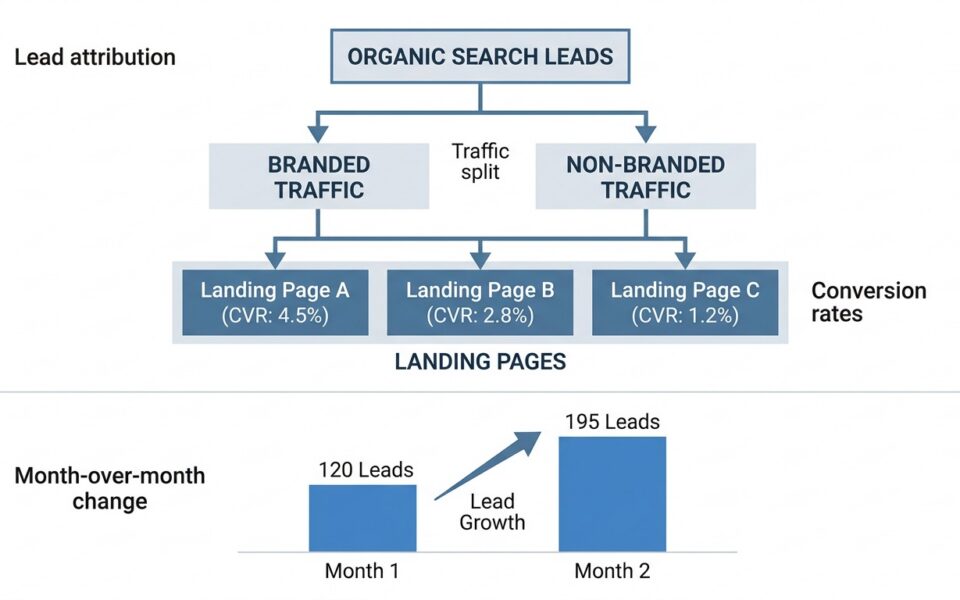
- Privacy-first attribution models require marketers to focus on incremental lift and customer lifetime value rather than last-click attribution
- Performance Max and Meta Advantage+ campaigns demand new optimization strategies centered on creative variety and audience signals
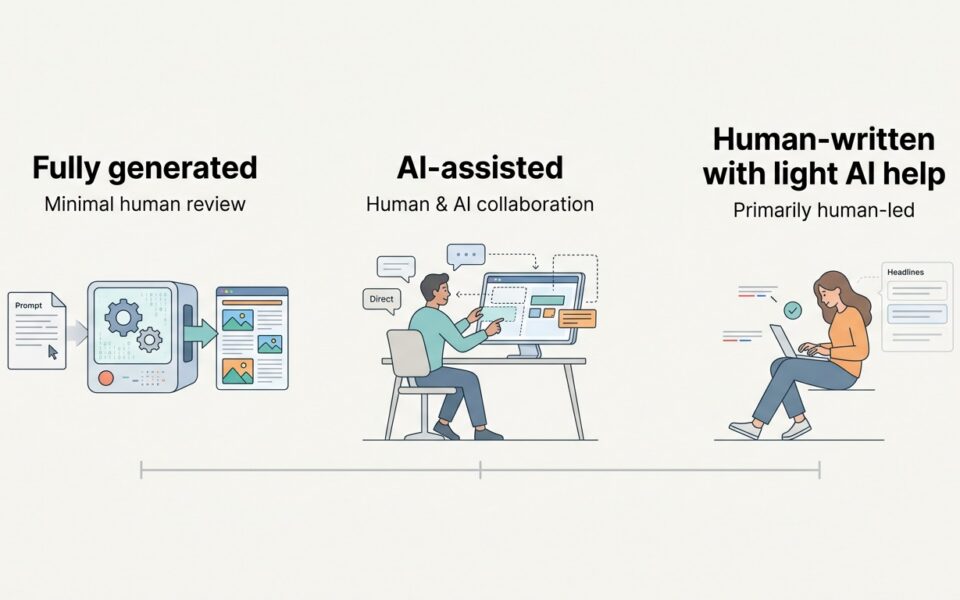
- Human insight becomes more valuable when combined with AI automation, particularly in creative strategy and audience hypothesis development
- Cross-channel measurement and predictive analytics are replacing traditional conversion tracking methods
The digital advertising landscape has undergone a seismic shift. The traditional metrics that guided PPC strategies for two decades are not just outdated—they’re actively misleading advertisers toward suboptimal decisions. As we navigate 2025, the integration of artificial intelligence, privacy-restrictive environments, and sophisticated automation platforms has fundamentally altered how we should measure, optimize, and think about paid media performance.
This isn’t another incremental evolution. This is a complete paradigm shift that requires advertisers to abandon their comfort zones and embrace a new framework for success. The traditional metrics we’ve relied on—click-through rates, cost-per-click, and even conversion rates—are becoming obsolete artifacts of a simpler time when user journeys were linear and attribution was straightforward.
The Death of Traditional Attribution Models
The foundation of traditional PPC measurement rested on the assumption that we could track users from initial click to final conversion with reasonable accuracy. This assumption is now fundamentally broken. iOS 14.5 was just the beginning—what we’re experiencing in 2025 is the complete erosion of traditional tracking mechanisms.
Consider the implications: when Apple’s App Tracking Transparency framework first launched, advertisers panicked about losing visibility into their iOS traffic. But the real disruption wasn’t just the immediate loss of data—it was the acceleration toward a privacy-first ecosystem where traditional attribution becomes impossible.
Google’s deprecation of third-party cookies, while delayed multiple times, has already forced advertisers to fundamentally rethink their measurement strategies. But here’s what most marketers miss: the solution isn’t finding new ways to track individual users—it’s developing measurement frameworks that don’t depend on individual user tracking at all.
Smart advertisers are already implementing incrementality testing frameworks that measure the true causal impact of their advertising spend. Instead of obsessing over which specific ad generated which specific conversion, they’re running controlled experiments to understand how their advertising influences overall business outcomes.
Here’s a practical implementation framework:
- Establish geographic holdout testing for 10-15% of your target markets
- Implement synthetic control methodologies to measure incremental impact
- Use customer lifetime value modeling instead of immediate conversion tracking
- Deploy media mix modeling to understand cross-channel attribution
AI-Driven Campaign Optimization Changes Everything
Performance Max and Meta Advantage+ campaigns represent more than just new campaign types—they’re evidence of a fundamental shift toward AI-driven optimization that makes traditional metrics irrelevant. When Google’s algorithms are making real-time decisions across multiple surfaces, bid adjustments, and creative combinations simultaneously, traditional metrics like individual keyword performance become meaningless.
The challenge isn’t that these platforms lack transparency—it’s that the traditional framework for understanding performance no longer applies. When a Performance Max campaign is simultaneously optimizing for YouTube viewers, Gmail promotions, and Discovery feed placements, measuring success through traditional channel-specific metrics creates a distorted view of reality.
Instead, advertisers need to focus on what I call “signal quality” metrics:
- Audience signal strength and diversity
- Creative asset performance distribution
- Cross-surface performance consistency
- Incremental reach and frequency optimization
The most successful campaigns I’ve analyzed in 2025 share a common characteristic: they provide the AI systems with rich, high-quality signals rather than trying to constrain algorithmic decision-making through traditional targeting parameters.
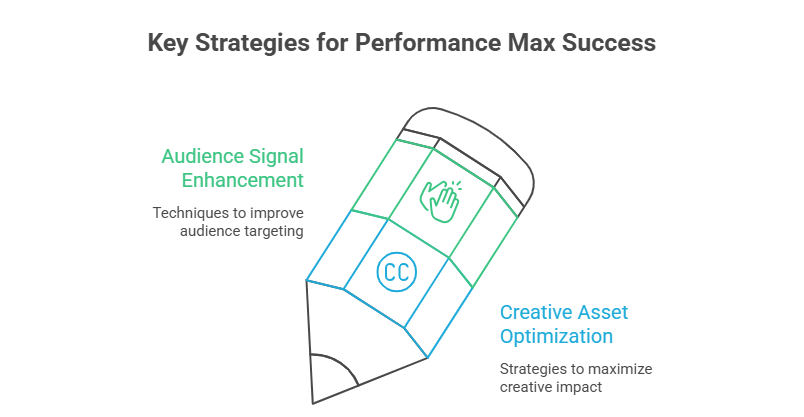
For Performance Max specifically, success correlates more strongly with creative variety and audience signal quality than with traditional optimization tactics. Here’s what actually moves the needle:
Creative Asset Optimization:
- Deploy a minimum of 15-20 unique creative assets across all formats
- Implement systematic creative testing with clear hypotheses
- Use Google’s asset reporting to identify top-performing combinations
- Rotate creative assets every 14-21 days to prevent creative fatigue
Audience Signal Enhancement:
- Upload customer lists with lifetime value segments
- Implement enhanced conversion tracking for better signal quality
- Use custom intent audiences based on actual business outcomes
- Layer demographic insights from first-party data sources
The New Metrics That Actually Matter
If traditional metrics are obsolete, what should advertisers focus on instead? The answer lies in understanding that modern paid media exists within a complex ecosystem where individual touchpoints matter less than overall system performance.
Customer Lifetime Value (CLV) Optimization: Instead of optimizing for immediate conversions, successful campaigns in 2025 optimize for long-term customer value. This requires sophisticated modeling that connects advertising spend to revenue generated over 12, 24, or 36-month periods.
Implementation requires building predictive models that estimate CLV based on early behavioral signals. E-commerce brands are using machine learning models that predict lifetime value within the first 7 days of customer acquisition, then feeding these predictions back into their bidding algorithms.
Incremental Revenue Attribution: Rather than asking “which ad drove this conversion,” the better question is “how much additional revenue did our advertising generate?” This shift from deterministic to probabilistic measurement reflects the reality of modern customer journeys.
Practical implementation involves running controlled experiments where advertising spend is systematically varied across different geographic regions or time periods, then measuring the impact on overall business metrics.
Cross-Channel Performance Correlation: Modern measurement requires understanding how paid media performance influences organic search rankings, social media engagement, and direct traffic patterns. The most sophisticated advertisers are using marketing mix modeling to understand these interconnected effects.
Automation Plus Human Insight: The Winning Combination
The rise of AI-driven advertising platforms doesn’t eliminate the need for human strategic thinking—it amplifies the importance of high-level strategic decisions while automating tactical execution. The most successful campaigns combine algorithmic optimization with human-generated strategic insights.
Here’s where human expertise becomes more valuable, not less:
Creative Strategy Development: While AI can optimize creative delivery and identify top-performing assets, humans excel at developing creative hypotheses based on market insights, competitive analysis, and brand positioning. The best results come from human-designed creative strategies executed through AI-optimized delivery systems.
Audience Hypothesis Formation: AI systems excel at finding patterns within the data they’re provided, but humans are better at forming hypotheses about new audience segments based on market research, customer interviews, and competitive intelligence.
Cross-Platform Strategy Coordination: While individual platforms optimize within their own ecosystems, humans are essential for coordinating strategies across multiple platforms to avoid audience overlap and ensure consistent messaging.
The most effective approach combines custom GPT workflows for data analysis and insight generation with human strategic oversight. For example, successful agencies are using custom AI tools to analyze performance data across multiple platforms, identify anomalies, and generate optimization recommendations, while human experts provide strategic context and make high-level decisions about campaign direction.
Privacy-First Optimization Strategies
The privacy-restrictive environment of 2025 requires fundamentally different optimization approaches. Instead of trying to recreate traditional tracking capabilities, successful advertisers are building optimization strategies that work within privacy constraints.
First-Party Data Activation: The most valuable asset in modern advertising isn’t third-party data—it’s high-quality first-party data that can be ethically used for targeting and measurement. This includes:
- Customer email lists with engagement scoring
- Website behavioral data through server-side tracking
- Purchase history and customer lifetime value models
- Survey data and explicit customer preferences
Contextual Targeting Renaissance: With behavioral targeting becoming less effective, contextual targeting is experiencing a renaissance. But modern contextual targeting goes far beyond keyword matching—it involves sophisticated content analysis, sentiment detection, and audience intent modeling.
Advanced contextual strategies include:
- Semantic content analysis for placement targeting
- Real-time sentiment monitoring for brand safety
- Competitive context analysis for strategic placement
- Seasonal and temporal context optimization
Privacy-Compliant Measurement: Effective measurement in a privacy-first environment requires new methodologies that don’t depend on individual user tracking:
| Traditional Method |
Privacy-First Alternative |
Implementation Complexity |
| Last-click attribution |
Marketing mix modeling |
High |
| Conversion tracking |
Incrementality testing |
Medium |
| Audience insights |
First-party data analysis |
Medium |
| Competitive benchmarking |
Market-level analysis |
Low |
Advanced Creative Optimization in AI Environments
Creative optimization in AI-driven campaigns requires understanding how machine learning algorithms evaluate and distribute creative assets. Traditional A/B testing approaches are insufficient when dealing with AI systems that are simultaneously testing hundreds of creative combinations across multiple surfaces.
The most effective creative optimization strategies in 2025 focus on providing AI systems with diverse, high-quality assets that can be dynamically combined and optimized:
Modular Creative Development: Instead of creating finished ads, successful advertisers are creating modular creative components that AI systems can combine in different ways:
- Headlines with different emotional triggers and value propositions
- Visual assets that work across multiple aspect ratios and placements
- Call-to-action variations optimized for different user intents
- Product imagery that can be dynamically personalized
Performance-Based Creative Iteration: Modern creative optimization requires rapid iteration based on AI-generated performance insights. This means:
- Weekly creative performance reviews using platform-specific reporting
- Systematic testing of creative hypotheses across audience segments
- Dynamic creative optimization based on real-time performance data
- Cross-platform creative performance analysis to identify universal insights
Audience Targeting in the Post-Cookie Era
Audience targeting strategies must evolve beyond traditional demographic and behavioral parameters. The most effective approaches combine multiple signal sources to create rich audience profiles that work within privacy constraints.
Intent-Based Audience Development: Rather than targeting users based on past behavior, successful campaigns target users based on current intent signals:
- Search query analysis for immediate intent identification
- Content engagement patterns for interest qualification
- Cross-device behavior modeling for comprehensive intent mapping
- Predictive intent scoring based on multiple data sources
Lookalike Modeling Evolution: Traditional lookalike audiences are being replaced by more sophisticated similar audience models that consider multiple dimensions of similarity:
- Behavioral similarity across multiple touchpoints
- Value-based similarity using customer lifetime value models
- Intent similarity based on current market research
- Contextual similarity considering current market conditions
Attribution Modeling for Complex Customer Journeys
Modern customer journeys are far too complex for traditional attribution models to handle effectively. The path from initial awareness to final purchase might involve dozens of touchpoints across multiple devices, platforms, and time periods.
Successful attribution in 2025 requires probabilistic models that can account for this complexity:
Data-Driven Attribution Models: These models use machine learning to analyze all available touchpoint data and assign conversion credit based on actual influence rather than arbitrary rules:
- Shapley value calculations for fair credit distribution
- Time-decay modeling that accounts for diminishing touchpoint influence
- Position-based models that recognize the importance of first and last touches
- Custom attribution models based on business-specific customer journey patterns
Unified Measurement Frameworks: Instead of trying to measure each channel in isolation, advanced advertisers are implementing unified measurement frameworks that consider all marketing activities holistically:
- Marketing mix modeling for high-level budget allocation
- Multi-touch attribution for tactical optimization
- Incrementality testing for causal measurement
- Customer journey analytics for strategic insights
The Role of Predictive Analytics
Predictive analytics has evolved from a nice-to-have capability to an essential component of effective paid media strategy. Modern campaigns use predictive models to anticipate customer behavior, optimize bidding strategies, and allocate budgets more effectively.
Customer Lifetime Value Prediction: Advanced CLV models can predict the long-term value of customers based on early behavioral signals, enabling more sophisticated bidding strategies:
- Machine learning models that analyze hundreds of behavioral variables
- Real-time CLV scoring that updates based on post-acquisition behavior
- Segmented CLV models that account for different customer types
- Seasonal CLV adjustments based on historical patterns
Demand Forecasting: Predictive models can anticipate changes in market demand, enabling proactive campaign optimization:
- Seasonal demand modeling for budget allocation
- Competitive response prediction for strategic planning
- Market trend analysis for creative strategy development
- Economic indicator modeling for risk management
Cross-Channel Orchestration
Modern paid media strategy requires sophisticated cross-channel orchestration that goes far beyond simply running campaigns on multiple platforms. Successful orchestration involves coordinating message sequencing, audience development, and budget allocation across all paid channels.
Sequential Messaging Strategies: Instead of delivering the same message across all channels, sophisticated advertisers are implementing sequential messaging strategies that guide prospects through a carefully orchestrated journey:
- Awareness-stage messaging through high-reach channels like YouTube and Facebook
- Consideration-stage content through search and social media advertising
- Decision-stage messaging through retargeting and email marketing
- Retention-stage communication through customer lifecycle campaigns
Dynamic Budget Allocation: Advanced campaigns use real-time performance data to automatically adjust budget allocation across channels:
- Performance-based budget shifting using automated rules
- Seasonal allocation adjustments based on historical patterns
- Competitive response budget reallocation for strategic advantage
- Opportunity-based spending increases for high-performing campaigns
Building Future-Proof Measurement Systems
The rapid pace of change in digital advertising requires measurement systems that can adapt to future developments while providing consistent insights for optimization. Building future-proof measurement requires focusing on foundational principles rather than platform-specific metrics.
Business Outcome Alignment: The most resilient measurement systems focus on business outcomes rather than platform-specific metrics:
- Revenue attribution models that connect advertising spend to actual business results
- Customer acquisition cost calculations that include lifetime value projections
- Market share analysis that considers competitive dynamics
- Brand awareness measurement that tracks long-term positioning
Adaptable Framework Development: Future-proof measurement frameworks are designed to incorporate new data sources and measurement methodologies as they become available:
- Modular measurement architectures that can integrate new platforms
- Standardized data formats that work across multiple systems
- Automated reporting systems that can adapt to changing privacy requirements
- Flexible attribution models that can incorporate new touchpoint data
Practical Implementation Roadmap
Transitioning from traditional PPC metrics to modern measurement requires a systematic approach that balances immediate needs with long-term strategic goals. Here’s a practical roadmap for making this transition:
Phase 1: Foundation Building (Months 1-3)
- Implement enhanced conversion tracking across all platforms
- Establish first-party data collection and management systems
- Deploy customer lifetime value modeling for key customer segments
- Begin incrementality testing with small budget allocations
Phase 2: Advanced Implementation (Months 4-6)
- Deploy marketing mix modeling for cross-channel attribution
- Implement predictive analytics for customer behavior forecasting
- Establish cross-platform creative optimization processes
- Begin systematic testing of AI-driven campaign types
Phase 3: Optimization and Scale (Months 7-12)
- Refine attribution models based on business-specific patterns
- Scale successful AI-driven campaigns across all relevant platforms
- Implement automated budget allocation based on performance modeling
- Establish continuous testing frameworks for ongoing optimization
The transformation of paid media measurement isn’t just about adopting new tools—it’s about fundamentally changing how we think about advertising effectiveness. The traditional metrics that guided the industry for decades are being replaced by sophisticated models that better reflect the reality of modern customer behavior and privacy-conscious digital environments.
Success in this new environment requires embracing uncertainty, investing in sophisticated measurement capabilities, and maintaining a relentless focus on business outcomes rather than vanity metrics. The advertisers who make this transition successfully will have a significant competitive advantage over those who cling to obsolete measurement frameworks.
The future belongs to marketers who can combine the power of AI-driven optimization with strategic human insight, creating campaigns that are both more effective and more respectful of customer privacy. This isn’t just about surviving in a post-cookie world—it’s about thriving in an environment where sophisticated measurement and optimization create unprecedented opportunities for growth.
Glossary of Terms
- Performance Max: Google’s AI-driven campaign type that automatically optimizes ads across all Google properties including Search, YouTube, Display, and Gmail
- Meta Advantage+: Facebook’s automated campaign optimization system that uses machine learning to optimize targeting, placement, and creative delivery
- Customer Lifetime Value (CLV): The predicted total revenue a customer will generate over their entire relationship with a business
- Incrementality Testing: A measurement methodology that determines the causal impact of advertising by comparing performance between test and control groups
- Marketing Mix Modeling: Statistical analysis technique that quantifies the impact of various marketing activities on sales or other business outcomes
- First-Party Data: Customer information that a company collects directly from its audience through owned channels
- Attribution Modeling: The process of determining which marketing touchpoints receive credit for conversions
- Contextual Targeting: Advertising targeting method based on the content and context of websites rather than user behavior data
- Predictive Analytics: The use of statistical algorithms and machine learning techniques to identify future outcomes based on historical data
- Cross-Channel Orchestration: The coordination of marketing messages and strategies across multiple advertising platforms and channels
Further Reading