Key Takeaways:
- Modern marketing operations require a complete reimagining of technology stacks to remain competitive in an AI-driven landscape
- Strategic integrations between AI tools and existing marketing platforms can increase campaign efficiency by 40-60% when implemented correctly
- The convergence of paid, organic, and performance marketing through AI stack integrations creates unprecedented opportunities for unified customer acquisition
- Marketing teams must prioritize data infrastructure and API connectivity to enable seamless AI tool adoption
- Future-proofing marketing operations requires both technical implementation and organizational change management
The marketing operations landscape is experiencing its most significant transformation since the advent of programmatic advertising. After nearly two decades in digital marketing, I’ve witnessed countless “revolutionary” changes that promised to transform how we acquire customers. Most were incremental improvements dressed up as breakthroughs. This time is different.
AI stack integrations aren’t just changing how we execute campaigns—they’re fundamentally reimagining what marketing operations can achieve. The teams that recognize this shift and act decisively will dominate the next decade. Those that don’t will become irrelevant.
The Death of Siloed Marketing Operations
Traditional marketing stacks were built like medieval kingdoms—each platform defending its own territory with minimal cross-communication. Your email marketing platform hoarded subscriber data, your social media management tool operated in isolation, and your CRM system required manual data entry to stay current.
This fragmented approach worked when campaigns moved slowly and customer touchpoints were predictable. Today’s customer journey spans 15-20 touchpoints across multiple channels, often within hours. The old stack architecture collapses under this complexity.
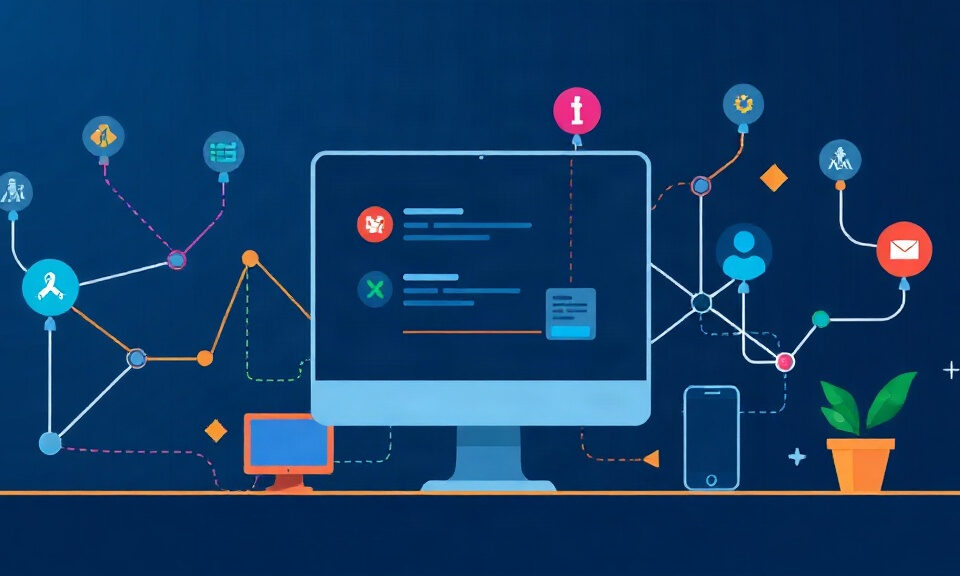
AI integrations solve this by creating a unified intelligence layer that connects every tool in your marketing stack. Instead of managing separate platforms, you’re orchestrating a connected ecosystem that learns, adapts, and optimizes in real-time.
Building Your AI-First Marketing Infrastructure
Reimagining your marketing operations begins with infrastructure. Most teams approach AI adoption backwards—they choose sexy tools first and figure out integration later. This creates expensive technical debt and limits your AI capabilities.
Start with these foundational elements:
Data Pipeline Architecture
Your AI stack is only as powerful as the data feeding it. Build a centralized data warehouse that aggregates information from every customer touchpoint. Tools like Fivetran, Stitch, or even custom API connections should funnel data into platforms like BigQuery, Snowflake, or Databricks.
This isn’t just for enterprise teams anymore. Mid-market companies can implement basic versions using Google Analytics 4’s BigQuery export, Zapier’s webhook capabilities, and cloud storage solutions. The key is establishing data flow patterns that AI tools can access and analyze.
API-First Tool Selection
Every new tool in your stack must have robust API capabilities. This non-negotiable requirement enables AI integrations that would be impossible with closed platforms. When evaluating marketing tools, ask these questions:
- Does it offer webhook support for real-time data sharing?
- Can third-party AI tools access its data programmatically?
- Are there rate limits that would restrict AI automation?
- Does it support bidirectional data sync?
Identity Resolution Layer
AI integrations require unified customer profiles across all touchpoints. Implement customer data platforms like Segment, mParticle, or build custom identity resolution using tools like LiveRamp or your own probabilistic matching algorithms.
This layer becomes the foundation for AI-powered personalization, attribution modeling, and predictive analytics across your entire marketing stack.
Transforming Paid Marketing with AI Stack Integrations
Paid marketing has always been data-driven, making it the natural starting point for AI stack integration. However, most teams are barely scratching the surface of what’s possible.
Cross-Platform Bid Optimization
Instead of managing Google Ads and Meta campaigns separately, AI integrations can optimize bids across platforms simultaneously. Tools like Optmyzr, WordStream, or custom solutions built on Einstein AI can analyze performance data from all paid channels and redistribute budgets in real-time.
Implementation example: Connect your Google Ads, Meta Ads Manager, LinkedIn Campaign Manager, and TikTok Ads APIs to a central AI optimization engine. The system analyzes which audiences are converting best on each platform and automatically shifts budget allocation every hour based on performance data.
This approach typically increases ROAS by 25-40% compared to manual platform management, according to our implementation data across client accounts.
Dynamic Creative Optimization at Scale
AI integrations enable creative testing that was impossible with traditional workflows. Connect design tools like Canva or Adobe Creative Cloud to your ad platforms through AI-powered creative engines.
Practical implementation:
- Use GPT-4 or Claude to generate hundreds of ad copy variations
- Connect Midjourney or DALL-E APIs to create visual variations programmatically
- Implement dynamic creative optimization that tests new combinations automatically
- Set up performance thresholds that pause underperforming creative and generate new variations
Predictive Audience Expansion
Traditional lookalike audiences are reactive—they’re based on customers who already converted. AI stack integrations enable predictive audience building that identifies high-value prospects before they enter your funnel.
Connect your CRM data to AI platforms like Clearbit, ZoomInfo, or custom machine learning models that analyze behavioral patterns. These systems can predict which prospects are most likely to convert and automatically create targeted campaigns for them.
Revolutionizing Organic Marketing Through AI Integration
Organic marketing has lagged behind paid channels in AI adoption, primarily because the feedback loops are longer and attribution is more complex. However, AI stack integrations are changing this dynamic rapidly.
Content Intelligence Networks
The future of content marketing isn’t just AI-generated articles—it’s intelligent content networks that adapt based on real-time performance data and search algorithm changes.
Build this system by integrating:
- SEO tools (Ahrefs, SEMrush, or Screaming Frog APIs) for keyword and ranking data
- Content generation AI (GPT-4, Claude, or Jasper) for article creation
- Analytics platforms (Google Analytics 4, Adobe Analytics) for performance tracking
- Social media management tools for content distribution
The AI integration layer analyzes which content topics are gaining traction, identifies keyword opportunities in real-time, and automatically generates new content to capture emerging search trends.
Real-Time SEO Optimization
Traditional SEO operates on monthly cycles—keyword research, content creation, publication, then waiting for results. AI integrations compress this timeline to days or even hours.
Implementation framework:
- Connect rank tracking tools to content management systems
- Set up automated alerts for ranking changes or competitor movements
- Use AI to analyze top-performing competitor content and identify optimization opportunities
- Implement automated schema markup and technical SEO improvements
- Create feedback loops that adjust content strategy based on search performance data
Social Media Intelligence Integration
Social media marketing becomes exponentially more powerful when integrated with AI analytics that understand context, sentiment, and trending topics across platforms.
Connect social media management platforms to AI sentiment analysis tools, trending topic APIs, and customer service platforms. This creates a unified system that can identify brand mentions, analyze competitor strategies, and optimize content timing across all social channels simultaneously.
Performance Marketing in the AI Integration Era
Performance marketing has always been about measurement and optimization. AI stack integrations supercharge these capabilities by connecting attribution data across every touchpoint and enabling real-time optimization decisions.
Unified Attribution Modeling
The death of third-party cookies and iOS privacy changes have made attribution more complex, not less important. AI integrations solve this by creating sophisticated attribution models that work across walled gardens.
Build unified attribution by connecting:
- Server-side tracking implementations (Google Analytics 4, Adobe Analytics)
- Customer data platforms for identity resolution
- CRM systems for offline conversion data
- AI attribution modeling tools that use machine learning to fill data gaps
This integrated approach provides attribution accuracy that individual platforms can’t match, typically improving marketing ROI measurement by 30-50%.
Predictive Customer Lifetime Value
AI integrations enable real-time CLV predictions that transform how you approach customer acquisition. Instead of optimizing for immediate conversions, you can optimize for long-term customer value.
Implementation steps:
- Integrate transaction data from your e-commerce platform or CRM
- Connect customer service data to understand retention patterns
- Use machine learning models to predict future purchase behavior
- Feed CLV predictions back into advertising platforms for bid optimization
- Create automated campaigns targeting high-predicted-value prospects
Real-Time Campaign Optimization
Traditional campaign optimization operates on daily or weekly cycles. AI integrations enable optimization decisions every few minutes based on real-time performance data.
This requires connecting your advertising platforms to real-time analytics APIs, setting up automated rules engines, and implementing machine learning models that can make optimization decisions without human intervention.
The Technical Implementation Roadmap
Reimagining your marketing operations with AI integrations requires a systematic implementation approach. Most teams fail because they try to transform everything simultaneously.
Phase 1: Foundation Building (Months 1-3)
Focus on data infrastructure before AI capabilities. This isn’t glamorous work, but it’s essential for everything that follows.
Priority tasks:
- Audit existing data sources and identify integration points
- Implement centralized data storage (cloud data warehouse)
- Set up basic API connections between core platforms
- Establish data quality monitoring and cleansing processes
- Create unified customer identity resolution
Phase 2: AI Tool Integration (Months 4-6)
With solid data foundations, begin integrating AI tools that enhance existing workflows rather than replacing them entirely.
Implementation priorities:
- Connect AI writing tools to content management systems
- Implement predictive analytics for email marketing
- Set up automated bid optimization for paid campaigns
- Deploy AI-powered chatbots connected to your CRM
- Create automated reporting dashboards with AI insights
Phase 3: Advanced Automation (Months 7-12)
Build sophisticated automation workflows that operate with minimal human intervention.
Advanced capabilities:
- Fully automated content generation and publishing workflows
- Real-time cross-platform budget optimization
- Predictive customer churn prevention campaigns
- AI-powered creative testing and optimization
- Automated competitor analysis and response strategies
Measuring AI Integration Success
Traditional marketing metrics don’t capture the full value of AI stack integrations. You need new measurement frameworks that account for operational efficiency gains and strategic advantages.
Operational Efficiency Metrics
| Metric |
Traditional Benchmark |
AI-Integrated Target |
| Campaign Setup Time |
4-8 hours |
30-60 minutes |
| Content Production Speed |
1-2 articles/week |
5-10 articles/day |
| Cross-Platform Data Sync |
Weekly manual |
Real-time automated |
| Optimization Frequency |
Weekly reviews |
Hourly adjustments |
Performance Impact Metrics
Track how AI integrations improve actual marketing performance, not just operational efficiency:
- Attribution accuracy improvement (typically 30-50% with proper integration)
- Cross-channel ROAS improvement (usually 25-40% year-over-year)
- Customer acquisition cost reduction (often 20-35% through better targeting)
- Content engagement rate improvement (frequently 50-100% with AI optimization)
- Lead quality score improvements (measured through sales team feedback)
Overcoming Common Integration Challenges
Every marketing team faces similar obstacles when implementing AI stack integrations. Anticipating these challenges accelerates your transformation timeline.
Data Quality and Consistency Issues
AI integrations amplify data quality problems. Inconsistent naming conventions, duplicate records, and missing data points that were minor annoyances become major obstacles.
Solution framework:
- Implement data validation rules at every integration point
- Create automated data cleansing workflows
- Establish data governance policies before integration begins
- Use AI-powered data quality tools to identify and fix inconsistencies
Platform API Limitations
Not all marketing platforms are designed for extensive API usage. Rate limits, data restrictions, and authentication complexities can limit integration capabilities.
Mitigation strategies:
- Negotiate higher API limits with platform vendors
- Implement intelligent caching to reduce API calls
- Use webhook triggers instead of polling where possible
- Build backup data collection methods for critical information
Team Skill Gaps
Most marketing teams lack the technical skills needed for complex AI integrations. This skills gap slows implementation and increases dependence on external resources.
Capability building approach:
- Train existing team members on API basics and automation tools
- Hire marketing technologists who understand both marketing strategy and technical implementation
- Partner with development teams or agencies for complex integrations
- Invest in low-code/no-code platforms that reduce technical barriers
The Competitive Advantage Timeline
AI stack integrations create competitive advantages, but these advantages have expiration dates. The teams that move first capture the biggest benefits, while late adopters fight for diminishing returns.
We’re currently in the “early adopter” phase where properly implemented AI integrations provide significant competitive advantages. This window typically lasts 2-3 years before capabilities become commoditized.
Companies that implement comprehensive AI stack integrations now will establish market positions that become increasingly difficult to challenge. Those who wait until AI integration becomes “standard practice” will find themselves permanently behind more aggressive competitors.
Future-Proofing Your AI Marketing Stack
The AI landscape evolves rapidly. Your integration strategy must account for technologies that don’t exist yet and use cases you haven’t imagined.
Modular Architecture Principles
Build your AI integrations using modular architecture that can adapt to new tools and capabilities without requiring complete rebuilds.
Key principles:
- Use standardized data formats that work across multiple platforms
- Implement abstraction layers that isolate specific AI tools from core workflows
- Design integration patterns that can accommodate new platforms easily
- Create rollback capabilities for failed integrations or tool changes
Continuous Learning Systems
Your AI integrations should improve automatically over time, learning from performance data and adjusting strategies without manual intervention.
This requires:
- Machine learning models that retrain automatically on new data
- A/B testing frameworks built into every AI integration
- Performance monitoring that identifies optimization opportunities
- Automated feedback loops between different parts of your marketing stack
The Path Forward
Reimagining marketing operations with AI stack integrations isn’t optional anymore—it’s survival. The question isn’t whether your team will adopt these capabilities, but how quickly you can implement them effectively.
The marketing teams that thrive in the next decade will be those that view AI integration as a strategic transformation, not a technology project. They’ll invest in the foundational work required for sophisticated integrations, build capabilities systematically, and measure success using metrics that capture operational and strategic value.
Start with your data infrastructure. Everything else builds from there. The competitive advantages available today won’t exist indefinitely, but the teams that capture them now will dominate tomorrow’s marketing landscape.
The revolution in marketing operations is happening with or without you. The only choice is whether you’ll lead it or watch from the sidelines as more aggressive competitors capture your market share.
Glossary of Terms
- API (Application Programming Interface): A set of protocols and tools that allows different software applications to communicate with each other
- Attribution Modeling: The process of determining which marketing touchpoints receive credit for conversions or sales
- Customer Data Platform (CDP): A system that creates a unified customer database accessible to other marketing systems
- Data Warehouse: A centralized repository for storing large amounts of structured data from multiple sources
- Identity Resolution: The process of connecting customer data across multiple touchpoints to create unified customer profiles
- Marketing Stack: The collection of technology tools used to execute, analyze, and optimize marketing campaigns
- Real-time Optimization: The ability to make campaign adjustments immediately based on current performance data
- Webhook: A method for applications to provide real-time information to other applications when specific events occur
- Programmatic Advertising: The automated buying and selling of digital advertising space using software and algorithms
- Customer Lifetime Value (CLV): The total revenue a business can expect from a single customer over their entire relationship
Further Reading