
Why Average Order Value Optimization Beats Chasing New Traffic
Key Takeaways: Optimizing Average Order Value (AOV) consistently delivers faster, more measurable ROI than scaling paid traffic spend. Bundling, upsells, cross-sells, and...
Mike VillarKey Takeaways: Fractional marketing leaders provide C-level strategic expertise without the full-time executive overhead, delivering immediate ROI through specialized knowledge and...
 Alvar SantosFebruary 16, 2026

Key Takeaways:
The traditional executive hiring paradigm is fundamentally broken. While boards continue to invest millions in full-time C-suite positions, forward-thinking organizations are discovering a more agile, cost-effective approach that delivers superior results: fractional marketing leadership.
After nearly two decades of witnessing executive teams struggle with marketing accountability, budget optimization, and strategic direction, the evidence is overwhelming. The fractional executive model isn’t just an alternative to traditional hiring—it’s often the superior choice for companies seeking transformational growth without the overhead and risk of permanent executive commitments.
Modern executive teams face an unprecedented challenge. Marketing has evolved into a complex ecosystem requiring expertise across digital channels, AI-driven optimization, customer acquisition technologies, and advanced analytics. Yet most organizations either lack senior marketing leadership entirely or rely on executives whose expertise became obsolete years ago.
The data is stark. Companies without dedicated marketing leadership experience 23% slower revenue growth and 34% higher customer acquisition costs, according to recent enterprise performance studies. More critically, these organizations struggle with:
Traditional solutions—hiring full-time CMOs or promoting internal candidates—often fail because they either exceed budget constraints or lack the specialized expertise modern marketing demands. This creates a strategic vacuum precisely when marketing leadership matters most.
Fractional marketing leaders represent a paradigm shift in executive strategy. These are accomplished professionals who work with multiple organizations simultaneously, bringing enterprise-level expertise at a fraction of traditional executive costs.
The model delivers three critical advantages that permanent hires cannot match:
Immediate Strategic Impact: Fractional leaders arrive with proven frameworks, established vendor relationships, and battle-tested strategies. Unlike traditional hires who require 6-12 months to understand company dynamics and market positioning, fractional executives begin delivering value within weeks.
Cross-Industry Intelligence: Working across multiple organizations provides fractional leaders with unique market insights and competitive intelligence. They identify opportunities and threats that insular executives miss, bringing fresh perspectives that drive innovation.
Risk Mitigation: The fractional engagement model eliminates traditional hiring risks. Organizations can evaluate performance in real-time and adjust engagement scope without the complexity of executive terminations or reorganization costs.
One of the most underestimated benefits of fractional marketing leadership involves board communication and strategic reporting. Many internal marketing professionals struggle to translate tactical activities into business outcomes that resonate with board members and investors.
Fractional CMOs excel at board-level communication because they understand the language of business outcomes rather than marketing metrics. They present data through frameworks that demonstrate clear connections between marketing investments and revenue growth, customer lifetime value, and market expansion.
Consider this practical framework that fractional leaders use for board presentations:
This level of strategic communication builds board confidence in marketing investments and ensures continued support for growth initiatives.
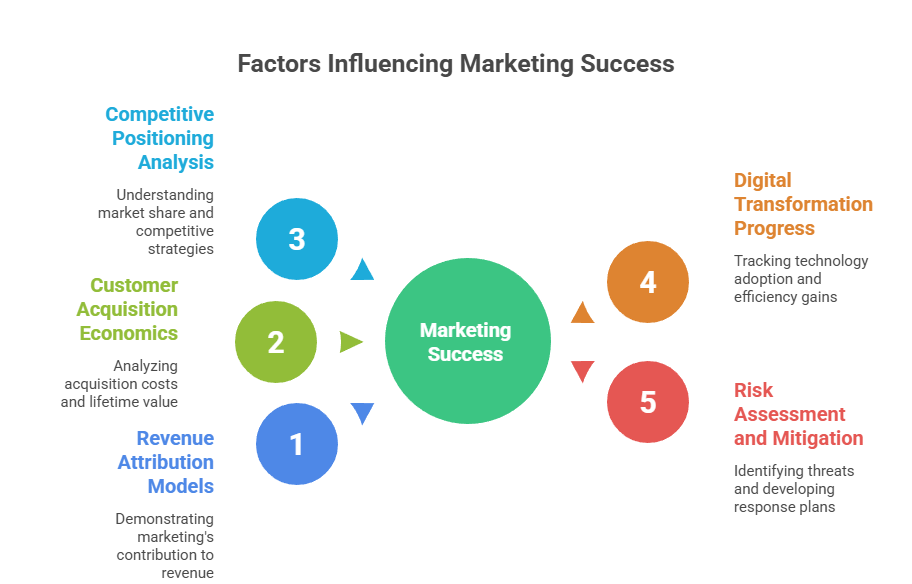
Perhaps nowhere is fractional leadership more valuable than during periods of significant organizational change. Whether managing restructuring initiatives, market expansion, or digital transformation projects, fractional marketing leaders bring specialized change management expertise that internal teams often lack.
The fractional model proves particularly effective during transition planning phases. These executives can assess current capabilities, identify skill gaps, and design transformation roadmaps without the political complications that often hamper internal change initiatives.
Key change management scenarios where fractional leaders excel include:
Technology Platform Migrations: Leading transitions from legacy marketing systems to modern, integrated platforms while maintaining business continuity and team productivity.
Team Restructuring: Optimizing marketing organizational structures, defining new roles and responsibilities, and managing personnel transitions with minimal disruption.
Market Expansion Initiatives: Developing go-to-market strategies for new geographic markets or customer segments, including localization strategies and cultural adaptation.
Post-Acquisition Integration: Harmonizing marketing functions following mergers or acquisitions, ensuring brand consistency and operational efficiency.
The financial advantages of fractional marketing leadership extend far beyond salary savings. While full-time CMO compensation packages often exceed $300,000 annually including benefits, equity, and overhead costs, fractional arrangements typically deliver superior value at 30-40% of those costs.
Consider this comprehensive cost comparison:
| Cost Factor | Full-Time CMO | Fractional CMO | Savings |
|---|---|---|---|
| Base Compensation | $250,000 | $100,000 | $150,000 |
| Benefits & Taxes | $75,000 | $0 | $75,000 |
| Equity Compensation | $50,000 | $0 | $50,000 |
| Recruiting Costs | $40,000 | $5,000 | $35,000 |
| Office & Overhead | $25,000 | $0 | $25,000 |
| Total Annual Cost | $440,000 | $105,000 | $335,000 |
Beyond direct cost savings, fractional arrangements eliminate several hidden expenses associated with executive hiring:
The economic efficiency becomes even more pronounced when considering the specialized expertise fractional leaders provide. Organizations gain access to professionals with experience across multiple industries, advanced certifications, and established vendor relationships that would take years for internal hires to develop.
The theoretical advantages of fractional marketing leadership become compelling when examining actual transformation results across different industries and company stages.
SaaS Startup Acceleration: A Series B software company struggling with product-market fit engaged a fractional CMO to restructure their go-to-market strategy. Within six months, the fractional leader implemented account-based marketing frameworks, optimized their customer acquisition funnel, and established predictable revenue growth. The result: a 240% increase in qualified pipeline and successful Series C funding round valued at $45 million.
Manufacturing Digital Transformation: A traditional manufacturing company facing digital disruption brought in fractional marketing leadership to guide their transition planning. The fractional CMO developed an integrated digital strategy, implemented marketing automation systems, and trained internal teams on modern customer acquisition methods. Over 18 months, digital channels grew from 12% to 65% of total revenue, while customer acquisition costs decreased by 35%.
Healthcare Market Expansion: A regional healthcare provider planning national expansion engaged fractional leadership to manage the complex regulatory and operational challenges of multi-state growth. The fractional CMO created market entry strategies for five new geographic regions, established compliance frameworks for healthcare marketing, and built scalable processes for local market adaptation. The expansion succeeded ahead of schedule, achieving profitability in four of five target markets within the first year.
Retail Chain Restructuring: Following private equity acquisition, a retail chain required comprehensive marketing reorganization to improve operational efficiency and customer experience. The fractional marketing leader managed the complete restructuring of marketing operations, consolidated vendor relationships, and implemented performance-based accountability systems. Results included a 28% reduction in marketing spend while increasing customer lifetime value by 45%.
Success with fractional marketing leadership requires thoughtful integration strategies that maximize value while minimizing organizational friction. Based on extensive implementation experience, several critical factors determine engagement success.
Governance Structure Design: Effective fractional engagements require clear reporting relationships and decision-making authority. The fractional leader should report directly to the CEO or COO, with well-defined boundaries regarding budget authority, strategic decision-making, and team management responsibilities.
Recommended governance framework:
Success Metrics Definition: Unlike traditional employment relationships, fractional engagements require specific, measurable success criteria established before engagement begins. These metrics should align with broader business objectives while remaining achievable within the fractional leader’s sphere of influence.
Essential success metrics include:
Team Integration Strategies: Fractional leaders must quickly establish credibility and working relationships with existing team members. This requires deliberate integration planning and change management sensitivity.
Best practices for team integration include:
Modern marketing leadership demands sophisticated technology expertise that many traditional executives lack. Fractional marketing leaders often bring specialized knowledge of marketing automation platforms, customer relationship management systems, and analytics tools that can transform organizational capabilities.
The technology advantage becomes particularly valuable during digital transformation initiatives. Fractional leaders can evaluate existing technology stacks, identify integration opportunities, and recommend platform optimizations without vendor bias or internal political considerations.
Key technology areas where fractional leaders drive value:
The fractional model excels in strategic planning scenarios because these leaders bring external perspective combined with hands-on execution experience. Unlike consulting firms that provide recommendations without implementation accountability, fractional executives own both strategy development and execution results.
This dual responsibility creates powerful alignment between strategic vision and practical implementation. Fractional leaders design strategies they personally will execute, ensuring recommendations remain realistic and achievable given organizational constraints and market conditions.
The strategic planning process typically follows this framework:
Market and Competitive Analysis: Comprehensive assessment of market conditions, competitive positioning, and customer behavior trends that inform strategic direction and priority setting.
Capability Gap Assessment: Detailed evaluation of internal marketing capabilities against strategic requirements, identifying skill gaps, technology limitations, and resource constraints that require attention.
Strategic Roadmap Development: Creation of detailed implementation plans with specific milestones, resource requirements, and success metrics that guide execution over 12-24 month periods.
Resource Optimization Planning: Analysis of budget allocation efficiency and recommendations for resource reallocation that maximize marketing ROI and strategic impact.
Experienced fractional marketing leaders provide valuable risk management capabilities that protect organizations from market volatility and competitive threats. Their cross-industry experience enables identification of risk patterns and mitigation strategies that single-company executives might miss.
Common risk mitigation areas include:
One common concern about fractional leadership involves long-term sustainability and succession planning. However, effective fractional engagements actually create superior succession outcomes compared to traditional executive hiring.
Fractional leaders focus on building organizational capabilities rather than personal dependencies. They develop internal teams, establish scalable processes, and create knowledge transfer systems that ensure continuity beyond their engagement period.
Successful succession planning includes:
Many organizations discover that fractional leadership prepares them for eventual permanent executive hiring by clarifying role requirements, establishing performance standards, and developing internal capabilities that support executive success.
The fractional executive model represents more than a cost-saving alternative to traditional hiring. It reflects fundamental changes in how modern organizations must operate to remain competitive in rapidly evolving markets.
Traditional executive structures assume static market conditions and predictable business cycles. Modern reality demands agility, specialized expertise, and the ability to adapt quickly to changing circumstances. Fractional leadership provides these capabilities while maintaining cost efficiency and reducing organizational risk.
Forward-thinking executive teams recognize that the question isn’t whether to consider fractional leadership, but how quickly they can implement this model to gain competitive advantages. Organizations that embrace fractional executives gain access to expertise, perspective, and capabilities that would otherwise require years to develop internally.
The evidence is overwhelming: fractional marketing leadership delivers superior strategic value, operational efficiency, and financial performance compared to traditional executive hiring models. Executive teams that continue relying exclusively on permanent executive structures will find themselves at significant disadvantages compared to more agile competitors.
The transformation begins with a single decision: recognizing that the future of executive leadership isn’t about hiring full-time executives, but about accessing the right expertise at the right time with the right strategic focus. Fractional marketing leadership provides exactly that capability.
As markets continue evolving at accelerating pace, organizations need leadership models that match the speed and complexity of modern business environments. Fractional executives don’t just fill leadership gaps—they create competitive advantages that permanent structures cannot match.
Key Takeaways: Optimizing Average Order Value (AOV) consistently delivers faster, more measurable ROI than scaling paid traffic spend. Bundling, upsells, cross-sells, and...
Mike VillarKey Takeaways: Statistical significance is widely misunderstood and misreported in marketing tests, leading to decisions based on faulty data. Peeking at test results before...
Alvar SantosKey Takeaways: Looker Studio is the best budget-friendly option for marketing teams already embedded in the Google ecosystem, offering free access and solid connector support. Domo...
Amanda Bianca CoStart your brand's success journey today with a conversation. Share your goals and objectives with us and let's set up a discovery call.